Thursday, May 17, 2012
Obama’s Lit Agency Used 'Born in Kenya' Bio Until 2007
by Ben Shapiro
May 17th, 2012
BREITBART NEWS:
According to archive.org, a website that caches websites on a regular basis, the Dystel.com website – the official website for Dystel & Goderich, Obama’s literary agents – was using the Barack Obama “born in Kenya” language until April 2007, just two months after then-Senator Obama declared his campaign for the presidency.
Archive.org shows that the Dystel website used the following biography for Obama as of April 3, 2007:
BARACK OBAMA is the junior Democratic senator from Illinois and was the dynamic keynote speaker at the 2004 Democratic National Convention. He was also the first African-American president of the Harvard Law Review. He was born in Kenya to an American anthropologist and a Kenyan finance minister and was raised in Indonesia, Hawaii, and Chicago. His first book, DREAMS FROM MY FATHER: A STORY OF RACE AND INHERITANCE, has been a long time New York Times bestseller.
Obama launched his presidential campaign in February 2007.
By April 21, 2007, the Obama bio had been changed to state that Obama was born in Hawaii:
BARACK OBAMA is the junior Democratic senator from Illinois and was the dynamic keynote speaker at the 2004 Democratic National Convention. He was also the first African-American president of the Harvard Law Review. He was born in Hawaii to an American anthropologist and a Kenyan finance minister and was raised in Indonesia, Hawaii, and Chicago. His first book, DREAMS FROM MY FATHER: A STORY OF RACE AND INHERITANCE, has been a long time New York Times bestseller.
Obama had already been a national figure for three years, since the Democratic National Convention in 2004, by the time the biography was changed; he had been a sitting Senator for over two years.
Ben Shapiro is the Editor-At-Large of Breitbart News. Follow him on Twitter @benshapiro.
Obama’s Lit Agency Used 'Born in Kenya' Bio Until 2007
by John Nolte
May 17th, 2012
BREITBART NEWS:
Never once have I doubted that President Obama was born in Hawaii. There's no way in the world that little constitutional issue would ever have got past the Clintons during the 2008 Democratic primary. Now that we're clear on that...
The exclusive story published by Breitbart News today about a 1991 booklet released by Obama's literary agent that falsely claims the President was born in Kenya, is about many things NOT having to do with where our President was born. And one of those things is the abject failure of the mainstream media to vet properly the man they so desperately wanted to be president.
Breitbart News is a scrappy, upstart organization less than four years old, and the fact that this is our exclusive is great for us. However, more importantly, it is a condemnation of a media that most certainly had the resources to find this story...had they wanted to. And who knows, maybe someone in the media did come across it but chose to cover it up.
The booklet in question that falsely states the President of the United States was born in Kenya is only 21 years old. It's less than half as young as the now-discredited story that ran in The Washington Post last week about Mitt Romney's supposed bullying as a teenager in high school.
The question now is: what will the humiliated media do? If past is prologue, they will once again attempt to shoot the messenger, us. It's what they tried to do in the early days of WeinerGate. Or, they'll do what they've always done with impeccably reported stories that show them up and damage the chosen narrative: ignore it.
You need not be a J-school grad to know there are plenty of follow-up stories here; plenty of questions to ask and reporting to do. Does this booklet not fit the pattern of a politician who has embellished his past, created composite characters, and enjoyed creating myths about himself in two autobiographies written before he reached middle age?
Who is this man whom we only know from his own words and those of his hagiographers in the media? Why would such a thing be published? How was the mistake made--if it was a mistake? If it wasn't a mistake, let's ask why. If it was a mistake, let's ask how.
But just as I'm willing to bet that not a single member of the elite media is currently staking out the University of Chicago Medical Center where Eric Whitaker works (the man Rev. Jeremiah Wright claims tried to bribe him to be quiet on behalf of the Obama campaign), I'm just as sure the corrupt media will do everything in its power to wish this story away, as well.
Wish away, shills. New Media is here and we've only just begun to do your job for you. Your failure and your corruption is our mother's milk.
It feeds, sustains, encourages, and drives us--and we are just getting started.
The Vetting - Exclusive - Obama's Literary Agent in 1991 Booklet: 'Born in Kenya and raised in Indonesia and Hawaii'
by Joel B. Pollak
May 17th, 2012
BREITBART NEWS:
Note from Senior Management:
Andrew Breitbart was never a "Birther," and Breitbart News is a site that has never advocated the narrative of "Birtherism." In fact, Andrew believed, as we do, that President Barack Obama was born in Honolulu, Hawaii, on August 4, 1961.
Yet Andrew also believed that the complicit mainstream media had refused to examine President Obama's ideological past, or the carefully crafted persona he and his advisers had constructed for him.
It is for that reason that we launched "The Vetting," an ongoing series in which we explore the ideological background of President Obama (and other presidential candidates)--not to re-litigate 2008, but because ideas and actions have consequences.
It is also in that spirit that we discovered, and now present, the booklet described below--one that includes a marketing pitch for a forthcoming book by a then-young, otherwise unknown former president of the Harvard Law Review.
It is evidence--not of the President's foreign origin, but that Barack Obama's public persona has perhaps been presented differently at different times.
***
Breitbart News has obtained a promotional booklet produced in 1991 by Barack Obama's then-literary agency, Acton & Dystel, which touts Obama as "born in Kenya and raised in Indonesia and Hawaii."
The booklet, which was distributed to "business colleagues" in the publishing industry, includes a brief biography of Obama among the biographies of eighty-nine other authors represented by Acton & Dystel.
It also promotes Obama's anticipated first book, Journeys in Black and White--which Obama abandoned, later publishing Dreams from My Father instead.
Obama’s biography in the booklet is as follows (image and text below):
Barack Obama, the first African-American president of the Harvard Law Review, was born in Kenya and raised in Indonesia and Hawaii. The son of an American anthropologist and a Kenyan finance minister, he attended Columbia University and worked as a financial journalist and editor for Business International Corporation. He served as project coordinator in Harlem for the New York Public Interest Research Group, and was Executive Director of the Developing Communities Project in Chicago’s South Side. His commitment to social and racial issues will be evident in his first book, Journeys in Black and White.
The booklet, which is thirty-six pages long, is printed in blue ink (and, on the cover, silver/grey ink), using offset lithography. It purports to celebrate the fifteenth anniversary of Acton & Dystel, which was founded in 1976.
Front cover (outside) - note Barack Obama listed in alphabetical order
******************************Front cover (inside)********************************
Jay Acton no longer represents Obama. However, Jane Dystel still lists Obama as a client on her agency's website.
According to the booklet itself, the text was edited by Miriam Goderich, who has since become Dystel's partner at Dystel & Goderich, an agency founded in 1994. Breitbart News attempted to reach Goderich by telephone several times over several days. Her calls are screened by an automated service that requires callers to state their name and company, which we did. She never answered.
The design of the booklet was undertaken by Richard Bellsey, who has since closed his business. Bellsey, reached by telephone, could not recall the exact details of the booklet, but told Breitbart News that it "sounds like one of our jobs, like I did for [Acton & Dystel] twenty years ago or more."
The parade of authors alongside Obama in the booklet includes politicians, such as former Speaker of the House Tip O’Neill; sports legends, such as Joe Montana and Kareem Abdul-Jabbar; and numerous Hollywood celebrities.
The reverse side of the page that features Barack Obama includes former Green Party presidential candidate Ralph Nader and early-1990s "boy band" pop sensation New Kids On the Block.
Acton, who spoke to Breitbart News by telephone, confirmed precise details of the booklet and said that it cost the agency tens of thousands of dollars to produce.
He indicated that while "almost nobody" wrote his or her own biography, the non-athletes in the booklet, whom "the agents deal[t] with on a daily basis," were "probably" approached to approve the text as presented.
Dystel did not respond to numerous requests for comment, via email and telephone. Her assistant told Breitbart News that Dystel "does not answer questions about Obama."
The errant Obama biography in the Acton & Dystel booklet does not contradict the authenticity of Obama's birth certificate. Moreover, several contemporaneous accounts of Obama’s background describe Obama as having been born in Hawaii.
The biography does, however, fit a pattern in which Obama--or the people representing and supporting him--manipulate his public persona.
David Maraniss's forthcoming biography of Obama has reportedly confirmed, for example, that a girlfriend Obama described in Dreams from My Father was, in fact, an amalgam of several separate individuals.
In addition, Obama and his handlers have a history of redefining his identity when expedient. In March 2008, for example, he famously declared: "I can no more disown [Jeremiah Wright] than I can disown the black community. I can no more disown him than I can my white grandmother."
Several weeks later, Obama left Wright's church--and, according to Edward Klein's new biography, The Amateur: Barack Obama in the White House, allegedly attempted to persuade Wright not to "do any more public speaking until after the November [2008] election" (51).
Obama has been known frequently to fictionalize aspects of his own life. During his 2008 campaign, for instance, Obama claimed that his dying mother had fought with insurance companies over coverage for her cancer treatments.
That turned out to be untrue, but Obama has repeated the story--which even the Washington Post called "misleading"--in a campaign video for the 2012 election.
The Acton & Dystel biography could also reflect how Obama was seen by his associates, or transitions in his own identity. He is said, for instance, to have cultivated an "international" identity until well into his adulthood, according to Maraniss.
Regardless of the reason for Obama's odd biography, the Acton & Dystel booklet raises new questions as part of ongoing efforts to understand Barack Obama--who, despite four years in office remains a mystery to many Americans, thanks to the mainstream media.
Larry O'Connor contributed to this report.
ON BREITBART TV
Rev Wright 'Throws Barack Obama Down The Stairs' In Explosive New Audio
May 17th, 2012
BREITBART NEWS:
Note from Senior Management:
Andrew Breitbart was never a "Birther," and Breitbart News is a site that has never advocated the narrative of "Birtherism." In fact, Andrew believed, as we do, that President Barack Obama was born in Honolulu, Hawaii, on August 4, 1961.
Yet Andrew also believed that the complicit mainstream media had refused to examine President Obama's ideological past, or the carefully crafted persona he and his advisers had constructed for him.
It is for that reason that we launched "The Vetting," an ongoing series in which we explore the ideological background of President Obama (and other presidential candidates)--not to re-litigate 2008, but because ideas and actions have consequences.
It is also in that spirit that we discovered, and now present, the booklet described below--one that includes a marketing pitch for a forthcoming book by a then-young, otherwise unknown former president of the Harvard Law Review.
It is evidence--not of the President's foreign origin, but that Barack Obama's public persona has perhaps been presented differently at different times.
***
Breitbart News has obtained a promotional booklet produced in 1991 by Barack Obama's then-literary agency, Acton & Dystel, which touts Obama as "born in Kenya and raised in Indonesia and Hawaii."
The booklet, which was distributed to "business colleagues" in the publishing industry, includes a brief biography of Obama among the biographies of eighty-nine other authors represented by Acton & Dystel.
It also promotes Obama's anticipated first book, Journeys in Black and White--which Obama abandoned, later publishing Dreams from My Father instead.
Obama’s biography in the booklet is as follows (image and text below):
Barack Obama, the first African-American president of the Harvard Law Review, was born in Kenya and raised in Indonesia and Hawaii. The son of an American anthropologist and a Kenyan finance minister, he attended Columbia University and worked as a financial journalist and editor for Business International Corporation. He served as project coordinator in Harlem for the New York Public Interest Research Group, and was Executive Director of the Developing Communities Project in Chicago’s South Side. His commitment to social and racial issues will be evident in his first book, Journeys in Black and White.
The booklet, which is thirty-six pages long, is printed in blue ink (and, on the cover, silver/grey ink), using offset lithography. It purports to celebrate the fifteenth anniversary of Acton & Dystel, which was founded in 1976.
Front cover (outside) - note Barack Obama listed in alphabetical order
******************************Front cover (inside)********************************
Jay Acton no longer represents Obama. However, Jane Dystel still lists Obama as a client on her agency's website.
According to the booklet itself, the text was edited by Miriam Goderich, who has since become Dystel's partner at Dystel & Goderich, an agency founded in 1994. Breitbart News attempted to reach Goderich by telephone several times over several days. Her calls are screened by an automated service that requires callers to state their name and company, which we did. She never answered.
The design of the booklet was undertaken by Richard Bellsey, who has since closed his business. Bellsey, reached by telephone, could not recall the exact details of the booklet, but told Breitbart News that it "sounds like one of our jobs, like I did for [Acton & Dystel] twenty years ago or more."
The parade of authors alongside Obama in the booklet includes politicians, such as former Speaker of the House Tip O’Neill; sports legends, such as Joe Montana and Kareem Abdul-Jabbar; and numerous Hollywood celebrities.
The reverse side of the page that features Barack Obama includes former Green Party presidential candidate Ralph Nader and early-1990s "boy band" pop sensation New Kids On the Block.
Acton, who spoke to Breitbart News by telephone, confirmed precise details of the booklet and said that it cost the agency tens of thousands of dollars to produce.
He indicated that while "almost nobody" wrote his or her own biography, the non-athletes in the booklet, whom "the agents deal[t] with on a daily basis," were "probably" approached to approve the text as presented.
Dystel did not respond to numerous requests for comment, via email and telephone. Her assistant told Breitbart News that Dystel "does not answer questions about Obama."
The errant Obama biography in the Acton & Dystel booklet does not contradict the authenticity of Obama's birth certificate. Moreover, several contemporaneous accounts of Obama’s background describe Obama as having been born in Hawaii.
The biography does, however, fit a pattern in which Obama--or the people representing and supporting him--manipulate his public persona.
David Maraniss's forthcoming biography of Obama has reportedly confirmed, for example, that a girlfriend Obama described in Dreams from My Father was, in fact, an amalgam of several separate individuals.
In addition, Obama and his handlers have a history of redefining his identity when expedient. In March 2008, for example, he famously declared: "I can no more disown [Jeremiah Wright] than I can disown the black community. I can no more disown him than I can my white grandmother."
Several weeks later, Obama left Wright's church--and, according to Edward Klein's new biography, The Amateur: Barack Obama in the White House, allegedly attempted to persuade Wright not to "do any more public speaking until after the November [2008] election" (51).
Obama has been known frequently to fictionalize aspects of his own life. During his 2008 campaign, for instance, Obama claimed that his dying mother had fought with insurance companies over coverage for her cancer treatments.
That turned out to be untrue, but Obama has repeated the story--which even the Washington Post called "misleading"--in a campaign video for the 2012 election.
The Acton & Dystel biography could also reflect how Obama was seen by his associates, or transitions in his own identity. He is said, for instance, to have cultivated an "international" identity until well into his adulthood, according to Maraniss.
Regardless of the reason for Obama's odd biography, the Acton & Dystel booklet raises new questions as part of ongoing efforts to understand Barack Obama--who, despite four years in office remains a mystery to many Americans, thanks to the mainstream media.
Larry O'Connor contributed to this report.
ON BREITBART TV
Rev Wright 'Throws Barack Obama Down The Stairs' In Explosive New Audio
Iran upgrades Palestinian Jihad Islami’s Gaza arsenal with coastal missiles, improved Qassams
DEBKAfile Exclusive Report May 7, 2012, 10:42 PM (GMT+02:00)
Iran is working at speed to give the Jihad Islami, its radical Palestinian arm in the Gaza Strip, a strong military edge over the ruling Hamas which it no longer trusts, debkafile’s exclusive military sources report. Tehran is motivated by two objectives:
1. Because of its growing distance from the Assad regime in Syria, Hamas can no longer be relied on to support the Islamic Republic’s cause and strike Israel or US Middle East targets if the latter go to war on Iran’s nuclear program.
One of Tehran’s top strategic priorities now is therefore to set Jihad Islami up as the spearhead of a potential attack on Israel instead of Hamas from the Gaza Strip and its Mediterranean coast.
2. Partly also as a rejoinder to the Qatari and Saudi arms shipments channeled to the Syrian rebels through Turkey, Iran is matching the level and quality of those arms deliveries by its own consignments through Sinai or by sea to the Gaza Strip and the Palestinian extremist group.
Those consignments have two parts:
The first entails the establishment of a line of radar-guided, shore-to-sea missiles along the Gaza coast - to prevent Israel’s missile ships getting near enough to the enclave from the Mediterranean to shell shore targets - and as a barrier against Israeli armored or special forces landings.
Iranian missile experts are on the spot setting up the missile deployments and organizing the logistics for their transfer from storage to preset launching sites. Scores of Jihad Islami fighters are undergoing special course in their use at Revolutionary Guards centers while Iranian instructors in Gaza are showing them how to use their radar systems.
For the second, Iranian and Hizballah missile engineers are working on magnifying the explosive punch, range and targeting precision of the estimated 15,000 Qassam missiles in the Jihad Islami’s armory.
To this end, they re building for the terrorists a military industry with production lines which for the first time will give them the capacity for the high-speed serial production of dozens of Qassam’s instead of producing them one at a time in small foundries.
Once those production lines are working, Jihad Islami can double the intensity of its missile attacks on Israeli locations from 100 to 200 per day. Their range has also been improved so as to bring Tel Aviv and its southern environs within reach of upgraded Qassams launched from the Gaza Strip.
According to debkafile’s military sources, Iran and Jihad Islami welcome Israel’s sudden decision to hold an early election on September 4 because they believe its leaders will be too busy campaigning to interfere with the Iranian-Palestinian military buildup going forward apace in the Gaza Strip. By the time the next Israeli government is in place, most likely headed by the incumbent Binyamin Netanyahu, their new deployment and armaments will already be in place.
Iran is working at speed to give the Jihad Islami, its radical Palestinian arm in the Gaza Strip, a strong military edge over the ruling Hamas which it no longer trusts, debkafile’s exclusive military sources report. Tehran is motivated by two objectives:
1. Because of its growing distance from the Assad regime in Syria, Hamas can no longer be relied on to support the Islamic Republic’s cause and strike Israel or US Middle East targets if the latter go to war on Iran’s nuclear program.
One of Tehran’s top strategic priorities now is therefore to set Jihad Islami up as the spearhead of a potential attack on Israel instead of Hamas from the Gaza Strip and its Mediterranean coast.
2. Partly also as a rejoinder to the Qatari and Saudi arms shipments channeled to the Syrian rebels through Turkey, Iran is matching the level and quality of those arms deliveries by its own consignments through Sinai or by sea to the Gaza Strip and the Palestinian extremist group.
Those consignments have two parts:
The first entails the establishment of a line of radar-guided, shore-to-sea missiles along the Gaza coast - to prevent Israel’s missile ships getting near enough to the enclave from the Mediterranean to shell shore targets - and as a barrier against Israeli armored or special forces landings.
Iranian missile experts are on the spot setting up the missile deployments and organizing the logistics for their transfer from storage to preset launching sites. Scores of Jihad Islami fighters are undergoing special course in their use at Revolutionary Guards centers while Iranian instructors in Gaza are showing them how to use their radar systems.
For the second, Iranian and Hizballah missile engineers are working on magnifying the explosive punch, range and targeting precision of the estimated 15,000 Qassam missiles in the Jihad Islami’s armory.
To this end, they re building for the terrorists a military industry with production lines which for the first time will give them the capacity for the high-speed serial production of dozens of Qassam’s instead of producing them one at a time in small foundries.
Once those production lines are working, Jihad Islami can double the intensity of its missile attacks on Israeli locations from 100 to 200 per day. Their range has also been improved so as to bring Tel Aviv and its southern environs within reach of upgraded Qassams launched from the Gaza Strip.
According to debkafile’s military sources, Iran and Jihad Islami welcome Israel’s sudden decision to hold an early election on September 4 because they believe its leaders will be too busy campaigning to interfere with the Iranian-Palestinian military buildup going forward apace in the Gaza Strip. By the time the next Israeli government is in place, most likely headed by the incumbent Binyamin Netanyahu, their new deployment and armaments will already be in place.
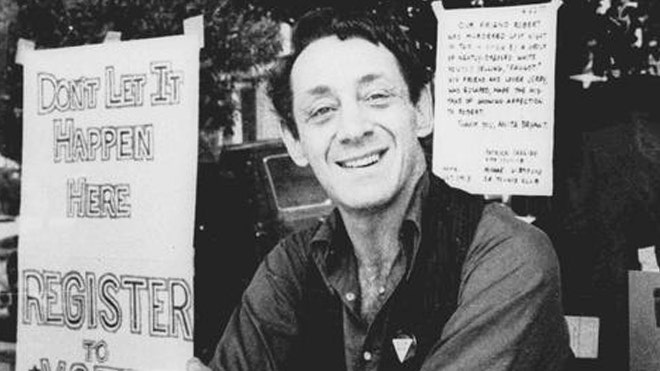
Push to name Navy vessel after Harvey Milk sparks criticism from gay community
Published May 16, 2012
FoxNews.com:
A California Democratic congressman is asking the Navy to name a ship after the late San Francisco lawmaker and gay activist Harvey Milk, but some of the strongest opposition appears to be from the gay community.
Rep. Bob Filner has written a letter to the heads of the Navy and Defense Department saying he “wholeheartedly” agrees with local efforts in San Francisco and his San Diego district to honor Milk, a Navy diver better known for his term as San Francisco city supervisor. Milk was gunned down in 1978 by a former city supervisor.
"This action would be a fitting tribute to Mr. Milk's support for equality, an ideal exemplified in the military's recent repeal of its former 'Don't Ask, Don't Tell' policy," Filner also said in the widely reported letter to Navy Secretary Ray Mabus and Defense Secretary Leon Panetta.
San Francisco and the rest of California continue to remember Milk’s place in history as the state’s first openly gay man elected to public office with the annual May 22 Harvey Milk Day. But some gay activists, at least one city supervisor and others have said Milk was anti-war and wouldn’t want a ship named after him.
In fact, a resolution in support of the naming before the San Francisco Board of Supervisors barely passed a subcommittee Monday.
Supervisor Christina Olague has said Milk, who reached the rank of Navy lieutenant before being honorably discharged in 1955, was against the war and the Vietnam War in particular.
Olague, the dissenter in the 2-1 vote this week, was joined in opposition by the city’s gay Democrat club named after Milk and other activists. She told the San Francisco Chronicle she prefers a national holiday honoring Milk.
Activist Tommi Avicolli Mecca wrote in a recent blog post: “The Milk who served in the Navy and the Milk who, less than two decades later, defied the taboos of his day to have sex with men, grow his hair, smoke pot and oppose the war in Vietnam, were completely different individuals.”
The secretary of the Navy traditionally names ships under the direction of the president and based on rules prescribed by Congress, according to a recent Congressional Research Service report. Ships are typically named after a city, state or person -- including aircraft carriers named after U.S. presidents.
Mabus announced in February that a class of combat ship typically named after a small U.S. city would instead be named after Rep. Gabrielle Giffords, D-Ariz., who retired from Congress after being shot in the head a year earlier during an assassination attempt at a town hall-style meeting.
Previous ship namings that broke with tradition have sparked sharp criticism. Mabus decided in 2010 to name a ship after Rep. John Murtha, D-Pa., who opposed the Iraq war. And last week, the Navy christened a ship named after labor leader Cesar Chavez, despite opposition from conservatives.
FoxNews.com:
A California Democratic congressman is asking the Navy to name a ship after the late San Francisco lawmaker and gay activist Harvey Milk, but some of the strongest opposition appears to be from the gay community.
Rep. Bob Filner has written a letter to the heads of the Navy and Defense Department saying he “wholeheartedly” agrees with local efforts in San Francisco and his San Diego district to honor Milk, a Navy diver better known for his term as San Francisco city supervisor. Milk was gunned down in 1978 by a former city supervisor.
"This action would be a fitting tribute to Mr. Milk's support for equality, an ideal exemplified in the military's recent repeal of its former 'Don't Ask, Don't Tell' policy," Filner also said in the widely reported letter to Navy Secretary Ray Mabus and Defense Secretary Leon Panetta.
San Francisco and the rest of California continue to remember Milk’s place in history as the state’s first openly gay man elected to public office with the annual May 22 Harvey Milk Day. But some gay activists, at least one city supervisor and others have said Milk was anti-war and wouldn’t want a ship named after him.
In fact, a resolution in support of the naming before the San Francisco Board of Supervisors barely passed a subcommittee Monday.
Supervisor Christina Olague has said Milk, who reached the rank of Navy lieutenant before being honorably discharged in 1955, was against the war and the Vietnam War in particular.
Olague, the dissenter in the 2-1 vote this week, was joined in opposition by the city’s gay Democrat club named after Milk and other activists. She told the San Francisco Chronicle she prefers a national holiday honoring Milk.
Activist Tommi Avicolli Mecca wrote in a recent blog post: “The Milk who served in the Navy and the Milk who, less than two decades later, defied the taboos of his day to have sex with men, grow his hair, smoke pot and oppose the war in Vietnam, were completely different individuals.”
The secretary of the Navy traditionally names ships under the direction of the president and based on rules prescribed by Congress, according to a recent Congressional Research Service report. Ships are typically named after a city, state or person -- including aircraft carriers named after U.S. presidents.
Mabus announced in February that a class of combat ship typically named after a small U.S. city would instead be named after Rep. Gabrielle Giffords, D-Ariz., who retired from Congress after being shot in the head a year earlier during an assassination attempt at a town hall-style meeting.
Previous ship namings that broke with tradition have sparked sharp criticism. Mabus decided in 2010 to name a ship after Rep. John Murtha, D-Pa., who opposed the Iraq war. And last week, the Navy christened a ship named after labor leader Cesar Chavez, despite opposition from conservatives.
Catholic university drops student health insurance, cites ObamaCare
Published May 16, 2012
FoxNews.com:
A Catholic university in Ohio said Tuesday it is being forced to end a student health insurance program over the Obama administration's contraception mandate and costs associated with other provisions of the health care overhaul.
Franciscan University in Steubenville, Ohio, said it has so far excluded contraceptive services and products from its health insurance policy for students and will not participate in a plan that “requires us to violate the consistent teachings of the Catholic Church on the sacredness of human life.”
In its decision to drop coverage, the school cited the contraception mandate, but also a requirement that the maximum coverage amount be increased to $100,000 for policyholders -- claiming that would have made premiums skyrocket. A university official told Fox News Radio the students’ basic $600 policy was going to double in cost in the fall and triple next year and that the school’s insurance provider said the increases were the result of the federal Patient Protection and Affordable Care Act.
"This is putting people in a position where they are having to choose between their faith and their morality, and now an unjust cost," said Mike Hernon, the school’s vice president of advancement. "These sorts of regulations from the government are forcing our hand in a way that's really wrong."
Hernon also told Fox News on Wednesday that the changes represented a "moral and economic injustice."
"This is unconscionable," he said.
Another consequence is full-time Franciscan undergraduates will no longer be required to carry health insurance, starting in the fall 2012 semester. However, the employee health insurance program will remain unchanged.
“We encourage you to decide how you are going to provide for accidents or illnesses requiring visits to physicians, health clinics or the hospital emergency room while you are a student here,” the school said on its website.
Students now will likely have to be covered through their parents’ policy, though the school says fewer than 200 of its students had been buying insurance from the university.
Existing student plans expire Aug. 15, and the changes begin in the fall 2012 semester.
The school said students playing intercollegiate sports and studying for a semester in Austria will be covered under different plans.
The Obama administration continues to face a standoff by Catholic organizations opposed to its mandate that religious-based institutions like hospitals and universities provide birth control coverage in their insurance policies, though the administration said the cost could be shifted to the insurance companies for organizations with religious objections.
The Catholic Church views use of contraceptives as morally wrong. Churches themselves already are exempt from the contraceptive coverage mandate.
Fox News Radio's Todd Starnes contributed to this report.
FoxNews.com:
A Catholic university in Ohio said Tuesday it is being forced to end a student health insurance program over the Obama administration's contraception mandate and costs associated with other provisions of the health care overhaul.
Franciscan University in Steubenville, Ohio, said it has so far excluded contraceptive services and products from its health insurance policy for students and will not participate in a plan that “requires us to violate the consistent teachings of the Catholic Church on the sacredness of human life.”
In its decision to drop coverage, the school cited the contraception mandate, but also a requirement that the maximum coverage amount be increased to $100,000 for policyholders -- claiming that would have made premiums skyrocket. A university official told Fox News Radio the students’ basic $600 policy was going to double in cost in the fall and triple next year and that the school’s insurance provider said the increases were the result of the federal Patient Protection and Affordable Care Act.
"This is putting people in a position where they are having to choose between their faith and their morality, and now an unjust cost," said Mike Hernon, the school’s vice president of advancement. "These sorts of regulations from the government are forcing our hand in a way that's really wrong."
Hernon also told Fox News on Wednesday that the changes represented a "moral and economic injustice."
"This is unconscionable," he said.
Another consequence is full-time Franciscan undergraduates will no longer be required to carry health insurance, starting in the fall 2012 semester. However, the employee health insurance program will remain unchanged.
“We encourage you to decide how you are going to provide for accidents or illnesses requiring visits to physicians, health clinics or the hospital emergency room while you are a student here,” the school said on its website.
Students now will likely have to be covered through their parents’ policy, though the school says fewer than 200 of its students had been buying insurance from the university.
Existing student plans expire Aug. 15, and the changes begin in the fall 2012 semester.
The school said students playing intercollegiate sports and studying for a semester in Austria will be covered under different plans.
The Obama administration continues to face a standoff by Catholic organizations opposed to its mandate that religious-based institutions like hospitals and universities provide birth control coverage in their insurance policies, though the administration said the cost could be shifted to the insurance companies for organizations with religious objections.
The Catholic Church views use of contraceptives as morally wrong. Churches themselves already are exempt from the contraceptive coverage mandate.
Fox News Radio's Todd Starnes contributed to this report.
Obama worth as much as $10 million
May 16, 2012
By Richard Wolf, USA TODAY Three things are apparent from President Obama's annual financial disclosure statement, released today:
He is a wealthy man, with assets of as much as $10 million.
He has a hefty stake in JPMorgan Chase, the megabank that just made a bad $2 billion bet. Obama has an account worth between $500,000 and $1 million.
Despite the nation's $15.6 trillion debt, he is a believer in government paper. More than half of his assets are in Treasury bills and notes.
The disclosure statement lists assets and liabilities in dollar ranges, so pinpointing the president's net worth is difficult. His assets appear to tally between $2.6 million and $9.9 million. He holds a mortgage on his Chicago home of $500,000 to $1 million.
As was clear from Obama's income tax filing, much of his income continues to roll in from book royalties. The disclosure form lists $100,000 to $1 million in royalties from Dreams From My Father, $100,000 to $1 million from Of Thee I Sing: A Letter to My Daughters, and $50,000 to $100,000 from The Audacity of Hope.
Vice President Biden, on the other hand, isn't all that wealthy. His financial disclosure statement includes less than $1 million in assets -- and as much as $1.5 million in liabilities, including between $500,000 and $1 million on his Wilmington home.
By Richard Wolf, USA TODAY Three things are apparent from President Obama's annual financial disclosure statement, released today:
He is a wealthy man, with assets of as much as $10 million.
He has a hefty stake in JPMorgan Chase, the megabank that just made a bad $2 billion bet. Obama has an account worth between $500,000 and $1 million.
Despite the nation's $15.6 trillion debt, he is a believer in government paper. More than half of his assets are in Treasury bills and notes.
The disclosure statement lists assets and liabilities in dollar ranges, so pinpointing the president's net worth is difficult. His assets appear to tally between $2.6 million and $9.9 million. He holds a mortgage on his Chicago home of $500,000 to $1 million.
As was clear from Obama's income tax filing, much of his income continues to roll in from book royalties. The disclosure form lists $100,000 to $1 million in royalties from Dreams From My Father, $100,000 to $1 million from Of Thee I Sing: A Letter to My Daughters, and $50,000 to $100,000 from The Audacity of Hope.
Vice President Biden, on the other hand, isn't all that wealthy. His financial disclosure statement includes less than $1 million in assets -- and as much as $1.5 million in liabilities, including between $500,000 and $1 million on his Wilmington home.
50% of new taxes in California to go to gov't pensions
By Chuck DeVore
Published May 15, 2012
FoxNews.com:
Over the weekend California Governor Jerry Brown announced the grim news that the Golden State’s budget deficit had almost doubled to $16 billion – more than 17 percent of the new budget year’s $92.6 billion spending plan.
Immediately, protesters descended on the state Capitol to demand more welfare spending in a state that already hosts one-third of all of America’s welfare recipients.
As a California state lawmaker for six years, this cycle is all too familiar. The liberals who run California tax more, spend more, regulate more, and drive up the cost of doing business, and then are shocked when tax revenue plunges as productive taxpayers leave the state.
For 13 years, before being elected in 2004, I worked as an executive in California’s once-vibrant aerospace industry.
Last September, Northrup Grumman, the last major aerospace company headquartered in California, picked up its operations and tax base and moved to Virginia.
Three months later, I left too, heading to low-tax, liberty-loving Texas.
My divorce from California was long in the making: call it a case of irreconcilable differences. I constantly warned that the nation’s biggest state was spending too much, that its meddlesome regulatory climate was choking off job creation, and that its “green” energy policies were driving out manufacturing. I was called a nag and ignored.
Concerned for my family’s financial viability, we packed up and left for greener pastures.
California and Texas are strikingly similar in many respects. They both feature large, diverse, and youthful populations. They both border Mexico and have long coastlines. And both are blessed with abundant natural resources. Where they differ is in their philosophies of government.
Beginning with their attitudes towards oil and gas exploration, California obstructs traditional energy production, preferring instead to subsidize expensive solar projects that produce costly electricity. Meanwhile, Texas has added more jobs in the oil and gas fields in the past year, 36,400, than are employed in California’s entire solar sector, 33,000.
As a share of its economic output, California spends about 46 percent more on state and local government than does Texas.
Having more government employees means more bureaucrats to write regulations. California itself commissioned a study showing that its regulatory morass costs the average small business in the state $134,122 in compliance costs every year.
Texas’ bureaucracy, excluding teachers, is 22 percent smaller as a portion of the population than is California’s, with every Texan paying about $467 a year for government retiree benefits, compared to California’s $1,105 in pension costs. Sky-high benefits for bureaucrats may soon cause the bankruptcy of Stockton, California’s 13th-largest city.
California has more government paper-pushers but Texas has 17 percent more teachers per capita, with educational outcomes favoring the Lone Star State. In fact, Texas K-12 schools perform consistently above the national average across age, racial, and subject matter areas, while California schools perform well below the national average.
To support its bloated government, California asks more of its taxpayers who pay 10.6 percent of their income to state and local government, above the U.S. average of 9.8 percent. Texans pay only 7.9 percent.
But California’s political leaders aren’t satisfied with 10.6 percent—they want more and they’re going to the voters this November with a massive $9 billion sales and income tax hike that, if approved, would set California’s income tax rates at a national-high of 13.3 percent, 2.3 percent higher than the top marginal rate charged by President Obama’s home state of Hawaii.
What Governor Brown doesn’t dare mention about his proposed tax hike is that half of the new taxes he wants to raise would fund government employee pensions.
But as California seeks to hike tax rates, its tax base is fleeing to lower-tax states. According to the U.S. Census, California lost about 300,000 jobs between 2000 and March of this year, while Texas gained about 1.2 million jobs.
Providing a powerful confirmation as to why the jobs are leaving California, Chief Executive magazine has ranked California the worst state in which to do business since it started its ranking eight years ago. Meanwhile, Texas has ranked number one for all eight years. Rather than attack the root causes of California’s job losses, California’s liberals attacked the magazine.
The Tax Foundation ranks Texas, with no income tax, as the 9th-best business tax climate in America. California ranks 48th, ahead of only New York and New Jersey.
California’s big-government, entitlement state model, aided by the nation’s best weather, is collapsing. California, ever the trendsetting state, appears to presage President Obama’s ideal vision of America by a few years.
Meanwhile Texas frees job creators to do what they do best through low taxes, less regulation, and a reasonable lawsuit climate – perhaps pointing the way to an alternative vision of a once and future America.
Chuck DeVore served in the California State Assembly from 2004 to 2010. He is a Senior Fellow for Fiscal Policy at the Texas Public Policy Foundation
Published May 15, 2012
FoxNews.com:
Over the weekend California Governor Jerry Brown announced the grim news that the Golden State’s budget deficit had almost doubled to $16 billion – more than 17 percent of the new budget year’s $92.6 billion spending plan.
Immediately, protesters descended on the state Capitol to demand more welfare spending in a state that already hosts one-third of all of America’s welfare recipients.
As a California state lawmaker for six years, this cycle is all too familiar. The liberals who run California tax more, spend more, regulate more, and drive up the cost of doing business, and then are shocked when tax revenue plunges as productive taxpayers leave the state.
For 13 years, before being elected in 2004, I worked as an executive in California’s once-vibrant aerospace industry.
Last September, Northrup Grumman, the last major aerospace company headquartered in California, picked up its operations and tax base and moved to Virginia.
Three months later, I left too, heading to low-tax, liberty-loving Texas.
My divorce from California was long in the making: call it a case of irreconcilable differences. I constantly warned that the nation’s biggest state was spending too much, that its meddlesome regulatory climate was choking off job creation, and that its “green” energy policies were driving out manufacturing. I was called a nag and ignored.
Concerned for my family’s financial viability, we packed up and left for greener pastures.
California and Texas are strikingly similar in many respects. They both feature large, diverse, and youthful populations. They both border Mexico and have long coastlines. And both are blessed with abundant natural resources. Where they differ is in their philosophies of government.
Beginning with their attitudes towards oil and gas exploration, California obstructs traditional energy production, preferring instead to subsidize expensive solar projects that produce costly electricity. Meanwhile, Texas has added more jobs in the oil and gas fields in the past year, 36,400, than are employed in California’s entire solar sector, 33,000.
As a share of its economic output, California spends about 46 percent more on state and local government than does Texas.
Having more government employees means more bureaucrats to write regulations. California itself commissioned a study showing that its regulatory morass costs the average small business in the state $134,122 in compliance costs every year.
Texas’ bureaucracy, excluding teachers, is 22 percent smaller as a portion of the population than is California’s, with every Texan paying about $467 a year for government retiree benefits, compared to California’s $1,105 in pension costs. Sky-high benefits for bureaucrats may soon cause the bankruptcy of Stockton, California’s 13th-largest city.
California has more government paper-pushers but Texas has 17 percent more teachers per capita, with educational outcomes favoring the Lone Star State. In fact, Texas K-12 schools perform consistently above the national average across age, racial, and subject matter areas, while California schools perform well below the national average.
To support its bloated government, California asks more of its taxpayers who pay 10.6 percent of their income to state and local government, above the U.S. average of 9.8 percent. Texans pay only 7.9 percent.
But California’s political leaders aren’t satisfied with 10.6 percent—they want more and they’re going to the voters this November with a massive $9 billion sales and income tax hike that, if approved, would set California’s income tax rates at a national-high of 13.3 percent, 2.3 percent higher than the top marginal rate charged by President Obama’s home state of Hawaii.
What Governor Brown doesn’t dare mention about his proposed tax hike is that half of the new taxes he wants to raise would fund government employee pensions.
But as California seeks to hike tax rates, its tax base is fleeing to lower-tax states. According to the U.S. Census, California lost about 300,000 jobs between 2000 and March of this year, while Texas gained about 1.2 million jobs.
Providing a powerful confirmation as to why the jobs are leaving California, Chief Executive magazine has ranked California the worst state in which to do business since it started its ranking eight years ago. Meanwhile, Texas has ranked number one for all eight years. Rather than attack the root causes of California’s job losses, California’s liberals attacked the magazine.
The Tax Foundation ranks Texas, with no income tax, as the 9th-best business tax climate in America. California ranks 48th, ahead of only New York and New Jersey.
California’s big-government, entitlement state model, aided by the nation’s best weather, is collapsing. California, ever the trendsetting state, appears to presage President Obama’s ideal vision of America by a few years.
Meanwhile Texas frees job creators to do what they do best through low taxes, less regulation, and a reasonable lawsuit climate – perhaps pointing the way to an alternative vision of a once and future America.
Chuck DeVore served in the California State Assembly from 2004 to 2010. He is a Senior Fellow for Fiscal Policy at the Texas Public Policy Foundation
Robert F. Kennedy Jr.'s wife found dead in home
By LARRY CELONA, EMILY SMITH and ANDY SOLTIS
Last Updated: 10:55 PM, May 16, 2012
Posted: 4:38 PM, May 16, 2012
Mary Richardson Kennedy, house builder Jim Blansfield and Robert Kennedy Jr. posing in the house where Mary was found dead Wednesday.
Robert F. Kennedy Jr.’s estranged wife, Mary, who battled her husband’s rumored philandering by turning to alcohol and prescription drugs, hanged herself in a barn on their Westchester estate today, sources told The Post.
The 52-year-old mother of four — the latest victim of a family dynasty cursed with tragedies — may have taken her own life because she was haunted by her broken marriage, her friends lamented.
“She was deeply troubled, abusing alcohol and prescription meds,” a close family friend said. “She had cause. She was used up and tossed away by Bobby. That was awful.”
. . . . . . . . . . . . Robert F Kennedy Jr. and Mary Richardson Kennedy's house in Mt Kisco. . .
Officials refused to elaborate on her death and said it would be investigated with the help of the Westchester Medical Examiner’s Office.
Bedford police responded at 1:36 p.m. to a report of a “possible unattended death” — meaning there were no witnesses — at the estate.
Mary was found “inside an out-building on that property,” police said in a statement.
There are several sheds behind the home — some hold garden tools and another is a falcon house — on a slope leading to a lake.
The Kennedy family dealt stoically with the latest in the long line of shocking deaths.
“We deeply regret the death of our beloved sister Mary, whose radiant and creative spirit will be sorely missed by those who loved her,” the family said in a statement.
“Our heart goes out to her children, who she loved without reservation. We have no further comment at this time.”
A grim-faced Kennedy showed up at the house around 8 p.m.
The third of 11 children of former US senator, attorney general and presidential candidate Robert Francis Kennedy, he married Mary Richardson in 1994 one month after his first marriage ended after 12 years.
The wedding ceremony took place aboard a research vessel on the Hudson River, a fitting location for the couple, who were environmental advocates.
. . . . . . . . Inside the house where Mary Kennedy was found dead. . . . . .
A family friend said Mary had known the Kennedy clan long before she married Bobby and had been a close friend of his sister, Mary — known as “Kerry” — since they were 15-year-olds.
“She had grown up with the Kennedy family, having been Kerry’s best friend since they were teenagers.”
But the marriage broke down amid reports of her addiction and rumors of his involvement with other women.
“She knew Bobby her whole life, and now he rejected her. Tragic,” the family friend said.
Kennedy, 58, filed for divorce on May 12, 2010, two days after Mary called the cops to complain about her husband — but she appeared “visibly intoxicated” when cops arrived, according to police reports.
As of today, the divorce was not finalized, TMZ.com reported. But Kennedy has since been dating actress Cheryl Hines, sources said.
A day after the divorce filing, Bedford police were again called to the home because of a report of a “domestic incident” in which Mary was reportedly drunk.
Two days later, she was charged with driving under the influence when she was caught speeding down the Taconic State Parkway. Her license was suspended.
But members of the family rallied to her support — even during her steep decline.
Ethel Kennedy, her mother-in-law, sent a handwritten letter to a town justice, seeking leniency and calling Mary a “kind, loving and generous person.”
Cops confirmed then that they had been called to the estate several times in the previous years.
Mary’s close friend pointed to the strain of her 18-year marriage.
“She was lovely. She always looked out for you,” she said, but added, “She did not have it easy, being Bobby’s wife.
“I remember being seated at a dinner next to Bobby around 10 years ago that she was also at — it was the first time I had met either of them — and he put his hand on my thigh under the table. We hadn’t even spoken but to say hello. He is such a dog that way.”
The friend, who requested anonymity, alluded to the problems of other women who married into the fabled clan: “Like all Kennedy wives, she was expected to tow the line. Stay quiet, take care of the kids, tolerate the affairs and look happy. She took solace in yoga and meditation.”
Still, the alleged philandering took “a terrible toll,” the source said.
“He got all the glory, and she got no acknowledgment for what she did: holding it all together at home.”
Kennedy rarely spoke about his private life but opened up to Oprah Winfrey in a 2007 interview.
“Pretty soon after my dad died” — referring to his father’s assassination in 1968 — “I started taking drugs,” he said. He said after overcoming his addiction he became an environmental advocate. Mary, who had worked as an architect before her marriage, took up the same environmental causes and tried to turn the Bedford estate into a showcase, according to her friend.
“She was a gentle soul. She was very proud of how she had turned their family home into the truly greenest/eco-friendly home ever. It was all solar panels and water regeneration and more,” she said.
The friend said Mary readily took over caring for the two children from her husband’s first marriage — and then raised four of her own.
“She was a good mother. Like so many parents of Kennedy kids, she was dealing with a wild bunch. The kids were always getting into scrapes, and Mary was forever rescuing them,” she said.
Additional reporting by C.J. Sullivan and Lois Weiss
Last Updated: 10:55 PM, May 16, 2012
Posted: 4:38 PM, May 16, 2012
Mary Richardson Kennedy, house builder Jim Blansfield and Robert Kennedy Jr. posing in the house where Mary was found dead Wednesday.
Robert F. Kennedy Jr.’s estranged wife, Mary, who battled her husband’s rumored philandering by turning to alcohol and prescription drugs, hanged herself in a barn on their Westchester estate today, sources told The Post.
The 52-year-old mother of four — the latest victim of a family dynasty cursed with tragedies — may have taken her own life because she was haunted by her broken marriage, her friends lamented.
“She was deeply troubled, abusing alcohol and prescription meds,” a close family friend said. “She had cause. She was used up and tossed away by Bobby. That was awful.”
. . . . . . . . . . . . Robert F Kennedy Jr. and Mary Richardson Kennedy's house in Mt Kisco. . .
Officials refused to elaborate on her death and said it would be investigated with the help of the Westchester Medical Examiner’s Office.
Bedford police responded at 1:36 p.m. to a report of a “possible unattended death” — meaning there were no witnesses — at the estate.
Mary was found “inside an out-building on that property,” police said in a statement.
There are several sheds behind the home — some hold garden tools and another is a falcon house — on a slope leading to a lake.
The Kennedy family dealt stoically with the latest in the long line of shocking deaths.
“We deeply regret the death of our beloved sister Mary, whose radiant and creative spirit will be sorely missed by those who loved her,” the family said in a statement.
“Our heart goes out to her children, who she loved without reservation. We have no further comment at this time.”
A grim-faced Kennedy showed up at the house around 8 p.m.
The third of 11 children of former US senator, attorney general and presidential candidate Robert Francis Kennedy, he married Mary Richardson in 1994 one month after his first marriage ended after 12 years.
The wedding ceremony took place aboard a research vessel on the Hudson River, a fitting location for the couple, who were environmental advocates.
. . . . . . . . Inside the house where Mary Kennedy was found dead. . . . . .
A family friend said Mary had known the Kennedy clan long before she married Bobby and had been a close friend of his sister, Mary — known as “Kerry” — since they were 15-year-olds.
“She had grown up with the Kennedy family, having been Kerry’s best friend since they were teenagers.”
But the marriage broke down amid reports of her addiction and rumors of his involvement with other women.
“She knew Bobby her whole life, and now he rejected her. Tragic,” the family friend said.
Kennedy, 58, filed for divorce on May 12, 2010, two days after Mary called the cops to complain about her husband — but she appeared “visibly intoxicated” when cops arrived, according to police reports.
As of today, the divorce was not finalized, TMZ.com reported. But Kennedy has since been dating actress Cheryl Hines, sources said.
A day after the divorce filing, Bedford police were again called to the home because of a report of a “domestic incident” in which Mary was reportedly drunk.
Two days later, she was charged with driving under the influence when she was caught speeding down the Taconic State Parkway. Her license was suspended.
But members of the family rallied to her support — even during her steep decline.
Ethel Kennedy, her mother-in-law, sent a handwritten letter to a town justice, seeking leniency and calling Mary a “kind, loving and generous person.”
Cops confirmed then that they had been called to the estate several times in the previous years.
Mary’s close friend pointed to the strain of her 18-year marriage.
“She was lovely. She always looked out for you,” she said, but added, “She did not have it easy, being Bobby’s wife.
“I remember being seated at a dinner next to Bobby around 10 years ago that she was also at — it was the first time I had met either of them — and he put his hand on my thigh under the table. We hadn’t even spoken but to say hello. He is such a dog that way.”
The friend, who requested anonymity, alluded to the problems of other women who married into the fabled clan: “Like all Kennedy wives, she was expected to tow the line. Stay quiet, take care of the kids, tolerate the affairs and look happy. She took solace in yoga and meditation.”
Still, the alleged philandering took “a terrible toll,” the source said.
“He got all the glory, and she got no acknowledgment for what she did: holding it all together at home.”
Kennedy rarely spoke about his private life but opened up to Oprah Winfrey in a 2007 interview.
“Pretty soon after my dad died” — referring to his father’s assassination in 1968 — “I started taking drugs,” he said. He said after overcoming his addiction he became an environmental advocate. Mary, who had worked as an architect before her marriage, took up the same environmental causes and tried to turn the Bedford estate into a showcase, according to her friend.
“She was a gentle soul. She was very proud of how she had turned their family home into the truly greenest/eco-friendly home ever. It was all solar panels and water regeneration and more,” she said.
The friend said Mary readily took over caring for the two children from her husband’s first marriage — and then raised four of her own.
“She was a good mother. Like so many parents of Kennedy kids, she was dealing with a wild bunch. The kids were always getting into scrapes, and Mary was forever rescuing them,” she said.
Additional reporting by C.J. Sullivan and Lois Weiss
NC Non-Citizens Voting, Dead Offered Ballots, UNC Officials Embrace Voter Fraud
North Carolina Ballots are offered out in the names of others to total strangers.
We find people who, according to Jury refusal forms, are listed as non-citizens. These individuals are also registered to vote. In one case the citizen appears to have perjured himself on the Jury-refusal form, since his jury refusal came after his voter registration. All public data is available here: http://www.projectveritas.com/ncsupporting
Ballots are also handed out in the names of others to total strangers.
A dead voter is listed on the voter rolls. We interview an election Judge who says he only wants to uphold parts of the state constitution. We also interview the following officials at UNC who seemingly embrace voter fraud:
Terri Phoenix -- Director - UNC LGBTQ Center
Dean Blackburn UNC Assistant Dean of Students
Adam Limehouse - Director for the Coalition to Protect All NC Families.
Please Make a donation to ProjectVeritas.com
New cancer drugs held up by the NHS for nine years as rationing body accused of letting down patients
Rationing body NICE is denying potentially life saving drugs because it is bogged down in other tasks, doctors claim
Delays can make the difference between someone being able to live independently or needing full time care
Some treatments for Alzheimer's, arthritis and hepatitis C delayed for more than a decade on average
By Sophie Borland
PUBLISHED: 17:20 EST, 15 May 2012 | UPDATED: 17:45 EST, 15 May 2012
UK Daily Mail:
Approval: People with Alzheimer's have been left waiting for years to receive new drugs on the NHS it is claimed because the rationing body is bogged down in other tasks
Patients are waiting up to nine years for cancer and Alzheimer’s drugs to be available on the health service because approval takes so long.
The delays mean that even new drugs given the all-clear in extensive trials remain stuck in the queue for years.
A major study found that on average it takes five years from a treatment’s launch by a manufacturer to approval by the rationing body, NICE.
But the process often lasts far longer, and on occasions NICE will not even start its assessment until a drug has been on the market for more than a year.
One of the problems is that NICE – the National Institute for Health and Clinical Excellence – has a wide-ranging remit which includes drawing up NHS guidance on tackling obesity, alcohol abuse and other public health issues.
But last night doctors and charities said it was unfair that patients were being denied potentially life-saving drugs just because the rationing body is bogged down in other tasks.
They said the delays are affecting patients’ quality of life and could make the difference between someone being able to live independently or needing full-time care.
Although patients can get drugs that have not yet been approved by NICE by paying privately or applying to the Cancer Drugs Fund, doctors are often reluctant to prescribe them.
The report by the Office for Health Economics, obtained by GP Newspaper, looked at all the drugs approved by NICE since 2000, covering a total of nearly 300 treatments including those for cancer, Alzheimer’s disease, and heart problems.
When making its decisions, NICE classifies drugs into two groups. Those which would be used on their own undergo ‘single’ appraisals, while those which are taken with another drug are subject to ‘multiple’ appraisals. These take several years longer.
Delays: A major study found that on average it takes the NHS rationing body NICE five years to give approval to a treatment after its launch
In 2010, the most recent year for which figures are available, the average delay for the 11 drugs which were approved after multiple appraisals was 10.2 years.
They included treatments for arthritis, hepatitis C and Crohn’s disease, a debilitating bowel disorder.
The average delay for multiple drugs given the green light in 2005 was 8.7 years. They included treatments for bowel cancer (irinotecan and oxaliplatin) and cancer of the womb (topotecan and pacilitaxel).
In 2006 NICE approved three Alzheimer’s drugs, Aricept, Reminyl and Exelon, although only for patients in the ‘moderate’ stages of the disease.
These treatments would have been classified as multiple appraisals, and that year the average time these assessments had taken was 7.8 years.
Delays: Patients can get drugs that have not yet been approved by NICE by paying privately or applying to the Cancer Drugs Fund, but doctors are often reluctant to approve them
Last night Andrew Chidgey of the Alzheimer’s Society said: ‘People with all types of dementia desperately need effective treatments to live a better quality of life and stay independent for longer.
‘Five years is a long time to wait. Whenever a new drug is available, NICE guidance should be issued as quickly as possible.’
Heather Walker of Cancer Research UK said patients needed effective drugs ‘swiftly’ and added: ‘There needs to be a balance between giving NICE enough time to make the right decisions and ensuring that drugs get to patients as soon as possible.’
Dr Anita Sharma, a senior GP in Manchester, said: ‘Being too busy to appraise a drug is not acceptable.’
NICE’s role includes drawing up public health guidelines such as how NHS trusts should tackle obesity. It also sets ‘quality standards’ which state how patients with a range of illnesses should best be treated.
Earlier this year the watchdog took on yet another role and began drawing up guidelines on social care. It will shortly be issuing advice on how NHS staff should care for the elderly with dementia and vulnerable children.
A spokesman from NICE said: ‘We don’t recognise most of the conclusions reached by the Office for Health Economics report which was published in January this year.
‘The report includes in its average figures some drugs that received their licences many years before NICE was established in 1999.
‘NICE has since been asked to appraise such drugs, but their inclusion in this report has skewed the average length of time elapsed from marketing authorisation to published NICE guidance quite considerably.’
Delays can make the difference between someone being able to live independently or needing full time care
Some treatments for Alzheimer's, arthritis and hepatitis C delayed for more than a decade on average
By Sophie Borland
PUBLISHED: 17:20 EST, 15 May 2012 | UPDATED: 17:45 EST, 15 May 2012
UK Daily Mail:
Approval: People with Alzheimer's have been left waiting for years to receive new drugs on the NHS it is claimed because the rationing body is bogged down in other tasks
Patients are waiting up to nine years for cancer and Alzheimer’s drugs to be available on the health service because approval takes so long.
The delays mean that even new drugs given the all-clear in extensive trials remain stuck in the queue for years.
A major study found that on average it takes five years from a treatment’s launch by a manufacturer to approval by the rationing body, NICE.
But the process often lasts far longer, and on occasions NICE will not even start its assessment until a drug has been on the market for more than a year.
One of the problems is that NICE – the National Institute for Health and Clinical Excellence – has a wide-ranging remit which includes drawing up NHS guidance on tackling obesity, alcohol abuse and other public health issues.
But last night doctors and charities said it was unfair that patients were being denied potentially life-saving drugs just because the rationing body is bogged down in other tasks.
They said the delays are affecting patients’ quality of life and could make the difference between someone being able to live independently or needing full-time care.
Although patients can get drugs that have not yet been approved by NICE by paying privately or applying to the Cancer Drugs Fund, doctors are often reluctant to prescribe them.
The report by the Office for Health Economics, obtained by GP Newspaper, looked at all the drugs approved by NICE since 2000, covering a total of nearly 300 treatments including those for cancer, Alzheimer’s disease, and heart problems.
When making its decisions, NICE classifies drugs into two groups. Those which would be used on their own undergo ‘single’ appraisals, while those which are taken with another drug are subject to ‘multiple’ appraisals. These take several years longer.
Delays: A major study found that on average it takes the NHS rationing body NICE five years to give approval to a treatment after its launch
In 2010, the most recent year for which figures are available, the average delay for the 11 drugs which were approved after multiple appraisals was 10.2 years.
They included treatments for arthritis, hepatitis C and Crohn’s disease, a debilitating bowel disorder.
The average delay for multiple drugs given the green light in 2005 was 8.7 years. They included treatments for bowel cancer (irinotecan and oxaliplatin) and cancer of the womb (topotecan and pacilitaxel).
In 2006 NICE approved three Alzheimer’s drugs, Aricept, Reminyl and Exelon, although only for patients in the ‘moderate’ stages of the disease.
These treatments would have been classified as multiple appraisals, and that year the average time these assessments had taken was 7.8 years.
Delays: Patients can get drugs that have not yet been approved by NICE by paying privately or applying to the Cancer Drugs Fund, but doctors are often reluctant to approve them
Last night Andrew Chidgey of the Alzheimer’s Society said: ‘People with all types of dementia desperately need effective treatments to live a better quality of life and stay independent for longer.
‘Five years is a long time to wait. Whenever a new drug is available, NICE guidance should be issued as quickly as possible.’
Heather Walker of Cancer Research UK said patients needed effective drugs ‘swiftly’ and added: ‘There needs to be a balance between giving NICE enough time to make the right decisions and ensuring that drugs get to patients as soon as possible.’
Dr Anita Sharma, a senior GP in Manchester, said: ‘Being too busy to appraise a drug is not acceptable.’
NICE’s role includes drawing up public health guidelines such as how NHS trusts should tackle obesity. It also sets ‘quality standards’ which state how patients with a range of illnesses should best be treated.
Earlier this year the watchdog took on yet another role and began drawing up guidelines on social care. It will shortly be issuing advice on how NHS staff should care for the elderly with dementia and vulnerable children.
A spokesman from NICE said: ‘We don’t recognise most of the conclusions reached by the Office for Health Economics report which was published in January this year.
‘The report includes in its average figures some drugs that received their licences many years before NICE was established in 1999.
‘NICE has since been asked to appraise such drugs, but their inclusion in this report has skewed the average length of time elapsed from marketing authorisation to published NICE guidance quite considerably.’
Senate approves Export-Import Bank in 78-20 vote
By Daniel Strauss
05/15/12 04:58 PM ET
TheHill:
The Senate passed legislation reauthorizing the Export-Import Bank on Tuesday after voting down five amendments that would have limited the program's scope and power.
The passage of the bill, in a 78-20 vote, sends the legislation to President Obama, who is expected to sign the reauthorization, which runs through September 2014.
Obama praised the reauthorization bill's passage through Congress.
"I’m pleased that Members of Congress from both parties have come together to reauthorize the Export-Import Bank," Obama said in a statement. "This important step will help American businesses create jobs here at home and sell their products around the world — all at no cost to taxpayers."
The reauthorization also ends an unexpectedly long fight on Capitol that divided the Republican Party.
The Export-Import Bank is generally considered a noncontroversial bill, but it came under attack this year from conservatives who argued it was a form of corporate welfare that distorted free trade.
The Club for Growth was among the groups that urged Republicans to oppose reauthorizing the bank’s charter. Ninety-three Republicans voted against the reauthorization in the House, and 19 Republicans voted against it on Tuesday. Sen. Bernie Sanders (I-Vt.) also voted against the bill.
"We need to end the corporate welfare that distorts the market and feeds crony capitalism," Sen. Mike Lee (R-Utah) said in a floor speech. Lee sponsored one of the amendments that sought to impose restrictions on the bank.
"The corporations that largely benefit from the Ex-Im bank should have no trouble marshaling their resources to compete in today's economy. If they are struggling, then they are most likely not deserving of taxpayer help," Lee said.
Lee’s amendment, which was rejected, would have terminated the bank a year after the reauthorization.
The other amendments would have limited the bank's financing of certain products, stopped the bank from lending to projects in countries that held government debt instruments, funded the bank only if there was progress in talks to end it and kept the bank from funding energy projects that competed with similar projects in the United States, respectively.
Other Republicans defended the bank, saying it was necessary for the United States to compete in the global economy. They noted that other countries have similar state-run enterprises that give their home companies an edge.
"Now it's one thing to reform, it's another thing to unilaterally surrender," Sen. Lindsey Graham (R-S.C.) said Tuesday. "So to those who would want to end the bank without other countries doing so, I think you would be doing a disservice to this country."
Business groups and conservative groups were similarly divided over renewing the bank, which encourages companies to buy U.S. goods overseas. While the Club for Growth opposed it, the U.S. Chamber of Commerce and other business groups offered support. Majority Leader Harry Reid (D-Nev.) was able to move the legislation toward passage on Monday by agreeing to votes on the five Republican amendments. Reid also agreed to a 60-vote threshold on each amendment as well as the final bill.
Senate Democrats were visibly frustrated at the lengths it took to win passage. On Tuesday Sen. Maria Cantwell (D-Wash.) said the five amendments were just the GOP's way of trying to kill the bank all together.
"These amendments that are all trying to gut the Export-Import Bank would send this back to the House when we really, really need to send this to the president's desk," Cantwell said.
Reid and other Senate Democrats grumbled throughout the chamber's consideration of the bill, Tea Party Republicans were holding up legislation that otherwise would have passed quickly.
"As I indicated, in earlier days the Senate would have passed this by unanimous consent as we've done before — this same legislation — but these days the far-right Tea Party wing of the Senate Republican caucus — I used to just talk about the House wing of the Republican caucus, who think that everything has to be a fight," Reid said last week, shortly after Re[publicans blocked an effort to advance the bill.
Reid also repeatedly noted that the reauthorization had Republican support. GOP leaders in the House voted for the reauthorization, for example.
Senate Minority Leader Mitch McConnell (R-Ky.) said Tuesday that Republican opposition to reauthorizing the bank had to do with a lack of input from the Senate GOP.
"Give us an opportunity to play a role in the process, and we'll work together on bipartisan solutions," McConnell said. "Just look at the record: When Democrats blocked all debate and amendments on the Export-Import bank legislation, it went nowhere. When they agreed to our reasonable request for input on the bill, that changed. They could've accepted this offer much earlier, but they didn't because it didn't fit the storyline."
—This story was last updated at 6:12 p.m.
05/15/12 04:58 PM ET
TheHill:
The Senate passed legislation reauthorizing the Export-Import Bank on Tuesday after voting down five amendments that would have limited the program's scope and power.
The passage of the bill, in a 78-20 vote, sends the legislation to President Obama, who is expected to sign the reauthorization, which runs through September 2014.
Obama praised the reauthorization bill's passage through Congress.
"I’m pleased that Members of Congress from both parties have come together to reauthorize the Export-Import Bank," Obama said in a statement. "This important step will help American businesses create jobs here at home and sell their products around the world — all at no cost to taxpayers."
The reauthorization also ends an unexpectedly long fight on Capitol that divided the Republican Party.
The Export-Import Bank is generally considered a noncontroversial bill, but it came under attack this year from conservatives who argued it was a form of corporate welfare that distorted free trade.
The Club for Growth was among the groups that urged Republicans to oppose reauthorizing the bank’s charter. Ninety-three Republicans voted against the reauthorization in the House, and 19 Republicans voted against it on Tuesday. Sen. Bernie Sanders (I-Vt.) also voted against the bill.
"We need to end the corporate welfare that distorts the market and feeds crony capitalism," Sen. Mike Lee (R-Utah) said in a floor speech. Lee sponsored one of the amendments that sought to impose restrictions on the bank.
"The corporations that largely benefit from the Ex-Im bank should have no trouble marshaling their resources to compete in today's economy. If they are struggling, then they are most likely not deserving of taxpayer help," Lee said.
Lee’s amendment, which was rejected, would have terminated the bank a year after the reauthorization.
The other amendments would have limited the bank's financing of certain products, stopped the bank from lending to projects in countries that held government debt instruments, funded the bank only if there was progress in talks to end it and kept the bank from funding energy projects that competed with similar projects in the United States, respectively.
Other Republicans defended the bank, saying it was necessary for the United States to compete in the global economy. They noted that other countries have similar state-run enterprises that give their home companies an edge.
"Now it's one thing to reform, it's another thing to unilaterally surrender," Sen. Lindsey Graham (R-S.C.) said Tuesday. "So to those who would want to end the bank without other countries doing so, I think you would be doing a disservice to this country."
Business groups and conservative groups were similarly divided over renewing the bank, which encourages companies to buy U.S. goods overseas. While the Club for Growth opposed it, the U.S. Chamber of Commerce and other business groups offered support. Majority Leader Harry Reid (D-Nev.) was able to move the legislation toward passage on Monday by agreeing to votes on the five Republican amendments. Reid also agreed to a 60-vote threshold on each amendment as well as the final bill.
Senate Democrats were visibly frustrated at the lengths it took to win passage. On Tuesday Sen. Maria Cantwell (D-Wash.) said the five amendments were just the GOP's way of trying to kill the bank all together.
"These amendments that are all trying to gut the Export-Import Bank would send this back to the House when we really, really need to send this to the president's desk," Cantwell said.
Reid and other Senate Democrats grumbled throughout the chamber's consideration of the bill, Tea Party Republicans were holding up legislation that otherwise would have passed quickly.
"As I indicated, in earlier days the Senate would have passed this by unanimous consent as we've done before — this same legislation — but these days the far-right Tea Party wing of the Senate Republican caucus — I used to just talk about the House wing of the Republican caucus, who think that everything has to be a fight," Reid said last week, shortly after Re[publicans blocked an effort to advance the bill.
Reid also repeatedly noted that the reauthorization had Republican support. GOP leaders in the House voted for the reauthorization, for example.
Senate Minority Leader Mitch McConnell (R-Ky.) said Tuesday that Republican opposition to reauthorizing the bank had to do with a lack of input from the Senate GOP.
"Give us an opportunity to play a role in the process, and we'll work together on bipartisan solutions," McConnell said. "Just look at the record: When Democrats blocked all debate and amendments on the Export-Import bank legislation, it went nowhere. When they agreed to our reasonable request for input on the bill, that changed. They could've accepted this offer much earlier, but they didn't because it didn't fit the storyline."
—This story was last updated at 6:12 p.m.
‘Fiscal Cliff’ Could Shrink US GDP Growth By 4%: Goldman Sachs
Published: Wednesday, 16 May 2012 12:21 AM ET
By: Jean Chua
Writer for CNBC.com
The United States’ economy could shrink as much as 4 percentage points in the first half of 2013 if Congress fails to address the expiration of $600 billion worth of tax breaks and jobless benefits by the end of this year, according to Goldman Sachs.
In a report issued on Tuesday, Goldman said in the worst-case scenario, the “fiscal cliff” facing the U.S. will shave almost 4 percentage points off gross domestic product (GDP) in the first half of 2013.
The fiscal cliff refers to the expiration of Bush-era tax cuts and the payroll tax holiday, as well as the end of extended unemployment benefits and the automatic spending and budget cuts mandated by Congress if lawmakers fails to reach deficit reduction goals.
According to Goldman, if the knock-on effects of a GDP contraction are considered, that is, reduced growth in one quarter weighs on the following quarter, the U.S. economy could experience a 5-percentage-point reduction in annualized quarter-on-quarter GDP.
The chances of the worst-case scenario actually happening are 35 percent, Goldman said, pointing out that a grand bargain was highly unlikely, thus raising the risks for the economy.
Republican Paul Ryan, who chairs the House Budget Committee, insisted it was Democrats who needed to cede ground on debt discussions. He said on CNBC's “The Kudlow Report" that the Democrats are to blame as they did "not put a budget that attempts to deal with any of these issues".
“While we see a small chance that a "grand bargain" is struck at year end (5% probability), there is a greater risk that Congress could fail to act and that the full amount of fiscal restraint could take effect at least temporarily,” Goldman said in the report.
Goldman believes there’s a 40 percent chance Congress will allow a short-term extension of the tax breaks and temporary increase in the debt limit by the end of the year. Such a move would allow lawmakers to postpone tough decisions until after the elections in 2013.
By: Jean Chua
Writer for CNBC.com
The United States’ economy could shrink as much as 4 percentage points in the first half of 2013 if Congress fails to address the expiration of $600 billion worth of tax breaks and jobless benefits by the end of this year, according to Goldman Sachs.
In a report issued on Tuesday, Goldman said in the worst-case scenario, the “fiscal cliff” facing the U.S. will shave almost 4 percentage points off gross domestic product (GDP) in the first half of 2013.
The fiscal cliff refers to the expiration of Bush-era tax cuts and the payroll tax holiday, as well as the end of extended unemployment benefits and the automatic spending and budget cuts mandated by Congress if lawmakers fails to reach deficit reduction goals.
According to Goldman, if the knock-on effects of a GDP contraction are considered, that is, reduced growth in one quarter weighs on the following quarter, the U.S. economy could experience a 5-percentage-point reduction in annualized quarter-on-quarter GDP.
The chances of the worst-case scenario actually happening are 35 percent, Goldman said, pointing out that a grand bargain was highly unlikely, thus raising the risks for the economy.
Republican Paul Ryan, who chairs the House Budget Committee, insisted it was Democrats who needed to cede ground on debt discussions. He said on CNBC's “The Kudlow Report" that the Democrats are to blame as they did "not put a budget that attempts to deal with any of these issues".
“While we see a small chance that a "grand bargain" is struck at year end (5% probability), there is a greater risk that Congress could fail to act and that the full amount of fiscal restraint could take effect at least temporarily,” Goldman said in the report.
Goldman believes there’s a 40 percent chance Congress will allow a short-term extension of the tax breaks and temporary increase in the debt limit by the end of the year. Such a move would allow lawmakers to postpone tough decisions until after the elections in 2013.
Donors tied to banking desert Obama for Romney
May 16, 2012
Michael Rezendez
Boston Globe:
When the head of JPMorgan Chase met with shareholders to answer for a trading loss of more than $2 billion Tuesday, it was against an evolving political backdrop: Donors from big banks are betting on Mitt Romney to defeat President Obama and repeal new restraints on risky, large-scale investments.
“There’s no doubt that there’s been a big diminution of support for the president,’’ said William M. Daley, Obama’s former chief of staff and a former top JPMorgan Chase executive. “People in the financial services sector are saying, ‘The president has been too tough on us, both in policy and on rhetoric.’ ’’
The top five donor groups in Romney’s campaign are individuals and political action committees associated with large financial institutions, led by Wall Street giants Goldman Sachs and JPMorgan Chase, according to information compiled by the Center for Responsive Politics, a nonpartisan research group that tracks campaign donations.
By contrast, Obama’s top five contributor groups include individuals and PACs affiliated with high technology giants Google Inc. and Microsoft Corp., and the global law firms DLA Piper and Sidley Austin, and do not include those associated with banks. In 2008, financial institutions backed him generously.
Analysts said the JPMorgan loss could be a political opportunity for Obama - and an obstacle for Romney.
On Monday, Obama was already seizing on the JPMorgan loss to bolster his reelection effort and underscore his continuing support for new and pending financial regulations in the 2010 Dodd-Frank regulatory overhaul, which includes the controversial Volcker Rule, a provision that would prohibit banks from making speculative investments with their own funds.
“This is the best, or one of the best-managed banks. You could have a bank that isn’t as strong, isn’t as profitable making those same bets and we might have had to step in,’’ Obama said on ABC TV’s “The View,’’ adding praise for JPMorgan chief Jamie Dimon. “That’s exactly why Wall Street reform is so important.’’
The JPMorgan loss “certainly fortifies the argument for stricter financial regulation,’’ said William A. Galston, a senior fellow at the Brookings Institution and former adviser to President Clinton. “And since President Obama has been on one side and Mitt Romney has been on the other, you would have to say it will make it a little bit harder for Mitt Romney to fortify the position he has articulated, which is that Dodd-Frank should be repealed.’’
Campaign finance records also show that the financial services sector is, to some extent, hedging its bets by donating money to the Democratic National Committee.
PAGE 2 HERE>>>
Michael Rezendez
Boston Globe:
When the head of JPMorgan Chase met with shareholders to answer for a trading loss of more than $2 billion Tuesday, it was against an evolving political backdrop: Donors from big banks are betting on Mitt Romney to defeat President Obama and repeal new restraints on risky, large-scale investments.
“There’s no doubt that there’s been a big diminution of support for the president,’’ said William M. Daley, Obama’s former chief of staff and a former top JPMorgan Chase executive. “People in the financial services sector are saying, ‘The president has been too tough on us, both in policy and on rhetoric.’ ’’
The top five donor groups in Romney’s campaign are individuals and political action committees associated with large financial institutions, led by Wall Street giants Goldman Sachs and JPMorgan Chase, according to information compiled by the Center for Responsive Politics, a nonpartisan research group that tracks campaign donations.
By contrast, Obama’s top five contributor groups include individuals and PACs affiliated with high technology giants Google Inc. and Microsoft Corp., and the global law firms DLA Piper and Sidley Austin, and do not include those associated with banks. In 2008, financial institutions backed him generously.
Analysts said the JPMorgan loss could be a political opportunity for Obama - and an obstacle for Romney.
On Monday, Obama was already seizing on the JPMorgan loss to bolster his reelection effort and underscore his continuing support for new and pending financial regulations in the 2010 Dodd-Frank regulatory overhaul, which includes the controversial Volcker Rule, a provision that would prohibit banks from making speculative investments with their own funds.
“This is the best, or one of the best-managed banks. You could have a bank that isn’t as strong, isn’t as profitable making those same bets and we might have had to step in,’’ Obama said on ABC TV’s “The View,’’ adding praise for JPMorgan chief Jamie Dimon. “That’s exactly why Wall Street reform is so important.’’
The JPMorgan loss “certainly fortifies the argument for stricter financial regulation,’’ said William A. Galston, a senior fellow at the Brookings Institution and former adviser to President Clinton. “And since President Obama has been on one side and Mitt Romney has been on the other, you would have to say it will make it a little bit harder for Mitt Romney to fortify the position he has articulated, which is that Dodd-Frank should be repealed.’’
Campaign finance records also show that the financial services sector is, to some extent, hedging its bets by donating money to the Democratic National Committee.
PAGE 2 HERE>>>
Do-Nothing Senate Democrats set to reject Ryan, Obama budgets
BY: Andrew Stiles - May 16, 2012 5:00 am
Washington Free Beacon:
Senate Democrats are poised to continue their impressive streak of budgetary negligence on Wednesday by unanimously rejecting as many as five different budgets, including the one offered by President Obama. Republicans, meanwhile, are hoping that voters will pick up on the disturbing trend.
The Democratic-led Senate has not formally proposed a federal budget resolution in more than three years, and is not expected to offer one Wednesday. Senate Majority Leader Harry Reid (D., Nev.) and Budget Committee chairman Kent Conrad (D., N.D.) have made explicitly clear that they have no intention of doing so before the November election.
Senate Republicans plan to offer four GOP budgets—authored by Sens. Mike Lee (R., Utah); Rand Paul (R., Ky.); Pat Toomey (R., Pa.); and House Budget Committee chairman Paul Ryan (R., Wis.)—as well as the president’s budget. None of them are expected to draw any support from Democrats.
It would mark the second year in a row that Senate Democrats have unanimously opposed the White House budget proposal. The House of Representatives has already voted to reject Obama’s budget 414-0.
In total, members of Congress have cast more than 500 votes in favor of what is widely seen as the official Republican budget (Ryan’s) and zero in support of the president’s plan.
It is a sign, Republicans say, that Democrats are not serious about solving what experts have called “the most predictable economic crisis in history.”
“They simply don’t want to be held accountable,” Sen. Ron Johnson (R., Wis.) told the Washington Free Beacon. “Either they don’t have a plan, or they are totally unwilling to tell the American people what their plan is.”
Sen. Jeff Sessions (R., Ala.), the ranking Republican on the Senate Budget Committee, said he thought the latter was true. “I actually think they do have a plan,” he told the Free Beacon. “Their goal is to increase spending and increase taxes. But that plan will be rejected by the American people.”
“If they believed their plan was popular, they’d want to put it out in front of people, vote on it, and brag about it,” said Grover Norquist, president of Americans for Tax Reform. “That’s not what they’re doing. They’d rather run for reelection without the American people knowing what their vision of the budget would look like. It’s one thing for me to say their plan is unpopular. That’s what they’re saying.”
Democrats have been particularly reticent to propose a credible plan to reform federal entitlement programs such as Medicare and Medicaid, despite the fact that these programs are the primary drivers of the national debt. Medicare’s trustees project that the program will be insolvent by 2024.
Earlier this year, Treasury Secretary Timothy Geithner admitted that, even if Congress were to enact President Obama’s latest budget, “We would still be left with … what are still unsustainable commitments in Medicare and Medicaid.”
Obama pledged to make entitlement reform a priority as a candidate in 2008. “We’re going to have to take on entitlements, and I think we’ve got to do it quickly,” he said during a debate moderated by NBC. “I can’t guarantee that we’re going to do it in the next two years, but I’d like to do it in my first term as president.”
Nearly four years later, the closest thing to Medicare reform the president has offered is the Independent Payment Advisory Board, a council of appointed “experts” given sweeping power to reduce federal reimbursements to healthcare providers. Medicare’s chief actuary, Richard Foster, has raised doubts about the board’s ability to control costs.
Ryan’s budget, on the other hand, proposes to save trillions of dollars by gradually transitioning Medicare from a “fee-for-service” model to a market-oriented “premium support” plan modeled after a bipartisan proposal co-authored by Sen. Ron Wyden (D., Ore.).
Democrats have countered by accusing Republicans of trying to “end Medicare as we know it”—a charge the nonpartisan fact-checking site PolitiFact rated “Lie of The Year” in 2011—and in one case by portraying Ryan as literally throwing the elderly off a cliff.
Geithner summed up the Democratic position on entitlement reform during a House Budget Committee hearing in February when he told Ryan, “we’re not coming before you today to say we have a definitive solution to that long-term problem. What we do know is, we don’t like yours.”
President Obama and his Democratic allies have been far more resolute in their determination to raise taxes. Obama’s most recent budget calls for nearly $2 trillion in tax increases over the next decade. Conrad, the Senate budget chairman, has indicated that a similar amount would be appropriate.
Raising taxes is not something on which many politicians are eager to base their re-election campaigns. Studies have also shown that it is a particularly ineffective way to solve a nation’s debt and deficit problems. One report produced by the American Enterprise Institute examined data from a variety of countries between 1970-2007 and found “strong evidence that expenditure cuts outweigh revenue increases in successful consolidations.”
The findings echo those of a recent report from the Organization for Economic Co-Operation and Development, which concluded: “International experience shows expenditure-based fiscal consolidation tends to be more successful.”
The nonpartisan Congressional Budget Office recently concluded that the president’s budget, if enacted, would have a negative impact on long-term economic growth.
Ryan’s budget, on the other hand, simplifies the notoriously complex federal tax code by eliminating various loopholes and tax shelters while lowering tax rates.
Wednesday’s vote encapsulates what ought to be central issue in the 2012 campaign, Republicans say.
“This is an opportunity for the American people to assess the differences between the two parties,” a GOP budget committee aide told the Free Beacon. “We’re headed for financial disaster, and Senate Democrats are making no effort to take us off that path.”
“Republicans are actually putting forward proposals that are serious, that address the major challenges—on tax reform, entailment reform, spending reductions,” said another Republican aide. “Democrats have punted on all these issues.”
Few things better illustrate this lack of leadership more than unwillingness of Democratic lawmakers to support the president’s plan, Republicans say. Senate Democrats in all likelihood will vote in lockstep against every budget proposal, including Obama’s, and quickly move to change the subject.
“It’s a tear-off-the-Band-Aid kind of moment for them,” the GOP budget aide said. “They want to get it over with quickly so they can avoid a serious conversation about the budget.”
Even though Ryan’s budget, or any other GOP plan, has no chance of passing the Senate, Republicans want to use the moment to lay the groundwork for a winning political agenda.
“This is preparation for a Romney presidency,” Norquist said. “Republicans can line up and vote for an actual, written down budget. If Romney wins, they can turn and say, ‘I was elected to do this.’ That’s not something Obama could say about anything he did.”
87% of U.S. Federal Offshore Acreage is Off Limits to Oil and Gas Development
Tuesday, May 15, 2012
Map of the Day: 87% of U.S. Federal Offshore Acreage is Off Limits to Oil and Gas Development
Carpe Diem:
The map above is from the American Petroleum Institute's "2012 Energy in Charts: Energy Industry Statistics," with the following commentary:
"Additional access to offshore areas currently off limits remains a key missing component of U.S. energy policy, and would provide substantial additional gains to the nation in terms of energy security, employment and government revenue."
Map of the Day: 87% of U.S. Federal Offshore Acreage is Off Limits to Oil and Gas Development
Carpe Diem:
The map above is from the American Petroleum Institute's "2012 Energy in Charts: Energy Industry Statistics," with the following commentary:
"Additional access to offshore areas currently off limits remains a key missing component of U.S. energy policy, and would provide substantial additional gains to the nation in terms of energy security, employment and government revenue."
71% Say Government Should Let Big Troubled Banks Fail
Wednesday, May 16, 2012
Rasmussen:
With JPMorgan Chase Bank, one of the nation’s biggest financial institutions, under scrutiny for its recent $2 billion in trading losses, Americans feel more strongly than ever that no bank is “too big to fail.”
Seventy-one percent (71%) say the government should let troubled banks, even ones that big, go out of business rather than find a way to keep them going, according to a new Rasmussen Reports national telephone survey of American Adults. That’s up 15 points from 56% in July 2010.
Just 19% think that if some of the largest banks in the country reach a point where they can no longer meet their obligations, the government should find a way to keep them in business. (To see survey question wording, click here.)
The national survey of 1,000 Adults was conducted on May 14, 2012 by Rasmussen Reports. The margin of sampling error is +/- 3 percentage points with a 95% level of confidence. Field work for all Rasmussen Reports surveys is conducted by Pulse Opinion Research, LLC. See methodology.
Rasmussen:
With JPMorgan Chase Bank, one of the nation’s biggest financial institutions, under scrutiny for its recent $2 billion in trading losses, Americans feel more strongly than ever that no bank is “too big to fail.”
Seventy-one percent (71%) say the government should let troubled banks, even ones that big, go out of business rather than find a way to keep them going, according to a new Rasmussen Reports national telephone survey of American Adults. That’s up 15 points from 56% in July 2010.
Just 19% think that if some of the largest banks in the country reach a point where they can no longer meet their obligations, the government should find a way to keep them in business. (To see survey question wording, click here.)
The national survey of 1,000 Adults was conducted on May 14, 2012 by Rasmussen Reports. The margin of sampling error is +/- 3 percentage points with a 95% level of confidence. Field work for all Rasmussen Reports surveys is conducted by Pulse Opinion Research, LLC. See methodology.
The Federal Reserve Gets Ready to Expand The Too-Big-To-Fail-Club
"Pledge Week at the Fed"
The ire over a trading stumble at J.P. Morgan shows how little taxpayers enjoy standing behind too-big-to-fail institutions. Remarkably, the same Federal Reserve that didn't blow the whistle on J.P. Morgan's "whale" trades is planning to make more such institutions.
The exercise is part of the regulators' new power to declare so-called systemically important firms. Big banks are automatically on the list, but the Fed is writing rules to determine who else to tap as members.
Not that all the new pledges really want to join this fraternity of the financial elite. For starters, companies that aren't banks and don't ...
SOURCE: Wall Street Journal (paywall)
The ire over a trading stumble at J.P. Morgan shows how little taxpayers enjoy standing behind too-big-to-fail institutions. Remarkably, the same Federal Reserve that didn't blow the whistle on J.P. Morgan's "whale" trades is planning to make more such institutions.
The exercise is part of the regulators' new power to declare so-called systemically important firms. Big banks are automatically on the list, but the Fed is writing rules to determine who else to tap as members.
Not that all the new pledges really want to join this fraternity of the financial elite. For starters, companies that aren't banks and don't ...
SOURCE: Wall Street Journal (paywall)
Census: Minorities now surpass whites in US births
By HOPE YEN
Associated Press
5-17-12
WASHINGTON (AP) — For the first time, racial and ethnic minorities make up more than half the children born in the U.S., capping decades of heady immigration growth that is now slowing.
New 2011 census estimates highlight sweeping changes in the nation's racial makeup and the prolonged impact of a weak economy, which is now resulting in fewer Hispanics entering the U.S.
"This is an important landmark," said Roderick Harrison, a former chief of racial statistics at the Census Bureau who is now a sociologist at Howard University. "This generation is growing up much more accustomed to diversity than its elders."
The report comes as the Supreme Court prepares to rule on the legality of Arizona's strict immigration law, with many states weighing similar get-tough measures.
"We remain in a dangerous period where those appealing to anti-immigration elements are fueling a divisiveness and hostility that might take decades to overcome," Harrison said.
As a whole, the nation's minority population continues to rise, following a higher-than-expected Hispanic count in the 2010 census. Minorities increased 1.9 percent to 114.1 million, or 36.6 percent of the total U.S. population, lifted by prior waves of immigration that brought in young families and boosted the number of Hispanic women in their prime childbearing years.
But a recent slowdown in the growth of the Hispanic and Asian populations is shifting notions on when the tipping point in U.S. diversity will come — the time when non-Hispanic whites become a minority. After 2010 census results suggested a crossover as early as 2040, demographers now believe the pivotal moment may be pushed back several years when new projections are released in December.
The annual growth rates for Hispanics and Asians fell sharply last year to just over 2 percent, roughly half the rates in 2000 and the lowest in more than a decade. The black growth rate stayed flat at 1 percent.
The immigrants staying put in the U.S. for now include Narcisa Marcelino, 34, a single mother who lives with her two daughters, ages 10 and 5, in Martinsburg, W.Va. After crossing into the U.S. from Mexico in 2000, she followed her brother to the eastern part of the state just outside the Baltimore-Washington region. The Martinsburg area is known for hiring hundreds of migrants annually to work in fruit orchards. Its Hispanic growth climbed from 14 percent to 18 percent between 2000 and 2005 before shrinking last year to 3.3 percent, still above the national average.
Marcelino says she sells food from her home to make ends meet for her family and continues to hope that one day she will get a hearing with immigration officials to stay legally in the U.S. She aspires to open a restaurant and is learning English at a community college so she can help other Spanish-language speakers.
If she is eventually deported, "it wouldn't be that tragic," Marcelino said. "But because the children have been born here, this is their country. And there are more opportunities for them here."
Of the 30 large metropolitan areas showing the fastest Hispanic growth in the previous decade, all showed slower growth in 2011 than in the peak Hispanic growth years of 2005-2006, when the construction boom attracted new migrants to low-wage work. They include Lakeland, Fla.; Charlotte, N.C.; Atlanta; Provo, Utah; Las Vegas; and Phoenix. All but two — Fort Myers, Fla., and Dallas-Fort Worth — also grew more slowly last year than in 2010, hurt by the jobs slump.
Pointing to a longer-term decline in immigration, demographers believe the Hispanic population boom may have peaked.
"The Latino population is very young, which means they will continue to have a lot of births relative to the general population," said Mark Mather, associate vice president of the Population Reference Bureau. "But we're seeing a slowdown that is likely the result of multiple factors: declining Latina birth rates combined with lower immigration levels. If both of these trends continue, they will lead to big changes down the road."
William H. Frey, a demographer at the Brookings Institution who analyzed the census data, noted that government debates over immigration enforcement may now be less pressing, given slowing growth. "The current congressional and Supreme Court interest in reducing immigration — and the concerns especially about low-skilled and undocumented Hispanic immigration — represent issues that could well be behind us," he said.
Minorities made up roughly 2.02 million, or 50.4 percent of U.S. births in the 12-month period ending July 2011. That compares with 37 percent in 1990.
In all, 348 of the nation's 3,143 counties, or 1 in 9, have minority populations across all age groups that total more than 50 percent. In a sign of future U.S. race and ethnic change, the number of counties reaching the tipping point increases to more than 690, or nearly 1 in 4, when looking only at the under age 5 population.
The counties in transition include Maricopa (Phoenix), Ariz.; King (Seattle), Wash.; Travis (Austin), Texas; and Palm Beach, Fla., where recent Hispanic births are driving the increased diversity among children. Also high on the list are suburban counties such as Fairfax, Va., just outside the nation's capital, and Westchester, N.Y., near New York City, where more open spaces are a draw for young families who are increasingly minority.
According to the latest data, the percentage growth of Hispanics slowed from 4.2 percent in 2001 to 2.5 percent last year. Their population growth would have been even lower if it weren't for their relatively high fertility rates — seven births for every death. The median age of U.S. Hispanics is 27.6 years.
Births actually have been declining for both whites and minorities as many women postponed having children during the economic slump. But the drop since 2008 has been larger for whites, who have a median age of 42. The number of white births fell by 11.4 percent, compared with 3.2 percent for minorities, according to Kenneth Johnson, a sociologist at the University of New Hampshire.
Asian population increases also slowed, from 4.5 percent in 2001 to about 2.2 percent. Hispanics and Asians still are the two fastest-growing minority groups, making up about 16.7 percent and 4.8 percent of the U.S. population, respectively.
Blacks, who comprise about 12.3 percent of the population, have increased at a rate of about 1 percent each year. Whites have increased very little in recent years.
Other findings:
—The migration of black Americans back to the South is slowing. New destinations in the South, including Atlanta, Charlotte, N.C., Raleigh, N.C., and Orlando, Fla., saw sharp drop-offs in black population growth as the prolonged housing bust kept African-Americans locked in place in traditional big cities. Metro areas including New York, Chicago, Los Angeles and San Francisco had reduced declines or gains.
—Nine U.S. counties in five states saw their minority populations across all age groups surpass 50 percent last year. They were Sutter and Yolo in California; Quitman in Georgia; Cumberland in New Jersey; Colfax in New Mexico; and Lynn, Mitchell, Schleicher and Swisher in Texas.
—Maverick County, Texas, had the largest share of minorities at 96.8 percent, followed by Webb County, Texas, and Wade Hampton, Alaska, both at 96 percent.
—Four states — Hawaii, California, New Mexico and Texas — as well as the District of Columbia have minority populations that exceed 50 percent.
The census estimates used local records of births and deaths, tax records of people moving within the U.S., and census statistics on immigrants. The figures for "white" refer to those whites who are not of Hispanic ethnicity.
___
Associated Press writer John Raby in Charleston, W.Va., contributed to this report.
Associated Press
5-17-12
WASHINGTON (AP) — For the first time, racial and ethnic minorities make up more than half the children born in the U.S., capping decades of heady immigration growth that is now slowing.
New 2011 census estimates highlight sweeping changes in the nation's racial makeup and the prolonged impact of a weak economy, which is now resulting in fewer Hispanics entering the U.S.
"This is an important landmark," said Roderick Harrison, a former chief of racial statistics at the Census Bureau who is now a sociologist at Howard University. "This generation is growing up much more accustomed to diversity than its elders."
The report comes as the Supreme Court prepares to rule on the legality of Arizona's strict immigration law, with many states weighing similar get-tough measures.
"We remain in a dangerous period where those appealing to anti-immigration elements are fueling a divisiveness and hostility that might take decades to overcome," Harrison said.
As a whole, the nation's minority population continues to rise, following a higher-than-expected Hispanic count in the 2010 census. Minorities increased 1.9 percent to 114.1 million, or 36.6 percent of the total U.S. population, lifted by prior waves of immigration that brought in young families and boosted the number of Hispanic women in their prime childbearing years.
But a recent slowdown in the growth of the Hispanic and Asian populations is shifting notions on when the tipping point in U.S. diversity will come — the time when non-Hispanic whites become a minority. After 2010 census results suggested a crossover as early as 2040, demographers now believe the pivotal moment may be pushed back several years when new projections are released in December.
The annual growth rates for Hispanics and Asians fell sharply last year to just over 2 percent, roughly half the rates in 2000 and the lowest in more than a decade. The black growth rate stayed flat at 1 percent.
The immigrants staying put in the U.S. for now include Narcisa Marcelino, 34, a single mother who lives with her two daughters, ages 10 and 5, in Martinsburg, W.Va. After crossing into the U.S. from Mexico in 2000, she followed her brother to the eastern part of the state just outside the Baltimore-Washington region. The Martinsburg area is known for hiring hundreds of migrants annually to work in fruit orchards. Its Hispanic growth climbed from 14 percent to 18 percent between 2000 and 2005 before shrinking last year to 3.3 percent, still above the national average.
Marcelino says she sells food from her home to make ends meet for her family and continues to hope that one day she will get a hearing with immigration officials to stay legally in the U.S. She aspires to open a restaurant and is learning English at a community college so she can help other Spanish-language speakers.
If she is eventually deported, "it wouldn't be that tragic," Marcelino said. "But because the children have been born here, this is their country. And there are more opportunities for them here."
Of the 30 large metropolitan areas showing the fastest Hispanic growth in the previous decade, all showed slower growth in 2011 than in the peak Hispanic growth years of 2005-2006, when the construction boom attracted new migrants to low-wage work. They include Lakeland, Fla.; Charlotte, N.C.; Atlanta; Provo, Utah; Las Vegas; and Phoenix. All but two — Fort Myers, Fla., and Dallas-Fort Worth — also grew more slowly last year than in 2010, hurt by the jobs slump.
Pointing to a longer-term decline in immigration, demographers believe the Hispanic population boom may have peaked.
"The Latino population is very young, which means they will continue to have a lot of births relative to the general population," said Mark Mather, associate vice president of the Population Reference Bureau. "But we're seeing a slowdown that is likely the result of multiple factors: declining Latina birth rates combined with lower immigration levels. If both of these trends continue, they will lead to big changes down the road."
William H. Frey, a demographer at the Brookings Institution who analyzed the census data, noted that government debates over immigration enforcement may now be less pressing, given slowing growth. "The current congressional and Supreme Court interest in reducing immigration — and the concerns especially about low-skilled and undocumented Hispanic immigration — represent issues that could well be behind us," he said.
Minorities made up roughly 2.02 million, or 50.4 percent of U.S. births in the 12-month period ending July 2011. That compares with 37 percent in 1990.
In all, 348 of the nation's 3,143 counties, or 1 in 9, have minority populations across all age groups that total more than 50 percent. In a sign of future U.S. race and ethnic change, the number of counties reaching the tipping point increases to more than 690, or nearly 1 in 4, when looking only at the under age 5 population.
The counties in transition include Maricopa (Phoenix), Ariz.; King (Seattle), Wash.; Travis (Austin), Texas; and Palm Beach, Fla., where recent Hispanic births are driving the increased diversity among children. Also high on the list are suburban counties such as Fairfax, Va., just outside the nation's capital, and Westchester, N.Y., near New York City, where more open spaces are a draw for young families who are increasingly minority.
According to the latest data, the percentage growth of Hispanics slowed from 4.2 percent in 2001 to 2.5 percent last year. Their population growth would have been even lower if it weren't for their relatively high fertility rates — seven births for every death. The median age of U.S. Hispanics is 27.6 years.
Births actually have been declining for both whites and minorities as many women postponed having children during the economic slump. But the drop since 2008 has been larger for whites, who have a median age of 42. The number of white births fell by 11.4 percent, compared with 3.2 percent for minorities, according to Kenneth Johnson, a sociologist at the University of New Hampshire.
Asian population increases also slowed, from 4.5 percent in 2001 to about 2.2 percent. Hispanics and Asians still are the two fastest-growing minority groups, making up about 16.7 percent and 4.8 percent of the U.S. population, respectively.
Blacks, who comprise about 12.3 percent of the population, have increased at a rate of about 1 percent each year. Whites have increased very little in recent years.
Other findings:
—The migration of black Americans back to the South is slowing. New destinations in the South, including Atlanta, Charlotte, N.C., Raleigh, N.C., and Orlando, Fla., saw sharp drop-offs in black population growth as the prolonged housing bust kept African-Americans locked in place in traditional big cities. Metro areas including New York, Chicago, Los Angeles and San Francisco had reduced declines or gains.
—Nine U.S. counties in five states saw their minority populations across all age groups surpass 50 percent last year. They were Sutter and Yolo in California; Quitman in Georgia; Cumberland in New Jersey; Colfax in New Mexico; and Lynn, Mitchell, Schleicher and Swisher in Texas.
—Maverick County, Texas, had the largest share of minorities at 96.8 percent, followed by Webb County, Texas, and Wade Hampton, Alaska, both at 96 percent.
—Four states — Hawaii, California, New Mexico and Texas — as well as the District of Columbia have minority populations that exceed 50 percent.
The census estimates used local records of births and deaths, tax records of people moving within the U.S., and census statistics on immigrants. The figures for "white" refer to those whites who are not of Hispanic ethnicity.
___
Associated Press writer John Raby in Charleston, W.Va., contributed to this report.
Financial Markets Panic, Euro Riots Rage, While US Obsesses Over Gay Marriage
by Gerald Celente
World stocks register double digit losses as worries grow that Greece may exit the single currency union. The escalating eurozone debt crisis and deepening economic slowdown in China are crashing commodity prices. After promising it would not bail out anymore banks, depression ravaged Spain is bailing out Bankia, it’s fourth largest lender. Day after day, week after week, massive citizen protests erupt in depression/recession ravaged cities across Europe.
On the geopolitical front, America expands its military involvement and drone strikes in Yemen. The civil war in Syria rages as “rebels” terrorize Damascus, killing scores and wounding hundreds. Rhetoric between China and the Philippines heats up over the tense territorial standoff in the South China Sea. Afghan troops kill more US/NATO troops. War in the Sudan, Iran/Israel nuclear standoff, more bombs blasting Baghdad … Bahrain, Egypt, Tunisia, all in turmoil.
On the economic front, we have forecast each and every one of these trends: The Greek bailout would not work, the eurozone would splinter, banks would get more bailouts, austerity measures would inflame the masses, class warfare would escalate and China would falter.
Meanwhile, back in Dumbfukistan
Economic turmoil and the devastating effect it would have on lives and livelihoods, geopolitical unrest, raging wars and wars in the making were put on the back burner as Barack Obama “made history” as the first President to support gay marriage.
Commandeering the headlines and the breaking news was his history-making declaration: “I think same-sex couples should be able to get married.” Day after day, hour after hour, the US press reported the story with the level of gravitas associated with sending a man to the moon, the fall of the Berlin Wall … and the death of Michael Jackson.
Splashed across the cover of Newsweek, under a glowing rainbow halo, was President Obama and the bold headline, “The First Gay President.” In editorials, on radio talk shows, cable TV, and in all the news that was fit to print, “experts,” “strategists,” pundits and media personalities waxed on, and on, debating why he did it, what it would mean, and how it would impact the November election.
There was Obama making the TV circuit, chatting up gay marriage with the women on “The View.” There he was, the President of the United States of America, the world Superpower, revealing how his decision had been, in part, shaped by his 14- and 11-year-old daughters, who went to school with children who had gay parents. Who cared what Obama’s kids thought, or what the cast of politicians, preachers and “celebrities” endlessly interviewed by the media thought? (Click here for a typically stupid celebrity interview.)
It was just another inane episode on “The Presidential Reality Show:” the issue of gay marriage had become a major national issue, in fact, it was the issue!
And yet it worked! Each moment spent on gay marriage deflected the nation’s attention from everything that was consequential: US soldiers sacrificing life and limbs in futile ongoing wars while new futile wars were in the making; tens of millions of homes foreclosed, millions jobless and homeless; the nation in debt, consumers in debt and college grads drowning in debt … as the global economy comes under renewed attack. These are the real issues.
Real issues will shape and determine the future – not gay marriage, abortion, contraception nor the personhood of sperm – and they are identified and analyzed in the Trends Journal.
May 17, 2011
SOURCE: Lew Rockwell
World stocks register double digit losses as worries grow that Greece may exit the single currency union. The escalating eurozone debt crisis and deepening economic slowdown in China are crashing commodity prices. After promising it would not bail out anymore banks, depression ravaged Spain is bailing out Bankia, it’s fourth largest lender. Day after day, week after week, massive citizen protests erupt in depression/recession ravaged cities across Europe.
On the geopolitical front, America expands its military involvement and drone strikes in Yemen. The civil war in Syria rages as “rebels” terrorize Damascus, killing scores and wounding hundreds. Rhetoric between China and the Philippines heats up over the tense territorial standoff in the South China Sea. Afghan troops kill more US/NATO troops. War in the Sudan, Iran/Israel nuclear standoff, more bombs blasting Baghdad … Bahrain, Egypt, Tunisia, all in turmoil.
On the economic front, we have forecast each and every one of these trends: The Greek bailout would not work, the eurozone would splinter, banks would get more bailouts, austerity measures would inflame the masses, class warfare would escalate and China would falter.
Meanwhile, back in Dumbfukistan
Economic turmoil and the devastating effect it would have on lives and livelihoods, geopolitical unrest, raging wars and wars in the making were put on the back burner as Barack Obama “made history” as the first President to support gay marriage.
Commandeering the headlines and the breaking news was his history-making declaration: “I think same-sex couples should be able to get married.” Day after day, hour after hour, the US press reported the story with the level of gravitas associated with sending a man to the moon, the fall of the Berlin Wall … and the death of Michael Jackson.
Splashed across the cover of Newsweek, under a glowing rainbow halo, was President Obama and the bold headline, “The First Gay President.” In editorials, on radio talk shows, cable TV, and in all the news that was fit to print, “experts,” “strategists,” pundits and media personalities waxed on, and on, debating why he did it, what it would mean, and how it would impact the November election.
There was Obama making the TV circuit, chatting up gay marriage with the women on “The View.” There he was, the President of the United States of America, the world Superpower, revealing how his decision had been, in part, shaped by his 14- and 11-year-old daughters, who went to school with children who had gay parents. Who cared what Obama’s kids thought, or what the cast of politicians, preachers and “celebrities” endlessly interviewed by the media thought? (Click here for a typically stupid celebrity interview.)
It was just another inane episode on “The Presidential Reality Show:” the issue of gay marriage had become a major national issue, in fact, it was the issue!
And yet it worked! Each moment spent on gay marriage deflected the nation’s attention from everything that was consequential: US soldiers sacrificing life and limbs in futile ongoing wars while new futile wars were in the making; tens of millions of homes foreclosed, millions jobless and homeless; the nation in debt, consumers in debt and college grads drowning in debt … as the global economy comes under renewed attack. These are the real issues.
Real issues will shape and determine the future – not gay marriage, abortion, contraception nor the personhood of sperm – and they are identified and analyzed in the Trends Journal.
May 17, 2011
SOURCE: Lew Rockwell
Wednesday, May 16, 2012
ABC News Exclusive: Zimmerman Medical Report Shows Broken Nose, Lacerations After Trayvon Martin Shooting
By MATT GUTMAN and SENI TIENABESO
5.15.12
ABC News:
A medical report compiled by the family physician of accused Trayvon Martin murderer George Zimmerman and obtained exclusively by ABC News found that Zimmerman was diagnosed with a "closed fracture" of his nose, a pair of black eyes, two lacerations to the back of his head and a minor back injury the day after he fatally shot Martin during an alleged altercation.
Zimmerman faces a second degree murder charge for the Feb. 26 shooting that left the unarmed 17-year-old high school junior dead. Zimmerman has claimed self defense in what he described as a life and death struggle that Martin initiated by accosting him, punching him in the face, then repeatedly bashing his head into the pavement.
Also today, a trove of documents are being examined by lawyers for both the defense and prosecution as part of discovery in Zimmerman's trial -- including 67 CDs worth of documents, video of Martin on the night of the shooting, his autopsy report and videos of Zimmerman's questioning by police.
Zimmerman's three-page medical report is included in those documents that the defense could use as evidence.
The morning after the shooting, on Feb. 27, Zimmerman sought treatment at the offices of a general physician at a family practice near Sanford, Fla. The doctor notes Zimmerman sought an appointment to get legal clearance to return to work.
The record shows that Zimmerman also suffered bruising in the upper lip and cheek and lower back pain. The two lacerations on the back of his head, one of them nearly an inch long, the other about a quarter-inch long, were first revealed in photos obtained exclusively by ABC News last month.
But the report also shows Zimmerman declined hospitalization the night of the shooting, and then declined the advice of his doctor to make a follow-up appointment with an ear nose and throat doctor.
In addition to his physical injuries, Zimmerman complained of stress and "occasional nausea when thinking about the violence." But he was not diagnosed with a concussion. The doctor noted that it was "imperative" that Zimmerman "be seen with [sic] his psychologist for evaluation."
According to the report, prior to the shooting Zimmerman had been prescribed Adderall and Temazepam, medications that can cause side effects such as agitation and mood swings, but in fewer than 10 percent of patients.
A neighbor told ABC News that the day after the shooting he saw Zimmerman as he spoke to officers outside his home. He too recalled seeing black eyes and significant swelling -- as well as a bandage over his nose.
Moments after the shooting Zimmerman told eyewitnesses he shot Martin in self defense. He later told officers his head was being pounded into the pavement and that he feared for his life, but that it was only when Martin seemed to reach for the gun wedges in his waistband that Zimmerman drew his weapon and fired directly into Martin's chest -- killing him.
The medical notes may bolster Zimmerman's claim that he acted in self-defense because he was being attacked. However, the prosecution contends that Zimmerman instigated the confrontation after profiling the teen, who was walking home after buying skittles and ice tea. They prosecution says Martin was breaking no laws and was not disturbing anyone as he walked back to his father's girlfriend's home.
Zimmerman was granted a $150,000 bail and has since been in deep hiding since his April 20 bail hearing.
5.15.12
ABC News:
A medical report compiled by the family physician of accused Trayvon Martin murderer George Zimmerman and obtained exclusively by ABC News found that Zimmerman was diagnosed with a "closed fracture" of his nose, a pair of black eyes, two lacerations to the back of his head and a minor back injury the day after he fatally shot Martin during an alleged altercation.
Zimmerman faces a second degree murder charge for the Feb. 26 shooting that left the unarmed 17-year-old high school junior dead. Zimmerman has claimed self defense in what he described as a life and death struggle that Martin initiated by accosting him, punching him in the face, then repeatedly bashing his head into the pavement.
Also today, a trove of documents are being examined by lawyers for both the defense and prosecution as part of discovery in Zimmerman's trial -- including 67 CDs worth of documents, video of Martin on the night of the shooting, his autopsy report and videos of Zimmerman's questioning by police.
Zimmerman's three-page medical report is included in those documents that the defense could use as evidence.
The morning after the shooting, on Feb. 27, Zimmerman sought treatment at the offices of a general physician at a family practice near Sanford, Fla. The doctor notes Zimmerman sought an appointment to get legal clearance to return to work.
The record shows that Zimmerman also suffered bruising in the upper lip and cheek and lower back pain. The two lacerations on the back of his head, one of them nearly an inch long, the other about a quarter-inch long, were first revealed in photos obtained exclusively by ABC News last month.
But the report also shows Zimmerman declined hospitalization the night of the shooting, and then declined the advice of his doctor to make a follow-up appointment with an ear nose and throat doctor.
In addition to his physical injuries, Zimmerman complained of stress and "occasional nausea when thinking about the violence." But he was not diagnosed with a concussion. The doctor noted that it was "imperative" that Zimmerman "be seen with [sic] his psychologist for evaluation."
According to the report, prior to the shooting Zimmerman had been prescribed Adderall and Temazepam, medications that can cause side effects such as agitation and mood swings, but in fewer than 10 percent of patients.
A neighbor told ABC News that the day after the shooting he saw Zimmerman as he spoke to officers outside his home. He too recalled seeing black eyes and significant swelling -- as well as a bandage over his nose.
Moments after the shooting Zimmerman told eyewitnesses he shot Martin in self defense. He later told officers his head was being pounded into the pavement and that he feared for his life, but that it was only when Martin seemed to reach for the gun wedges in his waistband that Zimmerman drew his weapon and fired directly into Martin's chest -- killing him.
The medical notes may bolster Zimmerman's claim that he acted in self-defense because he was being attacked. However, the prosecution contends that Zimmerman instigated the confrontation after profiling the teen, who was walking home after buying skittles and ice tea. They prosecution says Martin was breaking no laws and was not disturbing anyone as he walked back to his father's girlfriend's home.
Zimmerman was granted a $150,000 bail and has since been in deep hiding since his April 20 bail hearing.
New book claims Michelle Obama prepared divorce papers to separate from Barack - leaving him so depressed friends feared he'd kill himself
By Daniel Bates
PUBLISHED: 18:58 EST, 15 May 2012
UPDATED: 04:49 EST, 16 May 2012
UK Daily Mail:
Michelle Obama prepared divorce papers to separate from Barack Obama in 2000 following his disastrous attempt to win a House seat in Chicago, according to a new book.
When he lost miserably the future First Lady was supposedly disgusted that her husband had ignored her warnings not to take on the four term incumbent Bobby Rush.
Their marriage - in its eighth year at the time - was ‘on the rocks’ with Mr Obama so depressed some of his friends feared he was suicidal.
Rocky: Michelle Obama prepared divorce papers to separate from Barack Obama in 2000 - furious with him that he has ignored her advice about not running against Bobby Rush, according to a new book
The claims mark the second time the Obamas have faced allegations they were on the verge of divorce after reports in 2010 suggested they were having difficulties.
The couple have admitted that in the past they did go through a rough patch but that they patched things up and grew closer together.
The Obamas have now been married for 21 years and have two children, Malia, 13, and Sasha, nine.
In ‘The Amateur’, Mr Klein’s unauthorised account of Mr Obama’s life and first term in office, he claims that Mr Obama was over ambitious in his attempt to take on House member Mr Rush for the black South Side seat in Chicago.
In a crushing blow, he lost by two votes to one prompting claims from Mr Rush that he was an ‘educated fool’.
Mr Klein writes: ‘After Obama’s humiliating defeat he was broke and deeply in debt and it looked as though he might be finished in public life.
Happy families? The Obamas have been married for 21 years. The salacious book claims that they only married because Michelle 'insisted' upon it as she wanted to 'remake him'
‘During the dark days that followed his defeat, he turned to Michelle for comfort. But she was in no mood to offer him sympathy.
‘After all he had refused to listen to her warnings about taking on the formidable Bobby Rush. He had put his family in a precarious financial position. And he had dashed Michelle’s hopes of creating a stable and secure future.
‘As a result their marriage was on the rocks, and Obama confided to friends that he and Michelle were talking about divorce.
‘Michelle actually had divorce papers drawn up’, one of her friends told me’.
In desperation Mr Obama begged friends to help him open an office to stay in politics - but did not tell his wife for fear of her wrath if she found out.
The couple appear to have worked out their differences, however - Mr Obama ran for a Senate seat in Illinois and won it in, assuming office in 2005 and restoring his wife's faith in him.
Plotting: The book also claims that Bill Clinton called Obama an 'amateur' and encouraged his wife, Hillary, to run against him in this year's elections
The Amateur also includes a number of other claims about Mr Obama, including an interview with his former pastor Jeremiah Wright which could ignite the debate about his religion.
During the 'birther' row about where Mr Obama was born he faced repeated accusations that not only was he born in Kenya, he was in fact a Muslim and not a Christian as he claims to be.
Asked by Mr Klein if he converted Mr Obama from Islam to Christianity, Mr Wright said: ‘That’s hard to tell.
‘I think I convinced him that it was okay for him to make a choice in terms of who he believed Jesus is. And I told him it was really okay and not a put down of the Muslim part of his family or his Muslim friends’.
Mr Obama was supposedly known as ‘Black Jesus’ by his former senior campaign adviser David Axelrod because of his messiah complex, Mr Klein writes.
He also had a run-in with Steven Rogers, a wealthy businessman who became the Gund Family Distinguished Professor of Entrepreneurship at Northwestern University’s Kellogg School of Management.
Early in his campaign for the U.S. Senate he gave Mr Obama $3,000 and arranged for thousands more dollars to be donated to him on one condition: he come and speak at the school when he got elected.
After becoming a Senator Mr Obama is said to have gone back on his offer because he was too busy and told Mr Rogers: ‘Come on man, you should know better when politicians make promises’.
In a furious tirade Mr Rogers screamed at him: ‘You’re a dirty rotten m*****f*****. What kind of s*** are you trying to pull? F*** you, you big-eared m*****f*****.’
A year later Mr Obama finally showed up but by then Mr Rogers’ had all but written him off as a friend.
In extracts which had already been made public Mr Klein claims that Mrs Obama is so jealous of her husband receiving female attention she orders women who are close to him in the White House to be watched.
The First Lady is supposedly paranoid Mr Obama will cheat on her as John F Kennedy did to his wife.
In the book he adds more detail and claims when Mr Obama was studying at Harvard as a law student she would fly into jealous rages when she saw him with other women.
She was supposedly so territorial that she ‘drove a lot of Barack’s friends away’, Mr Klein writes.
The only reason they got married at all was that Mrs Obama ‘insisted’ upon it - because she wanted to ‘remake him’ as she wanted and not let him have an easy life.
The book claims that once her husband assumed office she began to wield power behind the scenes to such an extent that Mr Obama shares a ‘co-presidency’ with her.
Mr Klein also alleges that Mr Obama twice snubbed Caroline Kennedy, the daughter of former U.S. President John F Kennedy, and that he and Mrs Obama privately made disparaging comments about her family - and even their clothes.
He writes: ‘Caroline heard there was a lot of nasty s**** being said about the Kennedys by the president and Michelle.
‘There were catty remarks about how badly the Kennedy women dressed and how their houses were shabby and threadbare.
‘Caroline got the impression that most of this negativity was coming from Michelle, who didn’t want the Kennedys to be part of the administration for fear that they would have too much influence over the president.’
Among others who were also shut out of the White House were Oprah Winfrey who Mr Klein claims was given the cold shoulder for being too fat.
The title of the book comes from a supposed outburst last August by former U.S. President Bill Clinton who branded Mr Obama ‘an amateur’.
He also urged his wife Hillary to quit her post as U.S. Secretary of State and challenge Mr Obama for the Democratic ticket in this year’s elections, telling her: ‘Your country needs you! Your country needs us!’
The White House has denounced the book and said that Mr Klein has a record for making things up.
Mr Clinton has also denied he insulted the President.
PUBLISHED: 18:58 EST, 15 May 2012
UPDATED: 04:49 EST, 16 May 2012
UK Daily Mail:
Michelle Obama prepared divorce papers to separate from Barack Obama in 2000 following his disastrous attempt to win a House seat in Chicago, according to a new book.
When he lost miserably the future First Lady was supposedly disgusted that her husband had ignored her warnings not to take on the four term incumbent Bobby Rush.
Their marriage - in its eighth year at the time - was ‘on the rocks’ with Mr Obama so depressed some of his friends feared he was suicidal.
Rocky: Michelle Obama prepared divorce papers to separate from Barack Obama in 2000 - furious with him that he has ignored her advice about not running against Bobby Rush, according to a new book
The claims mark the second time the Obamas have faced allegations they were on the verge of divorce after reports in 2010 suggested they were having difficulties.
The couple have admitted that in the past they did go through a rough patch but that they patched things up and grew closer together.
The Obamas have now been married for 21 years and have two children, Malia, 13, and Sasha, nine.
In ‘The Amateur’, Mr Klein’s unauthorised account of Mr Obama’s life and first term in office, he claims that Mr Obama was over ambitious in his attempt to take on House member Mr Rush for the black South Side seat in Chicago.
In a crushing blow, he lost by two votes to one prompting claims from Mr Rush that he was an ‘educated fool’.
Mr Klein writes: ‘After Obama’s humiliating defeat he was broke and deeply in debt and it looked as though he might be finished in public life.
Happy families? The Obamas have been married for 21 years. The salacious book claims that they only married because Michelle 'insisted' upon it as she wanted to 'remake him'
‘During the dark days that followed his defeat, he turned to Michelle for comfort. But she was in no mood to offer him sympathy.
‘After all he had refused to listen to her warnings about taking on the formidable Bobby Rush. He had put his family in a precarious financial position. And he had dashed Michelle’s hopes of creating a stable and secure future.
‘As a result their marriage was on the rocks, and Obama confided to friends that he and Michelle were talking about divorce.
‘Michelle actually had divorce papers drawn up’, one of her friends told me’.
In desperation Mr Obama begged friends to help him open an office to stay in politics - but did not tell his wife for fear of her wrath if she found out.
The couple appear to have worked out their differences, however - Mr Obama ran for a Senate seat in Illinois and won it in, assuming office in 2005 and restoring his wife's faith in him.
Plotting: The book also claims that Bill Clinton called Obama an 'amateur' and encouraged his wife, Hillary, to run against him in this year's elections
The Amateur also includes a number of other claims about Mr Obama, including an interview with his former pastor Jeremiah Wright which could ignite the debate about his religion.
During the 'birther' row about where Mr Obama was born he faced repeated accusations that not only was he born in Kenya, he was in fact a Muslim and not a Christian as he claims to be.
Asked by Mr Klein if he converted Mr Obama from Islam to Christianity, Mr Wright said: ‘That’s hard to tell.
‘I think I convinced him that it was okay for him to make a choice in terms of who he believed Jesus is. And I told him it was really okay and not a put down of the Muslim part of his family or his Muslim friends’.
Mr Obama was supposedly known as ‘Black Jesus’ by his former senior campaign adviser David Axelrod because of his messiah complex, Mr Klein writes.
He also had a run-in with Steven Rogers, a wealthy businessman who became the Gund Family Distinguished Professor of Entrepreneurship at Northwestern University’s Kellogg School of Management.
Early in his campaign for the U.S. Senate he gave Mr Obama $3,000 and arranged for thousands more dollars to be donated to him on one condition: he come and speak at the school when he got elected.
After becoming a Senator Mr Obama is said to have gone back on his offer because he was too busy and told Mr Rogers: ‘Come on man, you should know better when politicians make promises’.
In a furious tirade Mr Rogers screamed at him: ‘You’re a dirty rotten m*****f*****. What kind of s*** are you trying to pull? F*** you, you big-eared m*****f*****.’
A year later Mr Obama finally showed up but by then Mr Rogers’ had all but written him off as a friend.
In extracts which had already been made public Mr Klein claims that Mrs Obama is so jealous of her husband receiving female attention she orders women who are close to him in the White House to be watched.
The First Lady is supposedly paranoid Mr Obama will cheat on her as John F Kennedy did to his wife.
In the book he adds more detail and claims when Mr Obama was studying at Harvard as a law student she would fly into jealous rages when she saw him with other women.
She was supposedly so territorial that she ‘drove a lot of Barack’s friends away’, Mr Klein writes.
The only reason they got married at all was that Mrs Obama ‘insisted’ upon it - because she wanted to ‘remake him’ as she wanted and not let him have an easy life.
The book claims that once her husband assumed office she began to wield power behind the scenes to such an extent that Mr Obama shares a ‘co-presidency’ with her.
Mr Klein also alleges that Mr Obama twice snubbed Caroline Kennedy, the daughter of former U.S. President John F Kennedy, and that he and Mrs Obama privately made disparaging comments about her family - and even their clothes.
He writes: ‘Caroline heard there was a lot of nasty s**** being said about the Kennedys by the president and Michelle.
‘There were catty remarks about how badly the Kennedy women dressed and how their houses were shabby and threadbare.
‘Caroline got the impression that most of this negativity was coming from Michelle, who didn’t want the Kennedys to be part of the administration for fear that they would have too much influence over the president.’
Among others who were also shut out of the White House were Oprah Winfrey who Mr Klein claims was given the cold shoulder for being too fat.
The title of the book comes from a supposed outburst last August by former U.S. President Bill Clinton who branded Mr Obama ‘an amateur’.
He also urged his wife Hillary to quit her post as U.S. Secretary of State and challenge Mr Obama for the Democratic ticket in this year’s elections, telling her: ‘Your country needs you! Your country needs us!’
The White House has denounced the book and said that Mr Klein has a record for making things up.
Mr Clinton has also denied he insulted the President.
Subscribe to:
Posts (Atom)