Tuesday, December 31, 2013

Party Labels reciprients of good old-fashion ass thumping in NC

December 31, 2013


Democracy N.C. report: More unaffiliated registered voters since 2008


More than one quarter of North Carolina's registered voters are unaffiliated — up from 22 percent in 2008 (and just 8 percent in 1993), the Asheville Citizen-Times' Jon Ostendorf reports. The figure comes from a recent study by Democracy North Carolina (for the full report, click here):

From Democracy North Carolina

North Carolina Voters: Less White, More Independent

Despite North Carolina’s continued population growth, the major political parties are losing thousands of members from their peak five years ago while the number of unaffiliated voters is climbing higher for all ages and races.

Overall, after accounting for deaths, moves and party switches, the number of registered voters has increased by 210,000 since November 2008 to a total of 6,475,000 in November 2013, but there are
102,800 fewer Democrats and 12,400 fewer Republicans. The net gain of 306,500 Unaffiliated voters accounts for all the growth in registrations over the past five years. 

The rapid growth of Unaffiliated voters indicates people are not attracted to either major party, said Bob Hall of Democracy North Carolina, the election reform group that compiled the data from State Board of Elections records. “More North Carolinians, especially new residents and young voters, are refusing to embrace or perhaps even understand a party’s philosophy. That will make it harder for the parties to mobilize voters as their core supporters decline, particularly in a non-presidential year like 2014.” 

Unaffiliated voters are now 26 percent of all registered voters, up from 22 percent five years ago and just 8 percent in 1993. Democrats made up 60 percent of North Carolina voters twenty years ago, but their share of the electorate has fallen to 43 percent while Republicans’ share has remained a fairly stable 31 percent . 

In addition to party alignment, the racial make-up of North Carolina voters continues to change. The number of white voters has actually declined by 1,300 in the past five years. Whites now make up 71 percent of all registered voters, compared to 73 percent in 2008 and 81 percent twenty years ago. 

Meanwhile, African-American registered voters increased by 99,200 and are now 23 percent of the state’s electorate, up from 22 percent in 2008 and 18 percent in 1993. 

Self-identified Hispanic or Latino voters (who may be of any race) are still less than 2 percent of all voters, but their number has nearly doubled over the past five years to 116,500.


From the Asheville Citizen-Times

The Democratic Party is the biggest loser as North Carolina’s voters become more independent in a growing electorate, according to a political watchdog group’s study.

The Republican Party isn’t making great gains, either, though it has not lost as many members, the study found.

The study comes as North Carolina heads into what is expected to be a long election season with GOP-controlled legislature working to stay in power.

Republicans took control of state government, from the governor’s office to the General Assembly, last year despite North Carolina having more registered Democrats than Republicans.

Left-leaning group Democracy North Carolina says the number of registered voters increased by 210,000 since November 2008 to a total of 6.4 million. There are 102,800 fewer Democrats and 12,400 fewer Republicans.

The gain of 306,500 unaffiliated voters accounts for all the growth in registrations over the past five years, the group said.

Bob Hall, the group’s executive director, said the growth in unaffiliated voters could mean trouble for the parties. ...


War on Lame Stream Update: Reporter from Hillary's favorite News Channel arrested

December 31, 2013

Egypt arrests Al-Jazeera journalists amid Brotherhood crackdown


CAIRO — Four journalists working for Al-Jazeera have been arrested by Egyptian authorities, the pan-Arab satellite channel said on its website, in an apparent escalation of Egyptian authorities’ harsh campaign against the Muslim Brotherhood.

The Qatar-based channel called for their immediate release.

The four, who were arrested late Sunday, were identified by Al-Jazeera as correspondent Peter Greste, producers Mohamed Fahmy and Baher Mohamed and cameraman Mohamed Fawzy. Greste, an award-winning Australian journalist, has previously worked for Reuters, CNN and the BBC, and Fahmy serves as Al-Jazeera’s Cairo bureau chief, according to colleagues.

The Interior Ministry, in a statement cited by regional news outlets, said the men were accused of making reports harmful to national security and possessing Muslim Brotherhood publications. It did not identify them by name, but specified their nationalities.

The arrests came amid a concerted official crackdown on the Brotherhood, the country’s largest and oldest Islamist movement. The interim military-backed government last week declared the Brotherhood a terrorist organization, which gives authorities sweeping powers to move against anyone connected with the group or expressing support for it.

Prohibited acts could include taking part in a demonstration in favor of ousted Islamist president Mohammed Morsi or displaying the Brotherhood’s unofficial emblem, a four-fingered salute, or posting an image of it on social media.

Brotherhood-linked media outlets were shuttered by Egyptian authorities in the wake of the popularly supported army coup against Morsi in July. In the intervening months, Al-Jazeera has had repeated run-ins with Egyptian authorities.

In recent days, the channel has been actively covering ongoing protests by pro-Morsi students at Al-Azhar University, which have boiled over into violent clashes with police.
———
©2013 Los Angeles Times


source

Black on White Crime: Suspect caught on camera attacking worker at Northwoods Subway

December 31, 2013


 A violent armed robbery at a north St. Louis County Subway was caught on camera.
On the video, A man walked into the Northwoods’ Subway restaurant and proceeded to grab for a gun at his waist at the cash register. Then, the suspect was seen jumping over the counter, and began beating the store clerk repeatedly.
The clerk fought back, hitting the suspect with a metal tray. Investigators say the suspect may be wanted in two recent bank robberies.
Anyone with information on this incident or the suspect involved should contact the Northwoods Police Department.

Omissions and Spin Edition: At 20 years, NAFTA didn't close Mexico wage gap

December 31, 2013


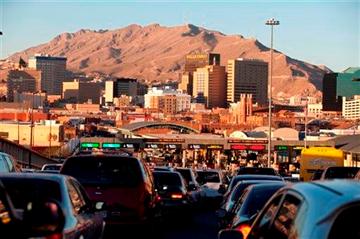
MEXICO CITY (AP) - Looking around a Mexico dotted by Starbucks, Wal-Mart and Krispy Kreme outlets, it's hard to remember the country before the North American Free Trade Agreement, which has dramatically expanded consumer choice and trade since it took effect 20 years ago on Jan. 1.
While it changed the country in some fundamental ways, the treaty never met many of its sweeping promises to close Mexico's wage gap with the United States, boost job growth, fight poverty and protect the environment. Mexico's weak unions and competition from Asia and Central America kept wages down; the tightening of security along the U.S. border closed off Mexico's immigration "escape valve," and environmental provisions in the agreement proved less powerful than those protecting investors.
Mexico took advantage of the accord with the United States and Canada in some areas. The auto, electronics and agriculture sectors grew, and foreign banks moved in, increasing access to credit, but a majority of Mexicans saw little benefit in income. While there is undoubtedly a larger middle class today, Mexico is the only major Latin American country where poverty also has grown in recent years.
According the Economic Commission for Latin America, poverty fell from 48.4 percent in 1990 to 27.9 percent in 2013 for all of Latin America. In Mexico, where it stood at 52.4 percent in 1994, the poverty rate dropped to as low as 42.7 percent in 2006; but by 2012, it had risen again to 51.3 percent.
"About 30 or 40 percent of what they promised (in the trade pact) never came through," said Rodolfo Hurtado Corona, 65, a chauffeur waiting for his boss on a Mexico City street. Still, motioning to the gleaming sport utility vehicle he drives for his boss, he noted that "before, there were only a couple of brands, now you can choose among many."
Economist Alfredo Coutino, director for Latin America at Moody's Analytics, says "the benefits arrived, but perhaps not of the magnitude that had been hoped for." He notes that "if this agreement had not been signed, Mexico would have been in a much worse situation than it has been over the last 20 years."
Before NAFTA, Mexico was a closed, state-dominated economy reeling from debt and the underlying problems of Mexican farms - low productivity on small plots. That had set up a perfect storm of mass unemployment.
The trade accord, globalization and foreign investment did help create jobs, albeit low-paid ones.
At supermarkets, shoppers are now familiar with everything from cranberries to chai and lemons (as opposed to the Mexican lime) that few had tasted before the treaty tore down trade barriers and tariffs between Mexico, Canada and the United States.
Consumer goods and clothing that were trendy among Mexico's wealthy are now available to everyone, with more products and choice, especially among electronics appliances and cars.
Coutino recalls that "before, in Mexico, it was a question of social status to have a pair of imported sneakers, they were very expensive ... now the majority of Mexicans can have these things that were once considered luxuries."
Mexicans remain ambivalent: A recent Universal newspaper/Buendia-Laredo poll showed that while about half would approve the trade pact if it was proposed again today, about 34 percent would reject it. The rest had no opinion. The margin of error was 3.5 percent.
There is no turning back. The three North American countries are pushing to become even more economically integrated. With Mexico's newly passed energy reform allowing private investment in the county's oil sector, they aim to make the continent energy independent as well.
NAFTA is almost forgotten in the latest controversial free-trade effort, the Trans-Pacific Partnership, a negotiation among 12 countries, including NAFTA's three, to open trade between Asia and the Americas.
Opposition to the TPP is reminiscent of the dire predictions when NAFTA was being negotiated in the early 1990s.
At the time, NAFTA opponents predicted millions of U.S. jobs would move south, and labor and farm groups forecast a mass exodus from the Mexican countryside. But as a 2010 Congressional Research Service report said, "Most studies after NAFTA have found that the effects on the Mexican economy tended to be modest at most."
On the plus side, trade between the three countries vastly increased, to about 3.5 times the 1994 levels, though U.S. trade with China and other Asian nations has grown even faster in the last two decades. More foreign automakers have set up plants in Mexico, which now produces about 3 million vehicles per year. Mexico has increased auto-sector jobs by around 50 percent since 1994.
But Mexico's auto jobs are notoriously low-paying, and little progress has been made in closing the wage gap with the U.S. Average manufacturing industry wages in Mexico were about 15 percent of U.S. wages in 1997. By 2012 that figure had risen only to 18 percent. In some sectors, China's wages have actually outstripped Mexico's.
Nor has NAFTA kept all promises made on environmental front.
The North American Development Bank, part of the side agreements to the accord, has spent over $1.33 billion to finance border projects for drinking water, waste water and sewage treatment. But untreated sewage continues to flow and air quality remains low in many border communities.
U.S. exports of spent lead-acid car batteries to Mexico spiked 500 percent between 2004 and 2011. Authorities are only now beginning to consider certification requirements for companies that export batteries for processing to recover the lead.
NAFTA has done a very good job of protecting foreign investors, however. The trade pact set up binding arbitration panels, where investors can bypass the courts with complaints that government regulation unfairly affects their businesses.
The complaints are often against natural resource management or environmental rules.
Mexico and Canada have paid out about $350 million in damages to foreign investors, while the United States hasn't paid any.
"The (arbitration) process is not like the domestic court system, it's not fair and open," said Scott Sinclair of the Canadian Centre for Policy Alternatives.
The U.S. government is pushing to include the same system in the TPP. And agricultural openings, as in NAFTA, are proving controversial; in developing countries, farms are culturally sensitive, big employers and often are the first to suffer in trade pacts.
"They have left us at a disadvantage," said Josefina Rosas, a corn farmer who is trying to introduce better farming techniques to lower the use of costly fertilizers and store-bought hybrid seeds in the Pacific coast town of Azoyu, Guerrero. Still, with all her efforts small farmers often don't make back the costs of planting. "We don't have the conditions to compete," Rosas says.
Copyright 2013 The Associated Press. All rights reserved. This material may not be published, broadcast, rewritten or redistributed.

Tebow time on TV: Ex-QB picked up by ESPN

December 31, 2013


(RNN) – Tim Tebow is back in football, this time from the broadcast booth.
The former Florida quarterback and Heisman winner will join ESPN's forthcoming SEC Network as a college football analyst.
Tebow will contribute to SEC Nation beginning in August 2014, a pregame show that travels to different SEC campuses each week.
He'll make his first ESPN appearance during pregame coverage of the BCS National Championship game on Jan. 6 with spots on College Gameday,SportsCenter and College Football Live.
"While I continue to pursue my dream of playing quarterback in the NFL, this is an amazing opportunity to be a part of the unparalleled passion of college football and the SEC," he wrote on his Facebook page.
ESPN says his role with the network won't prevent him from pursing opportunities in the NFL. 
Tebow was released by the New England Patriots in August. He previously spent one season with the New York Jets and two seasons with the Denver Broncos, leading the team to a playoff victory before being traded. 
Tebow is one of college football's most decorated players, leading the Florida Gators to a national championship in 2008 and winning the Heisman Trophy as a sophomore. He was drafted in the first round by Denver in the 2010 NFL Draft. 
Copyright 2013 Raycom News Network. All rights reserved. 

o'Bummercare: Iowa adds physicians, is still behind national rate

December 31, 2013


DES MOINES (AP) — The Iowa Board of Medicine said that the number of physicians in the state was increasing but that Iowa still had far fewer doctors for its population than the national average.

The board said in a press release Monday that Iowa had 6,414 active physicians in 2012, for a rate of 208.6 physicians per 100,000 people. That compares with a national rate of 260.5 physicians.

Nationally, Iowa ranks 41st in active physicians.

Massachusetts ranked first, with a rate of 421.5 physicians. Mississippi ranked last, with a rate of 180.8 physicians.

The statistics are based on a report by the Association of American Medical Colleges.
Copyright 2013 Associated Press. All rights reserved. This material may not be published, broadcast, rewritten or redistributed.

Border Security Lapse: "Immigrant" punches 7 year old child in the face during argument

December 31, 2013


Photo: 
A man is behind bars after an arrest warrant was issued for punching a 7-year-old girl’s nose, causing swelling and bleeding.
San Benito police were called to the intersection of FM 509 and Russell Lane where a DPS Trooper conducted a traffic stop with Oscar Antonio Gracia Jr.
According to police, Gracia had an active warrant for injury to a child.
A report for the incident was made Nov. 28th where a family member said she had a voicemail on her phone of a man and woman fighting, and a child crying.
The child told the family member that 30-year-old Gracia punched her in the face.
This caused swelling, and the 7-year-old’s nose to bleed.
Authorities arrested Gracia for an active arrest warrant for injury to a child.
He was transported to city jail, and a check on Gracia showed he had 38 local warrants with a total of $9,654.50.
Judge Benjamin Yudesis arraigned the 30-year-old and set a bond of $50,000.


source

Monday, December 30, 2013

New Agenda-driven laws for 2014 include everything from special privileges for illegals to teen drag queens violating your right to privacy

December 30, 2013

Pot, guns and paparazzi: New laws run gamut in US

Photo: Typical "He-she-it"

ALCOHOL AND MARIJUANA
COLORADO, MAINE AND WASHINGTON: Colorado pot stores open Jan. 1 as retailers open their doors to the nation's first legal recreational pot industry. Sales in Washington, which also legalized recreational marijuana, are expected to start later in the year. The laws still fly in the face of federal drug rules, but the federal government has said it's not going to fight to shut down pot shops for now. A law legalizing recreational marijuana went into effect in early December in Portland, Maine, but it's largely symbolic because the state has said it will continue to enforce its own ban.
ILLINOIS: It becomes the 20th state to legalize medical marijuana in a pilot project with some of the strictest standards in the nation. However, it may take more than a year to actually buy marijuana as separate state agencies draft rules that must be approved by a legislative committee.
WISCONSIN: Towns and cities can legalize pedal pubs, multiple-person bicycles that ferry riders to and from taverns. A driver steers while multiple riders sit at a bar mounted behind him, each with his or her own pedal-and-chain assembly.
TRANSGENDER RIGHTS
CALIFORNIA: It becomes the first state to give specific rights to transgender students starting in January unless opponents show they have gathered enough petition signatures to put a referendum before voters seeking to overturn the law. It lets transgender students choose which restroom to use and whether to play on boys' or girls' sports teams. Critics say that violates the privacy of other students.
GUNS
CONNECTICUT: Guns that are considered assault weapons and large-capacity ammunition magazines that haven't been registered with Connecticut authorities will be considered illegal contraband as of Jan. 1. The law was passed in April in response to the massacre that killed 26 people at Newtown's Sandy Hook Elementary School.
NEW YORK: The state's new gun law, passed shortly after the Sandy Hook shooting, already banned high-capacity magazines and the purchase or sale of popular AR-15 semi-automatic rifles. By April 15, it will also require registration of weapons now classified as assault weapons by owners who previously bought them legally.
PAPARAZZI
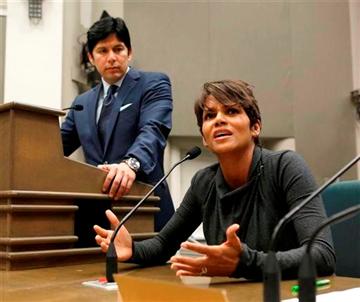
CALIFORNIA: Photographers who harass celebrities and their children face tougher penalties under a law backed by actresses Halle Berry and Jennifer Garner, who testified in favor of it. Berry told lawmakers that her daughter has been intimidated by aggressive photographers who follow them daily. Those who take photos and video of a child without consent and in a harassing manner could face up to a year in county jail and a fine of up to $10,000. They also can be sued for damages and attorney's fees under the new law, which media organizations opposed. Supporters say it also will help protect the children of police officers, judges and others who might be targets because of their parents' occupations.
IMMIGRATION
NEVADA: Immigrants living in the United States without legal permission can apply for driver authorization cards starting Jan. 2. State officials anticipate tens of thousands of people will apply under the program.
MARYLAND: In a program similar to Nevada's, immigrants living in the U.S. illegally will be able to obtain a state driver's license or identification card if they can provide evidence of a filed state income tax return or were claimed as a dependent for each of the preceding two years.
HEALTH COSTS
MAINE: Health care providers will have to provide patients who request it a list of prices of the most common health services and procedures, a law designed to boost transparency around medical costs.
DELAWARE: The state will limit patient copays for "specialty tier" prescription drugs to $150 a month for up to a 30-day supply.
WORKING AND WAGES
OHIO: The minimum wage for untipped employees rises from $7.85 to $7.95 an hour, while tipped employees will go from $3.93 to $3.98 an hour, plus tips.
CALIFORNIA: The minimum wage is being boosted to $9 an hour starting in July, the first of two dollar-an-hour boosts that will push the base minimum wage to $10 by 2016, making it one of the nation's highest minimums. Under another bill, domestic workers will have to be paid time and a half if they work more than nine hours in a day or more than 45 hours in a week; baby sitters are exempt.
Copyright 2013 The Associated Press. All rights reserved. This material may not be published, broadcast, rewritten or redistributed.

Big Brother Update: Report claims NSA intercepts computer deliveries

December 30, 2013

By RAPHAEL SATTER
Associated Press

LONDON (AP) - A German magazine lifted the lid on the operations of the National Security Agency's hacking unit Sunday, reporting that American spies intercept computer deliveries, exploit hardware vulnerabilities, and even hijack Microsoft's internal reporting system to spy on their targets.
Der Spiegel's revelations relate to a division of the NSA known as Tailored Access Operations, or TAO, which is painted as an elite team of hackers specializing in stealing data from the toughest of targets.
Citing internal NSA documents, the magazine said Sunday that TAO's mission was "Getting the ungettable," and quoted an unnamed intelligence official as saying that TAO had gathered "some of the most significant intelligence our country has ever seen."
Der Spiegel said TAO had a catalog of high-tech gadgets for particularly hard-to-crack cases, including computer monitor cables specially modified to record what is being typed across the screen, USB sticks secretly fitted with radio transmitters to broadcast stolen data over the airwaves, and fake base stations intended to intercept mobile phone signals on the go.
The NSA doesn't just rely on James Bond-style spy gear, the magazine said. Some of the attacks described by Der Spiegel exploit weaknesses in the architecture of the Internet to deliver malicious software to specific computers. Others take advantage of weaknesses in hardware or software distributed by some of the world's leading information technology companies, including Cisco Systems, Inc. and China's Huawei Technologies Ltd., the magazine reported.
Der Spiegel cited a 2008 mail order catalog-style list of vulnerabilities that NSA spies could exploit from companies such as Irvine, California-based Western Digital Corp. or Round Rock, Texas-based Dell Inc. The magazine said that suggested the agency was "compromising the technology and products of American companies."
Old-fashioned methods get a mention too. Der Spiegel said that if the NSA tracked a target ordering a new computer or other electronic accessories, TAO could tap its allies in the FBI and the CIA, intercept the hardware in transit, and take it to a secret workshop where it could be discretely fitted with espionage software before being sent on its way.
Intercepting computer equipment in such a way is among the NSA's "most productive operations," and has helped harvest intelligence from around the world, one document cited by Der Spiegel stated.
One of the most striking reported revelations concerned the NSA's alleged ability to spy on Microsoft Corp.'s crash reports, familiar to many users of the Windows operating system as the dialogue box which pops up when a game freezes or a Word document dies. The reporting system is intended to help Microsoft engineers improve their products and fix bugs, but Der Spiegel said the NSA was also sifting through the reports to help spies break into machines running Windows. One NSA document cited by the magazine appeared to poke fun at Microsoft's expense, replacing the software giant's standard error report message with the words: "This information may be intercepted by a foreign sigint (signals intelligence) system to gather detailed information and better exploit your machine."
Microsoft said that information sent by customers about technical issues in such a manner is limited.
"Microsoft does not provide any government with direct or unfettered access to our customer's data," a company representative said in an email Sunday. "We would have significant concerns if the allegations about government actions are true."
Microsoft is one of several U.S. firms that have demanded more transparency from the NSA - and worked to bolster their security - in the wake of the revelations of former intelligence worker Edward Snowden, whose disclosures have ignited an international debate over privacy and surveillance.
Der Spiegel did not explicitly say where its cache NSA documents had come from, although the magazine has previously published a series of stories based on documents leaked by Snowden, and one of Snowden's key contacts - American documentary filmmaker Laura Poitras - was listed among the article's six authors.
No one was immediately available at Der Spiegel to clarify whether Snowden was the source for the latest story.
Another company mentioned by Der Spiegel, though not directly linked with any NSA activity, was Juniper Networks Inc., a computer network equipment maker in Sunnyvale, Calif.
"Juniper Networks recently became aware of, and is currently investigating, alleged security compromises of technology products made by a number of companies, including Juniper," the company said in an email. "We take allegations of this nature very seriously and are working actively to address any possible exploit paths."
If necessary, Juniper said, it would, "work closely with customers to ensure they take any mitigation steps."

Geir Moulson contributed to this report from Berlin. Ryan Nakashima contributed from Los Angeles.
Copyright 2013 The Associated Press. All rights reserved. This material may not be published, broadcast, rewritten or redistributed.

Happy Communist Connecticut New Year: Gun owners rush to register weapons, ammo

December 30, 2013


Deadline_coming_up_to_register_weapons_1997060002_20131226234317
HARTFORD, Conn. (AP) — Connecticut gun owners are rushing to register certain firearms and ammunition that will be considered illegal contraband in the new year.
Under a wide-ranging gun control law passed after the Sandy Hook Elementary School shooting in Newtown, they have until Tuesday to submit the paperwork with the Department of Emergency Services and Public Protection.
State police say they've had people lining up early in the morning to turn in applications to keep high-capacity magazines that hold more than 10 rounds and guns considered assault weapons under the new law.
While the Connecticut Citizens Defense League believes the law is unconstitutional, it has been reminding gun owners of the deadline to make sure they don't become felons on Jan. 1.


Only two and a half more days until I'm a felon! Nice way to ring in the New Year!


source

Stealing Liberty: New laws designed to create probable cause

December 30, 2013

New Illinois laws take effect Jan. 1 including talking while driving


As the new year approaches, more than 200 new laws will take effect in Illinois. One of the biggest adjustments concerns talking on your phone while driving. News 4's Brittany Noble explains what happens if someone is caught breaking the law

source

Illegal alien accused of beating girl for talking to her friend

December 30, 2013


A man was arrested after he allegedly punched and kicked a 17-year-old girl around 40 times, according to an affidavit obtained by Action 4 News.
The incident happened at a San Benito home, where Hector Trejo was arrested on two charges.
Police claim they responded to the home when a girl called authorities after requesting to be escorted in order to pick-up her belongings from the 20-year-old's house.
That is when the bruised girl told authorities she feared for her life because she had been assaulted on multiple occasions, according to court documents.
She allegedly told authorities she was pushed, punched in the face and kicked over her entire body.
The probable cause affidavit says Trejo became upset because the girl was talking outside her house with a male friend.
Authorities said the girl had not filed a report before because she did not know what to do at the time of the assault.
The arresting deputy claims he saw bruises, redness and swelling on the 17-year-old girl.
Trejo was arrested for the assault, and was placed inside a sheriff's vehicle where he racked up another charge.
The 20-year-old man allegedly yelled profanities at the officer, and he was talking on his cell phone while his hands were handcuffed and placed in front of him.
The arresting deputy told the man he would be pepper sprayed if he did not comply, but Trejo began to kick the deputy when he attempted to place Trejo's arms behind his back.
Trejo was pepper sprayed after kicking the deputy multiple times and backup was called to the scene.
He was then placed in a hobble restraint used to restrain suspects who are not compliant.
The man was charged with assault family violence and assault of a public servant.
Trejo was booked at the Cameron County jail and he received $22,500 bond for the charges.