Texas Pee Wee league bars youth
Updated: August 16, 2012, 11:55 AM ET
ESPN.com news services:
A Texas Pee Wee football league has ruled that a 300-pound seventh-grader is too big to play, according to Dallas-Fort Worth television station KDFW Fox 4's website.
Elijah Earnhardt, 12, was informed this past weekend by the Mesquite Pee Wee Football Association that he is not allowed to play in the league, according to the report posted on MyFoxDFW.com.
The league's rule is that any seventh-grader weighing more than 135 pounds is barred and must play in his school's league, according to the report.
But Earnhardt, who is more than 6 feet tall, and his mother, Cindy, told the website that they still are pushing for admission into the league.
"I don't want to play in school right now because it's people that's had experience and I want to get some experience first and then start playing," Elijah Earnhardt told the website. "I just want to play because my teammates are my friends -- I know them. I don't want to go play for somebody else I don't know."
Cindy Earnhardt told MyFoxDFW.com that she plans to protest the league's decision.
"For him to come home and just cry and go to his room and say, 'I give up,' I'm not going to let him give up," she said. "This is his dream. This is what he wants to do. And I'm going to make it happen."
Elijah Earnhardt's coach, Marc Wright, also will protest the decision, according to the report. He cited multiple players within the league who are over the 135-pound limit.
"If they're over 135, they have to wear a symbol on their helmet, which is the X," Wright told the website. "So if they're an X-man they have to play offensive line, defensive line only."
Mesquite Pee Wee Football Association president Ronnie Henderson told the website that he sympathizes with Earnhardt but maintained that they must adhere to the league's rule.
"The coach over there should have known this," Henderson said. "He's been told this. He's been to our meetings. He knows this. I don't know where the misunderstanding was. We hate it. I don't like it for the kid or the parents."
Friday, August 17, 2012


Dehumanization of Babies. Brought to you by a Nationalized Health Care System near you...... So now can we finally murder the defectives with a clear conscience?
Genetically engineering 'ethical' babies is a moral obligation, says Oxford professor
Genetically screening our offspring to make them better people is just 'responsible parenting', claims an eminent Oxford academic.
 Peter Illingworth, an IVF clinician who worked on the study, said the death rate among babies born after single embryo transfer was just a fraction above the rate of 10 per 1000 for all births Photo: Ben Birchall/PA
By Richard Alleyne
3:33PM BST 16 Aug 2012
UK Telegraph:
Professor Julian Savulescu said that creating so-called designer babies could be considered a "moral obligation" as it makes them grow up into "ethically better children".
The expert in practical ethics said that we should actively give parents the choice to screen out personality flaws in their children as it meant they were then less likely to "harm themselves and others".
The academic, who is also editor-in-chief of the Journal of Medical Ethics, made his comments in an article in the latest edition of Reader's Digest.
He explained that we are now in the middle of a genetic revolution and that although screening, for all but a few conditions, remained illegal it should be welcomed.

He said that science is increasingly discovering that genes have a significant influence on personality – with certain genetic markers in embryo suggesting future characteristics.
By screening in and screening out certain genes in the embryos, it should be possible to influence how a child turns out.
In the end, he said that "rational design" would help lead to a better, more intelligent and less violent society in the future.
"Surely trying to ensure that your children have the best, or a good enough, opportunity for a great life is responsible parenting?" wrote Prof Savulescu, the Uehiro Professor in practical ethics.
"So where genetic selection aims to bring out a trait that clearly benefits an individual and society, we should allow parents the choice.
"To do otherwise is to consign those who come after us to the ball and chain of our squeamishness and irrationality.
"Indeed, when it comes to screening out personality flaws, such as potential alcoholism, psychopathy and disposition to violence, you could argue that people have a moral obligation to select ethically better children.
"They are, after all, less likely to harm themselves and others."
"If we have the power to intervene in the nature of our offspring — rather than consigning them to the natural lottery — then we should."
He said that we already routinely screen embryos and foetuses for conditions such as cystic fibrosis and Down’s syndrome and couples can test embryos for inherited bowel and breast cancer genes.
Rational design is just a natural extension of this, he said.
He said that unlike the eugenics movements, which fell out of favour when it was adopted by the Nazis, the system would be voluntary and allow parents to choose the characteristics of their children.
"We’re routinely screening embryos and foetuses for conditions such as cystic fibrosis and Down’s syndrome, and there’s little public outcry," he said.
"What’s more, few people protested at the decisions in the mid- 2000s to allow couples to test embryos for inherited bowel and breast cancer genes, and this pushes us a lot close to creating designer humans."
"Whether we like it or not, the future of humanity is in our hands now. Rather than fearing genetics, we should embrace it. We can do better than chance."
Full article appears in September issue of Reader’s Digest, out 21st August
Genetically screening our offspring to make them better people is just 'responsible parenting', claims an eminent Oxford academic.
By Richard Alleyne
3:33PM BST 16 Aug 2012
UK Telegraph:
Professor Julian Savulescu said that creating so-called designer babies could be considered a "moral obligation" as it makes them grow up into "ethically better children".
The expert in practical ethics said that we should actively give parents the choice to screen out personality flaws in their children as it meant they were then less likely to "harm themselves and others".
The academic, who is also editor-in-chief of the Journal of Medical Ethics, made his comments in an article in the latest edition of Reader's Digest.
He explained that we are now in the middle of a genetic revolution and that although screening, for all but a few conditions, remained illegal it should be welcomed.
He said that science is increasingly discovering that genes have a significant influence on personality – with certain genetic markers in embryo suggesting future characteristics.
By screening in and screening out certain genes in the embryos, it should be possible to influence how a child turns out.
In the end, he said that "rational design" would help lead to a better, more intelligent and less violent society in the future.
"Surely trying to ensure that your children have the best, or a good enough, opportunity for a great life is responsible parenting?" wrote Prof Savulescu, the Uehiro Professor in practical ethics.
"So where genetic selection aims to bring out a trait that clearly benefits an individual and society, we should allow parents the choice.
"To do otherwise is to consign those who come after us to the ball and chain of our squeamishness and irrationality.
"Indeed, when it comes to screening out personality flaws, such as potential alcoholism, psychopathy and disposition to violence, you could argue that people have a moral obligation to select ethically better children.
"They are, after all, less likely to harm themselves and others."
"If we have the power to intervene in the nature of our offspring — rather than consigning them to the natural lottery — then we should."
He said that we already routinely screen embryos and foetuses for conditions such as cystic fibrosis and Down’s syndrome and couples can test embryos for inherited bowel and breast cancer genes.
Rational design is just a natural extension of this, he said.
He said that unlike the eugenics movements, which fell out of favour when it was adopted by the Nazis, the system would be voluntary and allow parents to choose the characteristics of their children.
"We’re routinely screening embryos and foetuses for conditions such as cystic fibrosis and Down’s syndrome, and there’s little public outcry," he said.
"What’s more, few people protested at the decisions in the mid- 2000s to allow couples to test embryos for inherited bowel and breast cancer genes, and this pushes us a lot close to creating designer humans."
"Whether we like it or not, the future of humanity is in our hands now. Rather than fearing genetics, we should embrace it. We can do better than chance."
Full article appears in September issue of Reader’s Digest, out 21st August
Mission Impossible: Managing Joe Biden

8/16/12 4:52 AM EDT
Politico:
BLACKSBURG, Va. — The most emotionally powerful minute of Joe Biden’s two-day swing through rural Virginia almost didn’t happen.
After the vice president paid a solemn visit Wednesday to the memorial honoring the victims of the 2007 Virginia Tech shooting here, reporters asked him about his feelings upon seeing the site.
As Biden began to answer, his aides intervened, yelling “Let’s go,” and trying to shoo reporters back to the motorcade.
Only when it became clear that the vice president wanted to express himself did his entourage stop interrupting to let the candidate speak. When he did, Biden recalled his own family tragedy — losing his young wife and daughter in a 1972 car accident — and paused repeatedly to keep his composure. It was the side of Biden — comfortable with his emotions, and with a gift for human connection — that makes him appealing to many voters. And the moment never would’ve taken place if he had not effectively overruled his would-be handlers. It was a vivid illustration of a phenomenon that pervades the 2012 campaign: The consuming effort by operatives to stamp the spontaneity and life out of modern politics.
Of course, Biden’s two-day swing through small-town Virginia also offered a perfect example of why this brand of control-freak politics has emerged. His unrehearsed comment to a mixed-race audience in Danville that the Republicans and their Wall Street allies want to put people “back in chains” made national news as an example of rhetorical excess.
In an era of Twitter and saturation news coverage — when one stray remark can upend a day’s news cycle and campaigns struggle to shape their preferred message — politicians and their aides are increasingly intent on restricting the media’s interaction with candidates. Barack Obama or Mitt Romney both shun the sort of freewheeling news conferences that used to be a staple of campaigns. And when reporters do seek to engage the candidates, the staff minders attempt to shut it down with ham-handed aggressiveness.
All candidates live with the contradiction — a media culture that implores politicians to seem authentic but is ready to punish them when they really are — but the challenge is especially exquisite in Biden’s case.
He is an irrepressible, garrulous and emotive politician, who’s flourished and fumbled through 40 years in national office by practicing politics the old-fashioned way — from the gut and without much script. He’s as fine a one-on-one politician of any officeholder of his generation, a talent especially prized because it is not a particular gift of Obama’s.
But his penchant for off-message moments regularly sends aides in the West Wing and at Chicago reelection headquarters into orbit.
His staff’s response is effectively to try to save Biden from himself. During the Virginia trip reporters were hustled out of retail campaign stops in diners and other intimate settings, aides tried to edit media pool reports for any potential landmines that could be seized on by Republicans and even hovered at close range to eavesdrop on journalists’ conversations with attendees at Biden rallies.
If obsessive control is the order of the day in both presidential campaigns, it is also clear overzealousness can boomerang.
Take the case of Romney’s overseas trip last month.
When the travelling press corps attempted to ask questions of Romney as he walked to his car in Warsaw last month, a press aide cursed at the journalists. But the overreaction created the exact sort of off-message distraction it was meant to preempt when, later in the morning, the dressing-down found its way into the live reports on network morning news shows back in the states.
The attempt to control Biden, or limit visibility to a natural politician practicing his craft can often seem especially self-defeating.
It’s nearly impossible to imagine Obama convincingly tell a NASACR owner that he’d rather have won Daytona than be vice president, as Biden did in Stuart, Va. Nor is it likely that Romney would, after hearing of the death of a woman’s father, instinctively put his hand on her cheek in sympathy, as Biden did during a stop in Radford.
Yet because of his miscues, Biden’s staff lives on pins and needles. This leads to odd decisions.
For example, on Tuesday the vice president made an off-the-schedule stop at a cafe in the little courthouse town of Stuart . After meeting the owner of a Daytona 500-winning NASCAR team, Biden was asked about Social Security and Medicare by a crowd of a couple dozen seniors. In the aftermath of Paul Ryan joining the GOP ticket, it’s a topic Democrats are delighted to discuss. Yet just as Biden was saying “voucher-ize,” his aides started to not so subtly nudge reporters that it was time to leave.
It might seem like an opportune time to have reporters present to record and amplify his party’s message. But Biden aides sent the traveling press marching out.
What’s perhaps most striking about the Biden staff’s attempts at press management is its effort to influence what goes in the pool reports from his off-schedule stops. Because the entire press corps cannot easily jam in, say, a diner or private home, it is standard practice to have a single designated reporter take notes and share the material with colleagues from other news organizations. These reports are designed entirely for the media, but are distributed by White House staffers. In the case of Obama, as with his predecessors, the reports are simply forwarded without comment by email to a news media distribution list.
But on two occasions during Biden’s Virginia trip, his staff sought to have certain elements in the reports highlighted while reporters drafted them and discussed the contents with the reporters after the summaries had been sent but before they had before sent to the broader media.
Staffers spinning reporters to frame events the best they can is, of course, commonplace in politics. But attempting to intervene in the drafting of accounts that reporters share with one another is all but unheard of and reflects the deep concern Biden’s team has about offering any fodder to the opposition.
Biden officials emphasize how many off-schedule stops he makes on his campaign travels and, noting that that they let reporters hang around his visit to a high school football practice on Monday, point out that they were less restrictive before the “chains” comment.
Yet it’s the response to that remark that is so telling about their leash-tightening instincts when Biden has one of his moments. And the staff restrictiveness seems contagious.
By mid-day Wednesday, following a rally on the Virginia Tech campus, a press aide for the Virginia campaign was eavesdropping as a reporter attempted to interview attendees who had spoken with the vice president on the rope line. The snooping happened with one attendee on one side of the gym and with another on the opposite end.
Yet what the campaign doesn’t seem to realize is that Biden is at his best when he’s not being minded.
“The thing that people really like about Joe Biden is he says what he thinks,” explained former Sen. Ted Kaufman, the Delaware Democrat who once served as Biden’s chief of staff and replaced him in the Senate
After much of the elementary school gym had cleared out following a Tuesday night rally in the southwest Virginia town of Wytheville, the vice president was still working the remaining people left. Most of his staff and much of the press corps had already gone.
A father was trying to take a picture of his two children and wife with Biden, but the vice president had a better idea.
He grabbed the camera, whirled around and handed it to his security man. Then Biden reached out and made sure the dad was in the photo, too.
They were all beaming. But Biden didn’t stop with a photo op, he also bent down and had a word with the two kids.
Afterword, the dad, a Wytheville resident named Mark McHayle, said he found Biden “down to earth” and had his 13-year-old son recite what instructions the vice president had given him.
“Keep the boys away from your sister and make sure your mother is happy,” the adolescent repeated.
It was a genuine moment, pure Biden. But, in his campaign and others, it’s becoming more difficult to witness such authentic exchanges. The artifice of teleprompters and talking points is becoming the rule. It’s not a system that the Joe Biden of 1972, the year he won a Senate seat at age 29, would recognize.
MSNBC’s Touré: Romney Engaging In The ‘Niggerization’ Of Obama
by Andrew Kirell
4:41 pm, August 16th, 2012
Mediaite:
 On Thursday’s edition of MSNBC’s The Cycle the group discussed Republican presidential nominee Mitt Romney‘s assertion that President Obama should “take [his] campaign of division and anger and hate back to Chicago.” Co-host Touré saw what he believes to be explicit racial connotations beneath what Romney was saying, calling it the “niggerization” of the campaign.
“That really bothered me,” he said. “You notice he said anger twice. He’s really trying to use racial coding and access some really deep stereotypes about the angry black man. This is part of the playbook against Obama, the ‘otherization,’ he’s not like us.”
“I know it’s a heavy thing, I don’t say it lightly, but this is ‘niggerization,’” Touré said to the apparent shock of his co-panelists. “You are not one of us, you are like the scary black man who we’ve been trained to fear.”
Naturally this led to a battle between Touré and conservative co-host S.E. Cupp. She took particular issue with the fact that Touré admitted that VP Joe Biden‘s “chains” comments were divisive, but is now calling Romney a “racist” for saying the Obama campaign is “angry.”
“Do you see how dishonest that is?” she asked.
Touré denied calling anyone a racist, which prompted Cupp to say, “Certainly you were implying that Mitt Romney and the base will respond to this dog-whistle, racially-charged coding, and hate Obama, the angry black man?”
“Absolutely,” he replied.
“That’s so irresponsible,” Cupp answered back.
“This is not a revolutionary comment,” Touré later said. “This is a constituency all-white party that rejects the black vote.”
“You have two white guys in Joe Biden and Mitt Romney,” Cupp clarified. “Joe Biden made the overtly racial comment and has a history of making bigoted remarks. Mitt Romney was responding to the comment. Yet he is the one responsible for the whole Republican history of racism in politics?”
“That’s not what Touré is saying,” co-host Krystal Ball interjected. “You’re twisting his words.”
“No, he can speak for himself,” Cupp shot back.
“He’s using the playbook Republicans have been using for decades now,” Touré concluded.
Take a look below, via MSNBC:
4:41 pm, August 16th, 2012
Mediaite:
“That really bothered me,” he said. “You notice he said anger twice. He’s really trying to use racial coding and access some really deep stereotypes about the angry black man. This is part of the playbook against Obama, the ‘otherization,’ he’s not like us.”
“I know it’s a heavy thing, I don’t say it lightly, but this is ‘niggerization,’” Touré said to the apparent shock of his co-panelists. “You are not one of us, you are like the scary black man who we’ve been trained to fear.”
Naturally this led to a battle between Touré and conservative co-host S.E. Cupp. She took particular issue with the fact that Touré admitted that VP Joe Biden‘s “chains” comments were divisive, but is now calling Romney a “racist” for saying the Obama campaign is “angry.”
“Do you see how dishonest that is?” she asked.
Touré denied calling anyone a racist, which prompted Cupp to say, “Certainly you were implying that Mitt Romney and the base will respond to this dog-whistle, racially-charged coding, and hate Obama, the angry black man?”
“Absolutely,” he replied.
“That’s so irresponsible,” Cupp answered back.
“This is not a revolutionary comment,” Touré later said. “This is a constituency all-white party that rejects the black vote.”
“You have two white guys in Joe Biden and Mitt Romney,” Cupp clarified. “Joe Biden made the overtly racial comment and has a history of making bigoted remarks. Mitt Romney was responding to the comment. Yet he is the one responsible for the whole Republican history of racism in politics?”
“That’s not what Touré is saying,” co-host Krystal Ball interjected. “You’re twisting his words.”
“No, he can speak for himself,” Cupp shot back.
“He’s using the playbook Republicans have been using for decades now,” Touré concluded.
Take a look below, via MSNBC:
Left-wing insurer, PROGRESSIVE CAUGHT Denying Claims to OWN Policyholders

Progressive insurance on defense after court case
By MATTHEW BARAKAT, Associated Press
Updated 3:11 a.m., Friday, August 17, 2012
San Francisco Chronicle:
McLEAN, Va. (AP) — The Progressive Corp. insurance group is defending itself against an onslaught of negative publicity after it tried to avoid paying $75,000 to the family of a client killed in a car crash and sought to blame the wreck on her.
The criticism began Monday with a blog post from 33-year-old Matt Fisher of Brooklyn, whose sister Kaitlynn Fisher had Progressive insurance and was killed in a June 2010 car crash in Baltimore. In order to avoid the payout to Kaitlynn Fisher's family, Progressive interjected itself into a lawsuit the Fisher family filed against the other driver.
Last week, a jury found the other driver negligent, despite Progressive's efforts to persuade the jury otherwise.
Matt Fisher said Thursday that the deluge of online support his family has received is gratifying. The backlash against Progressive was strong enough that the Ohio-based company felt compelled to issue a public statement on the case. The statement denied Progressive was representing the driver who was ultimately found negligent. And it prompted even further backlash because it failed to acknowledge that, as a practical matter, Progressive's lawyer was indeed working in court as a third party to combat the Fisher family's claims.
While Fisher didn't quite anticipate the wave of support he received, he was sure others who learned about the case would be as shocked as he was that his sister's own insurance company was going to such lengths to cast the blame on her for the accident.
The Fisher family's lawyer, Annapolis, Md.-based attorney Allen Cohen, said it is technically true that Progressive was not representing the driver who caused the crash. During the trial, though, Progressive's attorney coordinated with the defense and put on witnesses who tried to undermine Kaitlynn Fisher's case, Cohen said.
According to Cohen, it's not necessarily unusual for an insurance company to go into court as an adversary of its client. But Cohen said it was unusual and wrong in this case because he believed that Progressive had ample reason to believe Kaitlynn was the victim, as well as a legal obligation of good faith toward its client. An independent witness at the scene testified that the other driver, Ronald K. Hope III of Baltimore, ran a red light and caused the accident. Even Hope's insurer, Nationwide, also did not dispute that Hope was at fault and paid $25,000, the limit of its coverage, to the Fisher family.
Kaitlynn Fisher's policy covered the actions of an uninsured or underinsured driver that caused injury or death up to $100,000. Because Nationwide had paid $25,000, the Fishers believed they were due $75,000 from Progressive. The company refused to acknowledge that Hope was at fault because if the crash was Kaitlynn Fisher's fault, it would not have to pay the $75,000. The Fisher family then sued, hoping that Progressive would have to make good on its policy if a jury found Hope negligent, Cohen said.
Instead, Progressive chose to believe the testimony of a passenger in Kaitlynn Fisher's car, who suffered brain damage in the accident and was unable to give a statement until two months later. Cohen said that woman testified Kaitlynn Fisher was at fault, but suffered memory problems and other injuries that made her testimony unreliable.
A Progressive spokesman, Jeff Sibel, said the company respects the jury's decision.
"This was a complex case, and we felt at the time we had fulfilled our obligations, and that's why we represented ourselves in court," Sibel said.
As for the online backlash, Sibel said "we're always concerned with what our customers think" and that Progressive is now committed to resolving the situation with the Fisher family.
Cohen said he does not anticipate a problem now collecting the $75,000 payment from Progressive. But he said he is considering filing a complaint with the Maryland insurance commissioner that, if upheld, would require a larger payment.
Matt Fisher, meanwhile, said that while the legal victory is important, it has also been an unnecessary distraction for a grieving family.
"The thing I would like more than anything to be talking about is how much I loved my sister," he said.
Coach: Pelosis in Breach of Contract
Former NFL head coach Dennis Green sues husband of House minority leader for breach of contract
BY: Bill McMorris
August 16, 2012
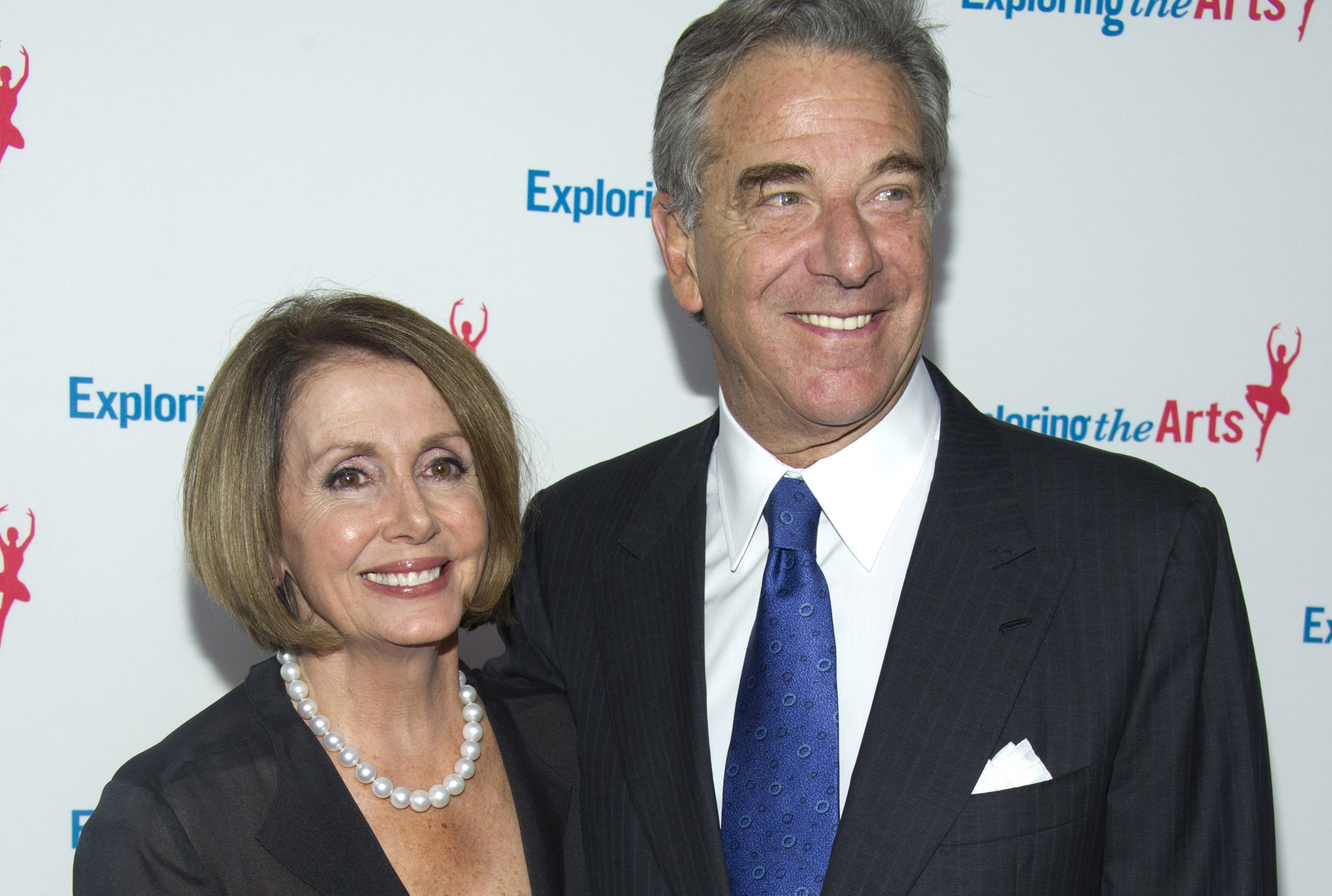 Free Beacon: A new lawsuit brought by a former NFL coach charges the husband of House minority leader Nancy Pelosi with breach of contract.
Dennis Green, former head coach of the Minnesota Vikings and Arizona Cardinals, is accusing Paul Pelosi and business partner Bill Hambrecht of failing to honor the $1.5 million contract he signed to coach Pelosi’s football team, the Sacramento Mountain Lions.
“Since January 2011, defendants … have failed to meet their contractual commitments to compensate Green at the amount required under his contract,” the suit states.
Green uprooted his family from their native San Diego, withdrew his children from school, and purchased a new home in Sacramento after he inked the lucrative deal with Pelosi and Hambrecht.
“[The team] acted willfully, intentionally, and maliciously in order to fraudulently induce Green to move from his home in San Diego,” the suit says. “[He] carried out the responsibilities of his contract in justifiable reliance upon Hambrecht’s promises that he would stand behind the commitments of UFL.”
A league spokesman declined to comment on the suit.
Hambrecht, a multimillionaire financier, founded the United Football League in 2007 to bring professional football to mid-sized cities in California, Oklahoma, Virginia, and Florida. He later invited Pelosi, a real estate developer and fellow San Francisco investor, to become a top owner in the league. Pelosi bought the Sacramento team for $12 million in 2009 and later purchased a $1 million stake in the league.
Pelosi pledged to treat the team like any other investment, swearing to the Washington Post that this was no vanity purchase.
“This is a business, I look at it as a business,” he said. “I’m in this because I think it is a very solid financial investment that is going to be very successful.”
Pelosi, however, did not take any of the steps required of a start-up sports league. There were no major television deals, corporate sponsorships, or signature tournament or playoff games—ingredients considered to be the staples of successful leagues.
The league also needed to bring in more investors for revenue. But its sloppy structure chased away prospective owners, including seasoned football owner Jim Speros.
“I think the football people were reputable, the problem was there was no real structure on how you could enter as an investor,” he said.
Speros, who founded the Canadian Football League’s Baltimore Stallions in the 1990s, sought to bring a UFL team to Virginia Beach in 2010. He quickly realized that it was a poor investment.
“I was looking for full ownership, but they treated the league as a single entity,” he said. “I don’t know if they did or did not pay any bills…but it doesn’t surprise me. It’s very difficult starting a league from scratch.”
Green noticed the missing elements, but received reassurances from the team that Pelosi and his partners had guaranteed its expenses, according to the suit.
“Green was mindful of the fact that the UFL [and Mountain Lions] were not generating sufficient revenues to cover their expenses, including his salary, and relied, reasonably and explicitly, on Hambrecht’s assurances that he and other investors in the UFL would pay for and guarantee the expenses,” it states.
Pelosi failed to pay Green’s bi-weekly $62,500 paycheck in full throughout 2011. He cut checks at varying amounts, dropping as low as $5,000 for weeks at a time, according to the suit. Rather than running the team like a business, Pelosi’s financial disclosure forms indicate he may have sold stocks to pay for the team.
Neither Paul Pelosi nor Rep. Pelosi (D, Calif.) returned calls for comment.
Leader Pelosi’s investment decisions have made her one of the wealthiest members of Congress and in recent years have also invited scrutiny from government watchdogs.
Her net worth grew to $43.4 million in 2011, a 62 percent jump from 2010, based in part on a number of questionable investment decisions. Author Peter Schweizer later revealed that Pelosi invested between $1 and $5 million in Visa as she presided over credit card legislation in Congress.
The UFL stands alone as Pelosi’s only financial stinker. Mr. and Mrs. Pelosi lost between $2 to $10 million on the league in 2011, according to the leader’s most recent financial disclosures. That did not stop dissuade the businessman from doubling down on the investment. He injected between $2.75 and $6.6 million into the league even as he refused to pay Green.
One person with knowledge of the league suspects Pelosi may have accepted heavy losses from the venture for political reasons.
“When people invest in a business where they’re losing money, they do it for a reason: tax deductions, or maybe it’s a pet project,” the source said. “The Pelosis, they’re sensitive to how much money they have. It’s almost like they’re looking to decrease their net worth.”
The couple’s extreme wealth has become a political liability in recent years and invited accusations of hypocrisy from critics.
The couple has refused to hire unions to work in its vineyard and other business interests, even as Pelosi has collected $365,500 in political contributions from labor groups in 2012. She has also railed against bankers despite the fact that her husband’s colleagues are her staunchest allies, contributing $500,000 in 2012, according to the Center for Responsive Politics.
Hambrecht, Pelosi’s UFL partner, is in the latter group. He has contributed $160,000 to Democratic candidates since 2007, including $22,000 to Pelosi and her Super PAC, according to the Center for Responsive Politics.
The mega-donations have helped line her husband’s pockets.
Pelosi’s campaign doled out $100,000 to her husband’s company, Financial Leasing Services Inc., between 1998 and 2008. In 2008, she championed legislation that would bar lawmakers from steering funds to spouses. She also proposed a multi-million dollar earmark to a neighborhood full of her husband’s rental properties in 2007. The four apartment buildings in the area earned the Pelosis more than $3 million per year at the time.
Green’s suit is only the latest example of troubling news for the UFL. The league failed to pay its players, many of whom earned as little as $25,000 per year, at the close of the 2010 season, and has settled separate multi-million lawsuits for failing to pay the Mayo Clinic and NBA owner Mark Cuban for services and investments.
BY: Bill McMorris
August 16, 2012
Dennis Green, former head coach of the Minnesota Vikings and Arizona Cardinals, is accusing Paul Pelosi and business partner Bill Hambrecht of failing to honor the $1.5 million contract he signed to coach Pelosi’s football team, the Sacramento Mountain Lions.
“Since January 2011, defendants … have failed to meet their contractual commitments to compensate Green at the amount required under his contract,” the suit states.
Green uprooted his family from their native San Diego, withdrew his children from school, and purchased a new home in Sacramento after he inked the lucrative deal with Pelosi and Hambrecht.
“[The team] acted willfully, intentionally, and maliciously in order to fraudulently induce Green to move from his home in San Diego,” the suit says. “[He] carried out the responsibilities of his contract in justifiable reliance upon Hambrecht’s promises that he would stand behind the commitments of UFL.”
A league spokesman declined to comment on the suit.
Hambrecht, a multimillionaire financier, founded the United Football League in 2007 to bring professional football to mid-sized cities in California, Oklahoma, Virginia, and Florida. He later invited Pelosi, a real estate developer and fellow San Francisco investor, to become a top owner in the league. Pelosi bought the Sacramento team for $12 million in 2009 and later purchased a $1 million stake in the league.
Pelosi pledged to treat the team like any other investment, swearing to the Washington Post that this was no vanity purchase.
“This is a business, I look at it as a business,” he said. “I’m in this because I think it is a very solid financial investment that is going to be very successful.”
Pelosi, however, did not take any of the steps required of a start-up sports league. There were no major television deals, corporate sponsorships, or signature tournament or playoff games—ingredients considered to be the staples of successful leagues.
The league also needed to bring in more investors for revenue. But its sloppy structure chased away prospective owners, including seasoned football owner Jim Speros.
“I think the football people were reputable, the problem was there was no real structure on how you could enter as an investor,” he said.
Speros, who founded the Canadian Football League’s Baltimore Stallions in the 1990s, sought to bring a UFL team to Virginia Beach in 2010. He quickly realized that it was a poor investment.
“I was looking for full ownership, but they treated the league as a single entity,” he said. “I don’t know if they did or did not pay any bills…but it doesn’t surprise me. It’s very difficult starting a league from scratch.”
Green noticed the missing elements, but received reassurances from the team that Pelosi and his partners had guaranteed its expenses, according to the suit.
“Green was mindful of the fact that the UFL [and Mountain Lions] were not generating sufficient revenues to cover their expenses, including his salary, and relied, reasonably and explicitly, on Hambrecht’s assurances that he and other investors in the UFL would pay for and guarantee the expenses,” it states.
Pelosi failed to pay Green’s bi-weekly $62,500 paycheck in full throughout 2011. He cut checks at varying amounts, dropping as low as $5,000 for weeks at a time, according to the suit. Rather than running the team like a business, Pelosi’s financial disclosure forms indicate he may have sold stocks to pay for the team.
Neither Paul Pelosi nor Rep. Pelosi (D, Calif.) returned calls for comment.
Leader Pelosi’s investment decisions have made her one of the wealthiest members of Congress and in recent years have also invited scrutiny from government watchdogs.
Her net worth grew to $43.4 million in 2011, a 62 percent jump from 2010, based in part on a number of questionable investment decisions. Author Peter Schweizer later revealed that Pelosi invested between $1 and $5 million in Visa as she presided over credit card legislation in Congress.
The UFL stands alone as Pelosi’s only financial stinker. Mr. and Mrs. Pelosi lost between $2 to $10 million on the league in 2011, according to the leader’s most recent financial disclosures. That did not stop dissuade the businessman from doubling down on the investment. He injected between $2.75 and $6.6 million into the league even as he refused to pay Green.
One person with knowledge of the league suspects Pelosi may have accepted heavy losses from the venture for political reasons.
“When people invest in a business where they’re losing money, they do it for a reason: tax deductions, or maybe it’s a pet project,” the source said. “The Pelosis, they’re sensitive to how much money they have. It’s almost like they’re looking to decrease their net worth.”
The couple’s extreme wealth has become a political liability in recent years and invited accusations of hypocrisy from critics.
The couple has refused to hire unions to work in its vineyard and other business interests, even as Pelosi has collected $365,500 in political contributions from labor groups in 2012. She has also railed against bankers despite the fact that her husband’s colleagues are her staunchest allies, contributing $500,000 in 2012, according to the Center for Responsive Politics.
Hambrecht, Pelosi’s UFL partner, is in the latter group. He has contributed $160,000 to Democratic candidates since 2007, including $22,000 to Pelosi and her Super PAC, according to the Center for Responsive Politics.
The mega-donations have helped line her husband’s pockets.
Pelosi’s campaign doled out $100,000 to her husband’s company, Financial Leasing Services Inc., between 1998 and 2008. In 2008, she championed legislation that would bar lawmakers from steering funds to spouses. She also proposed a multi-million dollar earmark to a neighborhood full of her husband’s rental properties in 2007. The four apartment buildings in the area earned the Pelosis more than $3 million per year at the time.
Green’s suit is only the latest example of troubling news for the UFL. The league failed to pay its players, many of whom earned as little as $25,000 per year, at the close of the 2010 season, and has settled separate multi-million lawsuits for failing to pay the Mayo Clinic and NBA owner Mark Cuban for services and investments.
SHOCKER! No one will be charged in MF Global collapse
By Dashiell Bennett
The Atlantic Wire
Aug 16, 2012
YAHOO NEWS:
 Authorities are winding down their criminal investigation of the failed brokarage firm, MF Global, and despite the lack of oversight and the loss of more than $1 billion in customer funds, it now seems unlikely that anyone at the firm will face criminal charges.
The New York Times is reporting this morning that after ten months of investigation by federal prosecutors, sources say there isn't even enough evidence to charge any of the firm's executives in a criminal probe. The company may have failed spectacularly when it came to oversight and risk management, but the losses cannot be chalked up to outright fraud.
The company placed a grossly outsized bet (more than $6 billion worth) on the health of the European debt market last year and when it went south, the firm "borrowed" money from the accounts of its customers to try and salvage its own losses. Most of the blame for those trades fell on its CEO (and ex-New Jersey governor) Jon Corzine, and while his reputation and firm are ruined, it seems he will escape any legal sanction. He could still face massive civil lawsuits or fines from regulators who have a lower standard than a criminal prosecution, but jail isn't in the cards.
Of course, if the company's bankruptcy is the result of incompetence rather than theft that won't make those who were burned by it feel any better. Nor will it help ease the fears of anti-Wall Street types who already believe the financial industry is a wasteland of greed and corruption. Those waiting to see bankers and traders hauled away in handcuffs are going to have to keep waiting a little longer.
The Atlantic Wire
Aug 16, 2012
YAHOO NEWS:
The New York Times is reporting this morning that after ten months of investigation by federal prosecutors, sources say there isn't even enough evidence to charge any of the firm's executives in a criminal probe. The company may have failed spectacularly when it came to oversight and risk management, but the losses cannot be chalked up to outright fraud.
The company placed a grossly outsized bet (more than $6 billion worth) on the health of the European debt market last year and when it went south, the firm "borrowed" money from the accounts of its customers to try and salvage its own losses. Most of the blame for those trades fell on its CEO (and ex-New Jersey governor) Jon Corzine, and while his reputation and firm are ruined, it seems he will escape any legal sanction. He could still face massive civil lawsuits or fines from regulators who have a lower standard than a criminal prosecution, but jail isn't in the cards.
Of course, if the company's bankruptcy is the result of incompetence rather than theft that won't make those who were burned by it feel any better. Nor will it help ease the fears of anti-Wall Street types who already believe the financial industry is a wasteland of greed and corruption. Those waiting to see bankers and traders hauled away in handcuffs are going to have to keep waiting a little longer.
Thursday, August 16, 2012
Lies and Deception: Obama immigration amnesty to include middle school dropouts
Published: 12:24 AM 08/15/2012
By Neil Munro
Daily Caller:
 President Barack Obama responds as he is interrupted while announcing that his administration will stop deporting and begin granting work permits to younger illegal immigrants who came to the U.S. as children and have since led law-abiding lives, Friday, June 15, 2012, during a statement in the Rose Garden of the White House in Washington. (AP Photo/Susan Walsh)
Administration officials confirmed on Tuesday that they have expanded the White House immigration policy for younger illegals to include low-skill immigrants who have not completed middle school or high school.
The shift adds roughly 350,000 low-skill immigrants to the Department of Homeland Security policy, which was initially portrayed as including only 800,000 people under the age of 31 when it was announced by President Barack Obama in a Rose Garden statement on June 15.
The inclusion of middle school dropouts clashes with Obama’s portrayal of the illegal immigrants as skilled workers, scientists and entrepreneurs.
“Imagine you’ve done everything right your entire life — studied hard, worked hard, maybe even graduated at the top of your class — only to suddenly face the threat of deportation,” Obama said on June 15, after criticizing Congress for not passing the DREAM Act.
One reason Congress did not pass the bill is because it is unpopular among voters, especially amid current, high-unemployment rates.
To downplay what conservatives call a de facto amnesty, officials have labeled the policy as a “consideration of deferred action for childhood arrivals.”
The Whtie House policy provides a two-year amnesty from immigration-related law enforcement, plus a work permit. The decision vaults the illegal immigrants ahead of many foreigners who have applied to legally work in the United States.
Many illegals are expected to apply for the program on Wednesday, when government officials begin accepting requests for the two-year stays and work permits.
The expanded amnesty is now expected to cover 1.76 million people, according to an estimate by the pro-amnesty Migration Policy Institute.
“There has not been any internal [federal] estimate about the number of individuals who will request deferred action under this process. … We’re prepared for any volume that may come in,” an administration official said on Tuesday.
The foreign workers will enter the legal job market alongside the 23 million American citizens who are unemployed or underemployed. Current unemployment rates are especially high among younger Latinos and African-Americans. For example, less than half of young African-American men lack full-time jobs.
Controversy over the president’s executive DREAM Act isn’t necessarily a negative for the Obama campaign, because Hispanic voters may feel pressured to rally around other Hispanics and vote for Obama if there is heated public criticism of the policy.
Democrats say the amnesty has boosted support for Obama on the campaign trail among the critical Latino voting bloc. That’s vital for Obama, because his overall approval ratings have fallen amid the stalled economy, high unemployment and record deficits.
When campaigning, Obama usually avoids mentioning his June 15 policy, but has endorsed “immigration reform” in states with a significant Hispanic population.
The expansion to include low-skill immigrants was revealed in official announcements on Tuesday, which provided more details about eligibility.
Immigrants who are enrolled in a course to achieve a General Education Development (GED) will be eligible, United States Citizenship and Immigration Services Director Alejandro Mayorkas said during a Tuesday press conference.
The GED enrollees don’t have to pass the GED to get the residency card and work permit, but will have to show “substantial measurable progress” when they apply for an extension after two years, Mayorkas said.
Immigrants who are enrolled in courses to get a high school certificate, or “educational, literacy or career training programs,” also qualify for the two-years stays and work permits, he said.
Even a “certificate of attendance” at a school will suffice, he said.
Obama portrays young immigrants as educated and productive
While promoting his amnesty, Obama has portrayed the illegal immigrants as educated and productive.
“It makes no sense to expel talented young people … who want to staff our labs, or start new businesses or defend our country,” he said on June 15.
An immigration overhaul is needed, he added, to give “our science and technology sectors certainty that the young people who come here to earn their Ph.D.s won’t be forced to leave and start new businesses in other countries.”
The influx of new immigrants may also depress wages, especially in Latino and African-American communities.
Wages for high school graduates declined 8 percent between 2007 and 2011, according to a March report by the left-of-center Economic Policy Institute.
In contrast, wages for unskilled workers rose by 10 percent between 1995 and 2000, because employers had to bid for workers amid the Internet-boosted economy.
Since then, the influx of legal and illegal immigrants has kept pace with job-creation, leaving employers with a surplus of applicants for available jobs.
By Neil Munro
Daily Caller:
Administration officials confirmed on Tuesday that they have expanded the White House immigration policy for younger illegals to include low-skill immigrants who have not completed middle school or high school.
The shift adds roughly 350,000 low-skill immigrants to the Department of Homeland Security policy, which was initially portrayed as including only 800,000 people under the age of 31 when it was announced by President Barack Obama in a Rose Garden statement on June 15.
The inclusion of middle school dropouts clashes with Obama’s portrayal of the illegal immigrants as skilled workers, scientists and entrepreneurs.
“Imagine you’ve done everything right your entire life — studied hard, worked hard, maybe even graduated at the top of your class — only to suddenly face the threat of deportation,” Obama said on June 15, after criticizing Congress for not passing the DREAM Act.
One reason Congress did not pass the bill is because it is unpopular among voters, especially amid current, high-unemployment rates.
To downplay what conservatives call a de facto amnesty, officials have labeled the policy as a “consideration of deferred action for childhood arrivals.”
The Whtie House policy provides a two-year amnesty from immigration-related law enforcement, plus a work permit. The decision vaults the illegal immigrants ahead of many foreigners who have applied to legally work in the United States.
Many illegals are expected to apply for the program on Wednesday, when government officials begin accepting requests for the two-year stays and work permits.
The expanded amnesty is now expected to cover 1.76 million people, according to an estimate by the pro-amnesty Migration Policy Institute.
“There has not been any internal [federal] estimate about the number of individuals who will request deferred action under this process. … We’re prepared for any volume that may come in,” an administration official said on Tuesday.
The foreign workers will enter the legal job market alongside the 23 million American citizens who are unemployed or underemployed. Current unemployment rates are especially high among younger Latinos and African-Americans. For example, less than half of young African-American men lack full-time jobs.
Controversy over the president’s executive DREAM Act isn’t necessarily a negative for the Obama campaign, because Hispanic voters may feel pressured to rally around other Hispanics and vote for Obama if there is heated public criticism of the policy.
Democrats say the amnesty has boosted support for Obama on the campaign trail among the critical Latino voting bloc. That’s vital for Obama, because his overall approval ratings have fallen amid the stalled economy, high unemployment and record deficits.
When campaigning, Obama usually avoids mentioning his June 15 policy, but has endorsed “immigration reform” in states with a significant Hispanic population.
The expansion to include low-skill immigrants was revealed in official announcements on Tuesday, which provided more details about eligibility.
Immigrants who are enrolled in a course to achieve a General Education Development (GED) will be eligible, United States Citizenship and Immigration Services Director Alejandro Mayorkas said during a Tuesday press conference.
The GED enrollees don’t have to pass the GED to get the residency card and work permit, but will have to show “substantial measurable progress” when they apply for an extension after two years, Mayorkas said.
Immigrants who are enrolled in courses to get a high school certificate, or “educational, literacy or career training programs,” also qualify for the two-years stays and work permits, he said.
Even a “certificate of attendance” at a school will suffice, he said.
Obama portrays young immigrants as educated and productive
While promoting his amnesty, Obama has portrayed the illegal immigrants as educated and productive.
“It makes no sense to expel talented young people … who want to staff our labs, or start new businesses or defend our country,” he said on June 15.
An immigration overhaul is needed, he added, to give “our science and technology sectors certainty that the young people who come here to earn their Ph.D.s won’t be forced to leave and start new businesses in other countries.”
The influx of new immigrants may also depress wages, especially in Latino and African-American communities.
Wages for high school graduates declined 8 percent between 2007 and 2011, according to a March report by the left-of-center Economic Policy Institute.
In contrast, wages for unskilled workers rose by 10 percent between 1995 and 2000, because employers had to bid for workers amid the Internet-boosted economy.
Since then, the influx of legal and illegal immigrants has kept pace with job-creation, leaving employers with a surplus of applicants for available jobs.
Cover Up: House members' VIP loans excluded from subpoena
Updated: 7:44 p.m. Wednesday, Aug. 15, 2012
By LARRY MARGASAK
The Associated Press (WASHINGTON) — A Democratic committee chairman overrode his own subpoena three years ago in an investigation of former subprime mortgage lender Countrywide Financial Corp. to exclude records showing that he, other House members and congressional aides got VIP discounted loans from the company, documents show.
The procedure to keep the names secret was devised by Rep. Edolphus Towns, D-N.Y. In 2003, the 15-term congressman had two loans processed by Countrywide's VIP section, which was established to give discounts to favored borrowers.
The effort at secrecy was reversed when Towns' Republican successor as chairman of the House Oversight and Government Reform Committee, California Rep. Darrell Issa, issued a second subpoena. It yielded Countrywide records identifying four current House members, a former member and five staff aides whose loans went through the VIP unit. Towns was on the list.
Issa, in a statement to The Associated Press on Wednesday, said, "It was a long fight to expose how Countrywide used its VIP program to advance its business and policy goals."
Most of the names had dribbled out to the media by the time Issa issued the committee's final report last month on Countrywide's use of loan discounts to buy influence with government officials. But there was no official confirmation until Issa made his report public.
Towns' effort to keep the loans secret was at odds with statements by Republicans and Democrats alike that full disclosure of lawmakers' financial dealings was the best means for keeping the public aware of congressional perks, unethical conduct and fundraising.
Countrywide had been the nation's largest home loan originator before the housing market collapse. Many of its borrowers were left unable to repay mortgages that, in many cases, required no proof of income or a down payment. The company was purchased in 2008 by Bank of America, which now holds the VIP loan files.
The original Towns subpoena had asked for all files that went through the Countrywide VIP unit and specifically mentioned House members and aides. Bank of America sent a spreadsheet that identified 18,000 files that listed a borrower's employer, but without names to maintain privacy.
The spreadsheet identified several files listing the House or Congress as the employer. Since the vast majority of the employers in the spreadsheet were of no interest to the committee, committee Republicans — then in the minority — and majority Democrats each drew up a separate list of loan files to be turned over by the bank.
The Republican list totaled 3,000 files and included borrowers listing the House as an employer. Towns narrowed the files to about 300 and excluded references to the House. It was Towns' truncated list that went to Bank of America.
Bank of America confirmed in a statement to The Associated Press that it produced the files requested in the truncated list.
"The committee provided the bank with specific instructions and modifications regarding the scope of the subpoena, and the bank followed and fulfilled all instructions and fully complied with the subpoena as modified by the committee," the bank said.
The AP reviewed the original bank spreadsheet of 18,000 and confirmed there were references to the House or Congress. The AP also obtained a copy of the subsequent instructions from Towns to the bank that excluded the House or Congress as an employer.
Some borrowers on the VIP list became known as "Friends of Angelo" because they received discounts on orders from then-Countrywide chief executive Angelo Mozilo.
The foremost benefit of being a Countrywide VIP was access to discounted loans in which borrowers received a reduction in points and fees. Usually between $350 and $400 was waived.
For several months in 2009, Towns refused to issue a subpoena for VIP loan documents to Bank of America, a position that became politically untenable after it was revealed in the media in August that year that he himself had two Countrywide loans.
The Issa committee report confirmed that the VIP section processed a 30-year, $182,972 loan to Towns for a vacation home in Lutz, Fla., and a $194,540, 30-year mortgage for his Brooklyn residence.
Towns still defended his approach when the Oversight Committee met for the first time under Republican control in January 2011. "This is not a super ethics committee and I want to make that very clear," he said at the public meeting.
The Issa report named:
-Towns, who has consistently denied that he received any special treatment from Countrywide.
-Rep. Howard "Buck" McKeon, R-Calif., now chairman of the House Armed Services Committee. A spokeswoman said McKeon was never aware of any Friends of Angelo designation and shares an interest with Issa in determining whether there was any wrongdoing by Countrywide.
-Rep. Elton Gallegly, R-Calif. His spokesman said his Countrywide loan carried an interest rate of 5.75 percent, which was comparable to rates at that time. Gallegly never asked for preferential treatment, the spokesman said.
-Former Rep. Tom Campbell, a California Republican. He said he never received any preference from Countrywide and did not even recall getting a Countrywide loan.
The report also said Rep. Pete Sessions, R-Texas, the current House GOP campaign chairman, had a loan processed by the VIP section. Sessions' spokeswoman said he requested that he not be extended any special benefits or treatment from Countrywide, and Issa's report confirmed the request was granted.
Towns' spokesman said the report does not alter the congressman's assertion that he did not receive any preferential treatment.
As for Towns' actions in 2009, spokesman Charles Lewis said: "He's done talking about it. He said everything he's going to say about it."
Back in October 2009 the Democratic-controlled Oversight Committee's spokeswoman at the time, Jenny Rosenberg, said Towns was the victim of a smear campaign.
She said Towns resisted the subpoena initially because there were other government investigations of Countrywide already under way, and he wanted to focus on investigating companies that received federal bailout money.
Issa on Wednesday rejected any assertion of a smear campaign against Towns.
"This a cautionary tale about how opponents of government accountability use terms like smear, partisan, and unnecessary to attack an investigation when what they really want is to continue a cover up," he said.
Two Democrats publicly broke with Towns on the issue in 2009. One of them, Rep. Mike Quigley of Illinois, said in a recent interview: "A majority of members of the committee wanted disclosure. The committee chairman needed our encouragement to send a subpoena. It looks bad if we redact names."
The second lawmaker, former Rep. Paul Hodes of New Hampshire, said in a recent interview, "I thought we had a mandate to drain the swamp, and I took it seriously."
Two House members said Rep. Chris Van Hollen, D-Md., who is close to Democratic leader Nancy Pelosi, privately conveyed to Towns that it was a bad idea to resist an investigation of member and staff discount loans. The members would not be quoted by name because they said the matter was too politically sensitive.
Only one House member file - that of McKeon - was produced under the Towns subpoena and it was by accident. Instead of listing House of Representatives as his employer on his loan documents, McKeon listed "U.S. government" - which was among the employer categories sought in the Towns request for loan files. That file, however, was sent under the subpoena's instructions to the secretive House Ethics Committee.
Towns' own loan files were not provided under his own subpoena because he listed U.S. Capital (sic) as his employer.
Towns normally would have become the committee's top-ranking Democrat in January 2011 when control of the House switched to Republicans and Issa became the panel's chairman. Instead, the leadership supported Rep. Elijah Cummings of Maryland, who took over the position.
Towns announced in April that he was retiring after 30 years of representing his Brooklyn district.
By LARRY MARGASAK
The Associated Press (WASHINGTON) — A Democratic committee chairman overrode his own subpoena three years ago in an investigation of former subprime mortgage lender Countrywide Financial Corp. to exclude records showing that he, other House members and congressional aides got VIP discounted loans from the company, documents show.
The procedure to keep the names secret was devised by Rep. Edolphus Towns, D-N.Y. In 2003, the 15-term congressman had two loans processed by Countrywide's VIP section, which was established to give discounts to favored borrowers.
The effort at secrecy was reversed when Towns' Republican successor as chairman of the House Oversight and Government Reform Committee, California Rep. Darrell Issa, issued a second subpoena. It yielded Countrywide records identifying four current House members, a former member and five staff aides whose loans went through the VIP unit. Towns was on the list.
Issa, in a statement to The Associated Press on Wednesday, said, "It was a long fight to expose how Countrywide used its VIP program to advance its business and policy goals."
Most of the names had dribbled out to the media by the time Issa issued the committee's final report last month on Countrywide's use of loan discounts to buy influence with government officials. But there was no official confirmation until Issa made his report public.
Towns' effort to keep the loans secret was at odds with statements by Republicans and Democrats alike that full disclosure of lawmakers' financial dealings was the best means for keeping the public aware of congressional perks, unethical conduct and fundraising.
Countrywide had been the nation's largest home loan originator before the housing market collapse. Many of its borrowers were left unable to repay mortgages that, in many cases, required no proof of income or a down payment. The company was purchased in 2008 by Bank of America, which now holds the VIP loan files.
The original Towns subpoena had asked for all files that went through the Countrywide VIP unit and specifically mentioned House members and aides. Bank of America sent a spreadsheet that identified 18,000 files that listed a borrower's employer, but without names to maintain privacy.
The spreadsheet identified several files listing the House or Congress as the employer. Since the vast majority of the employers in the spreadsheet were of no interest to the committee, committee Republicans — then in the minority — and majority Democrats each drew up a separate list of loan files to be turned over by the bank.
The Republican list totaled 3,000 files and included borrowers listing the House as an employer. Towns narrowed the files to about 300 and excluded references to the House. It was Towns' truncated list that went to Bank of America.
Bank of America confirmed in a statement to The Associated Press that it produced the files requested in the truncated list.
"The committee provided the bank with specific instructions and modifications regarding the scope of the subpoena, and the bank followed and fulfilled all instructions and fully complied with the subpoena as modified by the committee," the bank said.
The AP reviewed the original bank spreadsheet of 18,000 and confirmed there were references to the House or Congress. The AP also obtained a copy of the subsequent instructions from Towns to the bank that excluded the House or Congress as an employer.
Some borrowers on the VIP list became known as "Friends of Angelo" because they received discounts on orders from then-Countrywide chief executive Angelo Mozilo.
The foremost benefit of being a Countrywide VIP was access to discounted loans in which borrowers received a reduction in points and fees. Usually between $350 and $400 was waived.
For several months in 2009, Towns refused to issue a subpoena for VIP loan documents to Bank of America, a position that became politically untenable after it was revealed in the media in August that year that he himself had two Countrywide loans.
The Issa committee report confirmed that the VIP section processed a 30-year, $182,972 loan to Towns for a vacation home in Lutz, Fla., and a $194,540, 30-year mortgage for his Brooklyn residence.
Towns still defended his approach when the Oversight Committee met for the first time under Republican control in January 2011. "This is not a super ethics committee and I want to make that very clear," he said at the public meeting.
The Issa report named:
-Towns, who has consistently denied that he received any special treatment from Countrywide.
-Rep. Howard "Buck" McKeon, R-Calif., now chairman of the House Armed Services Committee. A spokeswoman said McKeon was never aware of any Friends of Angelo designation and shares an interest with Issa in determining whether there was any wrongdoing by Countrywide.
-Rep. Elton Gallegly, R-Calif. His spokesman said his Countrywide loan carried an interest rate of 5.75 percent, which was comparable to rates at that time. Gallegly never asked for preferential treatment, the spokesman said.
-Former Rep. Tom Campbell, a California Republican. He said he never received any preference from Countrywide and did not even recall getting a Countrywide loan.
The report also said Rep. Pete Sessions, R-Texas, the current House GOP campaign chairman, had a loan processed by the VIP section. Sessions' spokeswoman said he requested that he not be extended any special benefits or treatment from Countrywide, and Issa's report confirmed the request was granted.
Towns' spokesman said the report does not alter the congressman's assertion that he did not receive any preferential treatment.
As for Towns' actions in 2009, spokesman Charles Lewis said: "He's done talking about it. He said everything he's going to say about it."
Back in October 2009 the Democratic-controlled Oversight Committee's spokeswoman at the time, Jenny Rosenberg, said Towns was the victim of a smear campaign.
She said Towns resisted the subpoena initially because there were other government investigations of Countrywide already under way, and he wanted to focus on investigating companies that received federal bailout money.
Issa on Wednesday rejected any assertion of a smear campaign against Towns.
"This a cautionary tale about how opponents of government accountability use terms like smear, partisan, and unnecessary to attack an investigation when what they really want is to continue a cover up," he said.
Two Democrats publicly broke with Towns on the issue in 2009. One of them, Rep. Mike Quigley of Illinois, said in a recent interview: "A majority of members of the committee wanted disclosure. The committee chairman needed our encouragement to send a subpoena. It looks bad if we redact names."
The second lawmaker, former Rep. Paul Hodes of New Hampshire, said in a recent interview, "I thought we had a mandate to drain the swamp, and I took it seriously."
Two House members said Rep. Chris Van Hollen, D-Md., who is close to Democratic leader Nancy Pelosi, privately conveyed to Towns that it was a bad idea to resist an investigation of member and staff discount loans. The members would not be quoted by name because they said the matter was too politically sensitive.
Only one House member file - that of McKeon - was produced under the Towns subpoena and it was by accident. Instead of listing House of Representatives as his employer on his loan documents, McKeon listed "U.S. government" - which was among the employer categories sought in the Towns request for loan files. That file, however, was sent under the subpoena's instructions to the secretive House Ethics Committee.
Towns' own loan files were not provided under his own subpoena because he listed U.S. Capital (sic) as his employer.
Towns normally would have become the committee's top-ranking Democrat in January 2011 when control of the House switched to Republicans and Issa became the panel's chairman. Instead, the leadership supported Rep. Elijah Cummings of Maryland, who took over the position.
Towns announced in April that he was retiring after 30 years of representing his Brooklyn district.
Biden Mocks Sign Language Interpretor
8/14/12
Breitbart.com:
Vice President Biden in Danville, VA on 8/14: "I have more to say, but I am saying too much already because these guys get me going... and you're gonna have trouble translating all this! The poor lady, she's gonna have tendonitis by the time she finishes this."
Breitbart.com:
Vice President Biden in Danville, VA on 8/14: "I have more to say, but I am saying too much already because these guys get me going... and you're gonna have trouble translating all this! The poor lady, she's gonna have tendonitis by the time she finishes this."
Non-voters prefer Obama, poll finds
By Kim Geiger Tribune Washington Bureau
Posted August 15, 2012 at 10 p.m.
 President Barack Obama is greeted by his supporters at Harold and Ted Alfond Sports Center at Rollins College, in Winter Park, Fla., Thursday, Aug. 2, 2012. (AP Photo/Tampa Bay Times, Willie J. Allen Jr.) TAMPA OUT; CITRUS COUNTY OUT; PORT CHARLOTTE OUT; BROOKSVILLE HERNANDO OUT; USA TODAY OUT; MAGS OUT
Naples News (Washington) - In a race that is expected to come down to a tiny margin of votes in a handful of swing states, more than 80 million eligible Americans will sit out this year’s presidential election.
These potential voters could make all the difference for President Barack Obama - a new survey shows they overwhelmingly support the president over Republican rival Mitt Romney - but they won’t vote for him, even though a majority acknowledge that politics makes a difference in their lives.
A Suffolk University-USA Today survey found that 43 percent of unregistered Americans and 43 percent of registered voters who are unlikely to make it to the polls in November would choose Obama if they were to cast a ballot. Just 14 percent of unregistered Americans and 20 percent of registered but unlikely voters said the same of Romney.
These Americans are not likely to make their voices heard on Election Day because they are paying attention to other things and don’t have faith in the process. Sixty-one percent could not correctly name the current vice president.
Seventy-nine percent think the federal government plays an important role in their lives, but 59 percent say they don’t pay much attention to politics because “nothing ever gets done - it’s a bunch of empty promises,” and 54 percent say they don’t pay much attention because politics “is so corrupt.”
This group of Americans accounts for a huge portion of the potential electorate. Obama and Joe Biden won about 70 million votes in 2008, while John McCain and Sarah Palin won about 60 million votes. Eighty million eligible Americans sat on the sidelines that year - and that number is expected to be higher this time around.
This survey offers mixed news for Obama: Unlike swing state independents who take up the bulk of the campaign’s attention, many of these potential but unlikely voters don’t need convincing to support the president’s agenda.
Getting them to go to the polls, however, is the challenge. Still, Obama has the upper hand.
Of those who said they would support Obama if they did vote, 85 percent said they would be encouraged to register or even cast a ballot if they knew their vote could help swing a close election. Just 70 percent of those who support Romney said they would turn out to help swing the election in his favor.
David Paleologos, director of the Suffolk University Political Research Center in Boston, said the campaigns’ tactics might actually be suppressing votes.
“Ironically, both the Obama and Romney campaigns want to tout likely-voter polls showing their respective candidates leading by wide margins,” Paleologos said. But “if these people think you’re going to win anyway, that’s one more reason in a long list of reasons why they’ll stay home in November.”
The nationwide survey polled 800 adults in live telephone interviews between July 30 and Aug. 8. Fifty-two percent said there was a 50-50 chance they would vote in this year’s election and 44 percent said they were not likely to vote. Four percent were undecided.
Of those who said they are registered to vote but unlikely to do so, 44 percent said they voted for Obama in 2008 and 20 percent said they backed McCain.
The survey has a margin of error of plus or minus 3.47 percent.
© 2012 Naples Daily News. All rights reserved. This material may not be published, broadcast, rewritten or redistributed.
Posted August 15, 2012 at 10 p.m.
Naples News (Washington) - In a race that is expected to come down to a tiny margin of votes in a handful of swing states, more than 80 million eligible Americans will sit out this year’s presidential election.
These potential voters could make all the difference for President Barack Obama - a new survey shows they overwhelmingly support the president over Republican rival Mitt Romney - but they won’t vote for him, even though a majority acknowledge that politics makes a difference in their lives.
A Suffolk University-USA Today survey found that 43 percent of unregistered Americans and 43 percent of registered voters who are unlikely to make it to the polls in November would choose Obama if they were to cast a ballot. Just 14 percent of unregistered Americans and 20 percent of registered but unlikely voters said the same of Romney.
These Americans are not likely to make their voices heard on Election Day because they are paying attention to other things and don’t have faith in the process. Sixty-one percent could not correctly name the current vice president.
Seventy-nine percent think the federal government plays an important role in their lives, but 59 percent say they don’t pay much attention to politics because “nothing ever gets done - it’s a bunch of empty promises,” and 54 percent say they don’t pay much attention because politics “is so corrupt.”
This group of Americans accounts for a huge portion of the potential electorate. Obama and Joe Biden won about 70 million votes in 2008, while John McCain and Sarah Palin won about 60 million votes. Eighty million eligible Americans sat on the sidelines that year - and that number is expected to be higher this time around.
This survey offers mixed news for Obama: Unlike swing state independents who take up the bulk of the campaign’s attention, many of these potential but unlikely voters don’t need convincing to support the president’s agenda.
Getting them to go to the polls, however, is the challenge. Still, Obama has the upper hand.
Of those who said they would support Obama if they did vote, 85 percent said they would be encouraged to register or even cast a ballot if they knew their vote could help swing a close election. Just 70 percent of those who support Romney said they would turn out to help swing the election in his favor.
David Paleologos, director of the Suffolk University Political Research Center in Boston, said the campaigns’ tactics might actually be suppressing votes.
“Ironically, both the Obama and Romney campaigns want to tout likely-voter polls showing their respective candidates leading by wide margins,” Paleologos said. But “if these people think you’re going to win anyway, that’s one more reason in a long list of reasons why they’ll stay home in November.”
The nationwide survey polled 800 adults in live telephone interviews between July 30 and Aug. 8. Fifty-two percent said there was a 50-50 chance they would vote in this year’s election and 44 percent said they were not likely to vote. Four percent were undecided.
Of those who said they are registered to vote but unlikely to do so, 44 percent said they voted for Obama in 2008 and 20 percent said they backed McCain.
The survey has a margin of error of plus or minus 3.47 percent.
© 2012 Naples Daily News. All rights reserved. This material may not be published, broadcast, rewritten or redistributed.
Obama: I Don't Think Anyone Would Suggest I've Tried To Divide The Country
Posted on August 15, 2012
Real Clear Politics:
"We're going around the country, talking about, ‘How do we put people back to work? How do we improve our schools? How do we make sure that we're producing American energy? How do we lower our debt in a responsible way?' And I don't think you or anybody who's been watching the campaign would say that in any way we have tried to divide the country. We've always tried to bring the country together," President Obama said in an interview with Entertainment Tonight.
VIDEO HERE>>
Real Clear Politics:
"We're going around the country, talking about, ‘How do we put people back to work? How do we improve our schools? How do we make sure that we're producing American energy? How do we lower our debt in a responsible way?' And I don't think you or anybody who's been watching the campaign would say that in any way we have tried to divide the country. We've always tried to bring the country together," President Obama said in an interview with Entertainment Tonight.
VIDEO HERE>>
Rest stop incident involving Democratic Minn. lawmaker investigated
Article by: Associated Press
Updated: August 15, 2012 - 5:07 PM
DULUTH, Minn. - Authorities are looking into an incident at an interstate rest stop in Duluth that involves a state representative.
State Patrol Lt. Eric Roeske says a witness approached a trooper at Thompson Hill rest area off Interstate 35 about 11 p.m. on July 22 and told the officer about some "suspicious activity." Roeske says the trooper had contact with Rep. Kerry Gauthier and turned the matter over to Duluth police because it was a "non-traffic" incident.
Duluth police said in a statement the incident is still being actively investigated and released no further details. Gauthier, a Democrat, did not immediately return a call from The Associated Press seeking comment. But he earlier told the Duluth News Tribune ( http://tinyurl.com/9xyjlj4) that the matter is private and he doesn't plan to discuss it.
___
Information from: Duluth News Tribune, http://www.duluthsuperior.com
Updated: August 15, 2012 - 5:07 PM
DULUTH, Minn. - Authorities are looking into an incident at an interstate rest stop in Duluth that involves a state representative.
State Patrol Lt. Eric Roeske says a witness approached a trooper at Thompson Hill rest area off Interstate 35 about 11 p.m. on July 22 and told the officer about some "suspicious activity." Roeske says the trooper had contact with Rep. Kerry Gauthier and turned the matter over to Duluth police because it was a "non-traffic" incident.
Duluth police said in a statement the incident is still being actively investigated and released no further details. Gauthier, a Democrat, did not immediately return a call from The Associated Press seeking comment. But he earlier told the Duluth News Tribune ( http://tinyurl.com/9xyjlj4) that the matter is private and he doesn't plan to discuss it.
___
Information from: Duluth News Tribune, http://www.duluthsuperior.com
Allegations of lewd conduct at highest levels of ICE force leave of absence by chief of staff
posted at 11:21 am on August 15, 2012
by Ed Morrissey
Hot Air:
It started with a lawsuit by an angry ICE director who claimed that Janet Napolitano’s personal relationship with Dora Shriro was the basis of a promotion to “special advisor’ that came at his expense, and who then began to be isolated by Napolitano in retaliation for his complaints. Now two more ICE employees have come forward to allege sexual harassment and lewd conduct by a senior member of Napolitano’s ICE staff — and that has resulted in chief of staff Suzanne Barr’s leave of absence:
The top Homeland Security official accused of cultivating a “frat-house”-style work environment has “voluntarily placed herself on leave” amid an internal review, the department told FoxNews.com late Tuesday evening — just hours after FoxNews.com contacted the agency about new allegations against her.
The official, Suzanne Barr, is chief of staff for Immigration and Customs Enforcement.
Two more ICE employees came forward this week to complain about “lewd” conduct inside the agency, submitting sworn affidavits that depict graphic comments made by two top officials working under DHS Secretary Janet Napolitano.
The suit by James Hayes, former director of ICE Detention and Removal Operations before Napolitano’s appointment in 2009, had also named Barr as an antagonist and harasser:
On one occasion, Barr called a colleague in his hotel room and screamed using sexually explicit language, telling him she ‘wanted his c*** in the back of [her] throat’.
Hayes claims he ‘felt that he was being targeted because of his gender’ and witnessed Barr repeatedly picking on men.
She ‘created a frat-house type atmosphere that is targeted to humiliate and intimidate male employees’, according to court papers.
In 2009 she ‘removed the entire contents of the offices of three male employees, including nameplates, computers and telephones, to the men’s bathroom at ICE headquarters’.
The new affidavits contain further allegations of sexual harassment:
In the newly emerging affidavits, one of the employees claimed that in October 2009, while in a discussion about Halloween plans, the individual witnessed Barr turn to a senior ICE employee and say: “You a sexy” (expletive deleted).
“She then looked at his crotch and asked, ‘How long is it anyway?’” according to the affidavit.
“Several employees laughed nervously,” the affidavit said. The names of the workers making the claims have been redacted.
Until now, the Department of Homeland Security has insisted that Hayes’ allegations were “unfounded.” Shriro has already left ICE and now works in the New York City Department of Correction, Fox reports. Neither Shriro or Barr are named as co-defendants in the suit, but both can be certain that they will end up being deposed at the very least by attorneys for both sides. This looks like an ugly affair already, and we may just be seeing the tip of the iceberg. With Barr on leave, more ICE employees may feel encouraged to come forward.
by Ed Morrissey
Hot Air:
It started with a lawsuit by an angry ICE director who claimed that Janet Napolitano’s personal relationship with Dora Shriro was the basis of a promotion to “special advisor’ that came at his expense, and who then began to be isolated by Napolitano in retaliation for his complaints. Now two more ICE employees have come forward to allege sexual harassment and lewd conduct by a senior member of Napolitano’s ICE staff — and that has resulted in chief of staff Suzanne Barr’s leave of absence:
The top Homeland Security official accused of cultivating a “frat-house”-style work environment has “voluntarily placed herself on leave” amid an internal review, the department told FoxNews.com late Tuesday evening — just hours after FoxNews.com contacted the agency about new allegations against her.
The official, Suzanne Barr, is chief of staff for Immigration and Customs Enforcement.
Two more ICE employees came forward this week to complain about “lewd” conduct inside the agency, submitting sworn affidavits that depict graphic comments made by two top officials working under DHS Secretary Janet Napolitano.
The suit by James Hayes, former director of ICE Detention and Removal Operations before Napolitano’s appointment in 2009, had also named Barr as an antagonist and harasser:
On one occasion, Barr called a colleague in his hotel room and screamed using sexually explicit language, telling him she ‘wanted his c*** in the back of [her] throat’.
Hayes claims he ‘felt that he was being targeted because of his gender’ and witnessed Barr repeatedly picking on men.
She ‘created a frat-house type atmosphere that is targeted to humiliate and intimidate male employees’, according to court papers.
In 2009 she ‘removed the entire contents of the offices of three male employees, including nameplates, computers and telephones, to the men’s bathroom at ICE headquarters’.
The new affidavits contain further allegations of sexual harassment:
In the newly emerging affidavits, one of the employees claimed that in October 2009, while in a discussion about Halloween plans, the individual witnessed Barr turn to a senior ICE employee and say: “You a sexy” (expletive deleted).
“She then looked at his crotch and asked, ‘How long is it anyway?’” according to the affidavit.
“Several employees laughed nervously,” the affidavit said. The names of the workers making the claims have been redacted.
Until now, the Department of Homeland Security has insisted that Hayes’ allegations were “unfounded.” Shriro has already left ICE and now works in the New York City Department of Correction, Fox reports. Neither Shriro or Barr are named as co-defendants in the suit, but both can be certain that they will end up being deposed at the very least by attorneys for both sides. This looks like an ugly affair already, and we may just be seeing the tip of the iceberg. With Barr on leave, more ICE employees may feel encouraged to come forward.
The Importance of Congress’s All-Time Low 10% Approval Rating
Posted on August 14, 2012
Principles and Policy
As we move closer to November, Congress definitely isn’t growing any more popular. Gallup’s latest nationwide poll reveals that just 10% of Americans actually approve of the job that the 112th Congress is doing. That’s the lowest percentage in the history of Gallup polling on the subject. This is actually the second time Congress sunk that low just this year, as it also hit that mark in February.
No doubt, this new poll provides fresh ammunition for critics of the current Congress. While those critics range across the ideological and political spectrum, the loudest among them by far are Democrats. For whatever reason, the media has placed most of the blame for Congress’s low approval ratings on tea partiers and House Republicans, while Senate Democrats remain largely unscathed.
With Congressman Paul Ryan (R-WI) as Mitt Romney’s new vice presidential nominee, leftists particularly want to tie the deeply unpopular Congress around the neck of the Romney campaign. Will it work? Only time will tell, but right now I want to consider the importance of these polling numbers.
First, we have to remember that Congress is almost never popular. Looking at the Gallup polling data from 1974 to the present, the highest approval rating was 84%. That rating came in October of 2001, and the previous rating was 42%. Obviously, the sudden doubling of Congress’s approval rating resulted from a rally-’round-the-flag effect due to the 9/11 terrorist attacks. Congress’s approval rating typically hovered between 20% and 40%, except for a brief period from the late 1990s through the early 2000s in which the rating fluctuated between 40% and 60%.
The 112th Congress is obviously amongst the least popular since Gallup began its polling, but there are sensible explanations for that. First, the economy still isn’t doing well. Unemployment stubbornly remains above 8%. The 111th Congress dealt with a similar economic situation, so what did its approval ratings look like?
They were a little bit better, but they certainly weren’t great. By the end of their term, their approval rating sat at an abysmal 13%, which is well within the margin of error for the new Gallup poll on the current Congress. Let me remind you that Democrats held large majorities in both chambers during the 111th Congress. Furthermore, it’s reasonable to assume that if economic problems drag on, approval ratings will continue to drop as people grow more and more frustrated.
Weak economic growth and high unemployment are obvious contributors to low approval ratings, but what about the divided control of Congress? I consider this an important cause for the poor ratings, but it’s difficult to find empirical evidence to support this assertion for a few reasons.
Since the Gallup polling began in 1974, there have only been four terms featuring divided Congresses. Unfortunately, I believe that none of them provide a useful comparison to the current Congress. The 107th Congress (2001-2002) actually didn’t even begin as a split Congress. Initially, Republicans held a majority in the House, and Vice President Dick Cheney could cast a tiebreaking 51st vote in the Senate, which was split 50/50.
However, the defection of Senator Jim Jeffords (R-VT) to the Democratic caucus gave control of that chamber to the Democrats, creating a split Congress. Furthermore, while there was a very brief recession in 2001, the aforementioned 9/11 terrorist attacks led to an enormous surge of support for Congress.
The 97th, 98th, and 99th Congresses (1981-1986) also had divided control. In all three terms, a Republican Senate majority battled with a Democratic House majority. Why don’t I think that these three terms of Congress are helpful in examining the current Congress?
Two reasons. One, Gallup barely took any polls during those six years. In fact, they only took four. In about a year and a half, Gallup has taken nineteen polls of this Congress’s approval ratings. To roughly extrapolate for six years of polling, that would be seventy-eight polls. So, it’s difficult for me to trust a comparison using just four scattered polls.
Also, even if we were to take those four polls at face value, they were made in the context of a better economy. Yes, there was another short (and admittedly severe) recession during the 97th Congress, but its context doesn’t match that of the 112th Congress. By the time that the 112th Congress took office, the United States had been mired in an economic crisis for years, and people were losing hope. The 1981-1982 recession began and ended during the 97th Congress.
More importantly, Americans had just made it through the economic difficulties and stagflation of the 1970s. Now, Americans are comparing their financial struggles to the tremendous economic growth they experienced, almost without fail, from the mid-1980s through the mid-to-late 2000s. It would make sense for present-day Americans to hold the economy’s performance (and by extension, Congress) to a much higher standard.
Due to these reasons, I don’t believe that the Gallup polling data on the other four divided Congresses is useful in examining the polling data on the 112th Congress. So, why do I think that the current divided control of Congress is a major cause for public dissatisfaction? Honestly, because it makes sense.
Think about it: When your political party is in control of both chambers of Congress, it can be a little uncomfortable to say that you don’t approve of the job they’re doing. You might do so anyway, but you’ll be admitting that you made a mistake in previously supporting them. Most people are loathe to do that. So, when one party controls both chambers, there’s a natural base of support for Congress which doesn’t exist for a split Congress.
Still, during an economic boom, independents and members of the opposition party may acknowledge that the current Congress isn’t doing such a bad job. For example, regardless of your party, most Americans would say that Congress and the economy were doing fine during much of the 1990s. In the midst of a recession and high unemployment, however, people aren’t so forgiving. Looking for someone to blame, they’ll focus on the people in power, especially if those people are in the other party.
This is exacerbated by a divided Congress. During a recession, most Americans want the government to do something. I don’t necessarily agree with this tendency (particularly if the “something” is Keynesian in nature), but it’s there nonetheless. With split control of Congress, it’s exponentially more difficult for that Congress to appease Americans by doing something. So, a divided Congress has no natural base of support among the people, nor is it well-suited to respond to an economic crisis.
The 112th Congress clearly shouldn’t be celebrating about their approval rating, but I will say that they’re uniquely positioned to receive these low ratings. A terrible economic recovery, persistently high unemployment, and divided control of Congress are not a recipe for wild popularity.
With this new Gallup poll, the media and the left will try to pin the blame squarely on the Tea Party, House Republicans, Paul Ryan, and now Mitt Romney. They’ll call Congress “dysfunctional and hyper-partisan,” and they’ll insist that this Congress is somehow worse than any other.
Don’t buy it.
Principles and Policy
As we move closer to November, Congress definitely isn’t growing any more popular. Gallup’s latest nationwide poll reveals that just 10% of Americans actually approve of the job that the 112th Congress is doing. That’s the lowest percentage in the history of Gallup polling on the subject. This is actually the second time Congress sunk that low just this year, as it also hit that mark in February.
No doubt, this new poll provides fresh ammunition for critics of the current Congress. While those critics range across the ideological and political spectrum, the loudest among them by far are Democrats. For whatever reason, the media has placed most of the blame for Congress’s low approval ratings on tea partiers and House Republicans, while Senate Democrats remain largely unscathed.
With Congressman Paul Ryan (R-WI) as Mitt Romney’s new vice presidential nominee, leftists particularly want to tie the deeply unpopular Congress around the neck of the Romney campaign. Will it work? Only time will tell, but right now I want to consider the importance of these polling numbers.
First, we have to remember that Congress is almost never popular. Looking at the Gallup polling data from 1974 to the present, the highest approval rating was 84%. That rating came in October of 2001, and the previous rating was 42%. Obviously, the sudden doubling of Congress’s approval rating resulted from a rally-’round-the-flag effect due to the 9/11 terrorist attacks. Congress’s approval rating typically hovered between 20% and 40%, except for a brief period from the late 1990s through the early 2000s in which the rating fluctuated between 40% and 60%.
The 112th Congress is obviously amongst the least popular since Gallup began its polling, but there are sensible explanations for that. First, the economy still isn’t doing well. Unemployment stubbornly remains above 8%. The 111th Congress dealt with a similar economic situation, so what did its approval ratings look like?
They were a little bit better, but they certainly weren’t great. By the end of their term, their approval rating sat at an abysmal 13%, which is well within the margin of error for the new Gallup poll on the current Congress. Let me remind you that Democrats held large majorities in both chambers during the 111th Congress. Furthermore, it’s reasonable to assume that if economic problems drag on, approval ratings will continue to drop as people grow more and more frustrated.
Weak economic growth and high unemployment are obvious contributors to low approval ratings, but what about the divided control of Congress? I consider this an important cause for the poor ratings, but it’s difficult to find empirical evidence to support this assertion for a few reasons.
Since the Gallup polling began in 1974, there have only been four terms featuring divided Congresses. Unfortunately, I believe that none of them provide a useful comparison to the current Congress. The 107th Congress (2001-2002) actually didn’t even begin as a split Congress. Initially, Republicans held a majority in the House, and Vice President Dick Cheney could cast a tiebreaking 51st vote in the Senate, which was split 50/50.
However, the defection of Senator Jim Jeffords (R-VT) to the Democratic caucus gave control of that chamber to the Democrats, creating a split Congress. Furthermore, while there was a very brief recession in 2001, the aforementioned 9/11 terrorist attacks led to an enormous surge of support for Congress.
The 97th, 98th, and 99th Congresses (1981-1986) also had divided control. In all three terms, a Republican Senate majority battled with a Democratic House majority. Why don’t I think that these three terms of Congress are helpful in examining the current Congress?
Two reasons. One, Gallup barely took any polls during those six years. In fact, they only took four. In about a year and a half, Gallup has taken nineteen polls of this Congress’s approval ratings. To roughly extrapolate for six years of polling, that would be seventy-eight polls. So, it’s difficult for me to trust a comparison using just four scattered polls.
Also, even if we were to take those four polls at face value, they were made in the context of a better economy. Yes, there was another short (and admittedly severe) recession during the 97th Congress, but its context doesn’t match that of the 112th Congress. By the time that the 112th Congress took office, the United States had been mired in an economic crisis for years, and people were losing hope. The 1981-1982 recession began and ended during the 97th Congress.
More importantly, Americans had just made it through the economic difficulties and stagflation of the 1970s. Now, Americans are comparing their financial struggles to the tremendous economic growth they experienced, almost without fail, from the mid-1980s through the mid-to-late 2000s. It would make sense for present-day Americans to hold the economy’s performance (and by extension, Congress) to a much higher standard.
Due to these reasons, I don’t believe that the Gallup polling data on the other four divided Congresses is useful in examining the polling data on the 112th Congress. So, why do I think that the current divided control of Congress is a major cause for public dissatisfaction? Honestly, because it makes sense.
Think about it: When your political party is in control of both chambers of Congress, it can be a little uncomfortable to say that you don’t approve of the job they’re doing. You might do so anyway, but you’ll be admitting that you made a mistake in previously supporting them. Most people are loathe to do that. So, when one party controls both chambers, there’s a natural base of support for Congress which doesn’t exist for a split Congress.
Still, during an economic boom, independents and members of the opposition party may acknowledge that the current Congress isn’t doing such a bad job. For example, regardless of your party, most Americans would say that Congress and the economy were doing fine during much of the 1990s. In the midst of a recession and high unemployment, however, people aren’t so forgiving. Looking for someone to blame, they’ll focus on the people in power, especially if those people are in the other party.
This is exacerbated by a divided Congress. During a recession, most Americans want the government to do something. I don’t necessarily agree with this tendency (particularly if the “something” is Keynesian in nature), but it’s there nonetheless. With split control of Congress, it’s exponentially more difficult for that Congress to appease Americans by doing something. So, a divided Congress has no natural base of support among the people, nor is it well-suited to respond to an economic crisis.
The 112th Congress clearly shouldn’t be celebrating about their approval rating, but I will say that they’re uniquely positioned to receive these low ratings. A terrible economic recovery, persistently high unemployment, and divided control of Congress are not a recipe for wild popularity.
With this new Gallup poll, the media and the left will try to pin the blame squarely on the Tea Party, House Republicans, Paul Ryan, and now Mitt Romney. They’ll call Congress “dysfunctional and hyper-partisan,” and they’ll insist that this Congress is somehow worse than any other.
Don’t buy it.
Morsi 'to Make Changes in Camp David Accords'
Egyptian strongman intends to change agreement to enable Egypt to achieve "full sovereignty in Sinai."
By Gil Ronen
First Publish: 8/14/2012, 3:36 PM
 Egyptian President Mohamed Morsi will discuss, in coming days, making changes in the Camp David Accord signed with Israel. The changes will allow Egypt "to implement its full sovereignty over the Sinai Peninsula."
Morsi's advisor told an Egyptian newspaper, Al Masri al Youm, that despite the fact that Al Masri dismissed the entire top echelon of Egypt's security mechanism, there is no bad blood between the Military Council and the elected president.
The decision regarding whom to appoint as the new Defense Minister and Chief of Staff was taken by the Morsi, the advisor said, without the intervention of the Military Council.
Morsi has appointed Abdul-Fatah al-Sessi as Defense Minister and Lieutenant-General Sidki Sayed Ahmed as Army Chief of Staff.
By Gil Ronen
First Publish: 8/14/2012, 3:36 PM
Morsi's advisor told an Egyptian newspaper, Al Masri al Youm, that despite the fact that Al Masri dismissed the entire top echelon of Egypt's security mechanism, there is no bad blood between the Military Council and the elected president.
The decision regarding whom to appoint as the new Defense Minister and Chief of Staff was taken by the Morsi, the advisor said, without the intervention of the Military Council.
Morsi has appointed Abdul-Fatah al-Sessi as Defense Minister and Lieutenant-General Sidki Sayed Ahmed as Army Chief of Staff.
Muslim group blasts judge over "sea monster" comparison
By Dan Whitcomb
Aug. 15, 2012
LOS ANGELES (Reuters) - A Muslim rights group criticized a federal judge on Wednesday, complaining he had compared the civil liberties of Muslim Americans to a "hideous sea monster" while tossing out a lawsuit over the infiltration of California mosques by an FBI informant.
U.S. District Judge Cormac Carney dismissed the lawsuit on Tuesday, which charged that the undercover FBI informant had violated civil liberties of U.S. Muslims by spying on them, ruling that allowing the case to proceed could risk disclosure of government secrets.
In his 36-page order, Carney invoked the fictional Greek hero Odysseus, who was forced to sail his ship between a six-headed sea monster and a dangerous whirlpool during an epic voyage home from the Trojan War.
"Odysseus opted to pass by the monster and risk a few of his individual sailors, rather than hazard the loss of his entire ship to the sucking whirlpool," Carney wrote. "Similarly, the proper application of the state secrets privilege may unfortunately mean the sacrifice of individual liberties for the sake of national security."
Carney allowed the case to go forward only against five current or former agents named as individual defendants, who the plaintiffs claim violated the Foreign Intelligence Surveillance Act. Plaintiffs attorneys have said they will appeal.
"Our civil liberties are not a hideous sea monster, but they are instead the most stalwart defense against the real threats of tyranny and oppression," Ameena Mirza Qazi, deputy executive director for the Council on American-Islamic Relations (CAIR), said in a written statement.
The lawsuit, jointly filed by CAIR and the American Civil Liberties Union last year in U.S. District Court in Santa Ana, said the FBI sent undercover informant Craig Monteilh into Orange County mosques to collect personal information on hundreds, or possibly thousands, of Muslims.
According to the suit, Monteilh took hundreds of hours of surreptitious video and audio recordings of religious lectures, classes, cultural events and other meetings in 2006 and 2007 as part of a counterterrorism investigation, known as "Operation Flex," that did not produce a single conviction.
"It is deeply troubling that the prisoners at Guantanamo Bay have more access to judicial review than U.S. citizens," plaintiffs attorney Reem Salahi said. "Where plaintiffs and the informant himself describe act after act of illegal government surveillance, the government should not be allowed to skirt liability by using its wild card -- state secrets."
The FBI and U.S. Department of Justice declined to comment on Wednesday. The FBI has acknowledged in court documents that Monteilh was used as a confidential informant during the operation but denies any wrongdoing, saying it took reasonable measures to investigate credible evidence of possible terrorist activity.
Carney wrote in his ruling that he did not reach the decision lightly and conducted a careful review of classified government filings with "a skeptical eye" before ruling.
(Reporting by Dan Whitcomb; Editing by Cynthia Johnston and M.D. Golan)
Aug. 15, 2012
LOS ANGELES (Reuters) - A Muslim rights group criticized a federal judge on Wednesday, complaining he had compared the civil liberties of Muslim Americans to a "hideous sea monster" while tossing out a lawsuit over the infiltration of California mosques by an FBI informant.
U.S. District Judge Cormac Carney dismissed the lawsuit on Tuesday, which charged that the undercover FBI informant had violated civil liberties of U.S. Muslims by spying on them, ruling that allowing the case to proceed could risk disclosure of government secrets.
In his 36-page order, Carney invoked the fictional Greek hero Odysseus, who was forced to sail his ship between a six-headed sea monster and a dangerous whirlpool during an epic voyage home from the Trojan War.
"Odysseus opted to pass by the monster and risk a few of his individual sailors, rather than hazard the loss of his entire ship to the sucking whirlpool," Carney wrote. "Similarly, the proper application of the state secrets privilege may unfortunately mean the sacrifice of individual liberties for the sake of national security."
Carney allowed the case to go forward only against five current or former agents named as individual defendants, who the plaintiffs claim violated the Foreign Intelligence Surveillance Act. Plaintiffs attorneys have said they will appeal.
"Our civil liberties are not a hideous sea monster, but they are instead the most stalwart defense against the real threats of tyranny and oppression," Ameena Mirza Qazi, deputy executive director for the Council on American-Islamic Relations (CAIR), said in a written statement.
The lawsuit, jointly filed by CAIR and the American Civil Liberties Union last year in U.S. District Court in Santa Ana, said the FBI sent undercover informant Craig Monteilh into Orange County mosques to collect personal information on hundreds, or possibly thousands, of Muslims.
According to the suit, Monteilh took hundreds of hours of surreptitious video and audio recordings of religious lectures, classes, cultural events and other meetings in 2006 and 2007 as part of a counterterrorism investigation, known as "Operation Flex," that did not produce a single conviction.
"It is deeply troubling that the prisoners at Guantanamo Bay have more access to judicial review than U.S. citizens," plaintiffs attorney Reem Salahi said. "Where plaintiffs and the informant himself describe act after act of illegal government surveillance, the government should not be allowed to skirt liability by using its wild card -- state secrets."
The FBI and U.S. Department of Justice declined to comment on Wednesday. The FBI has acknowledged in court documents that Monteilh was used as a confidential informant during the operation but denies any wrongdoing, saying it took reasonable measures to investigate credible evidence of possible terrorist activity.
Carney wrote in his ruling that he did not reach the decision lightly and conducted a careful review of classified government filings with "a skeptical eye" before ruling.
(Reporting by Dan Whitcomb; Editing by Cynthia Johnston and M.D. Golan)
Poll: Colorado Pot Amendment Could Pass -- And Hurt Obama
Yahoo news:
By Tom Kludt
TPM – Tue, Aug 14, 2012
Support is growing for a proposed Colorado amendment to legalize marijuana, a new poll released Wednesday shows, and the referendum could upend the former member of the Choom Gang who currently occupies the White House.
The latest survey from Democratic-leaning Public Policy Polling (PPP) shows that 47 percent of likely Colorado voters support Amendment 64, which will appear on the state ballot in November. That's a small uptick since PPP's June survey, which showed 46 percent support, but opposition to the measure is dropping. Only 38 percent of voters oppose Amendment 64 in Wednesday's poll, down from 42 percent in June.
If passed, Amendment 64 would treat marijuana similarly to alcohol. Colorado adults 21 and over could consume and possess limited amounts of marijuana for personal use, while licenses would be provided to producers and sellers. The law would levy a tax on marijuana, with the first $40 million of the revenue generated to be earmarked for public school construction. Washington and Oregon will also vote on legalization measures in the fall, but most drug reform advocates believe that Colorado represents the best opportunity for an electoral breakthrough.
Mason Tvert, co-director of the Campaign to Regulate Marijuana Like Alcohol, isn't surprised that Colorado voters are open to the amendment. The state has been ground zero for the legalization movement, he said. Voters passed an amendment in 2000 to allow the use of medical cannabis, which Tvert said is now used by roughly 100,000 Coloradans. In 2005, Denver became the first major American city to legalize small amounts of marijuana.
"This is an issue that has been at the forefront here for years," Tvert told TPM. "People are pretty educated about it. You'll see people who have not traditionally followed the issue -- a woman in her mid-40s, mid-50s, mother of two -- who are familiar with the details of our state's medical marijuana laws and aware of the flaws of marijuana prohibition."
Tvert insists that the pro-amendment campaign is strictly non-partisan and has no intention of endorsing any candidate, but no ballot measure exists in a vacuum. Colorado is a battleground state that both candidates have targeted, so the presidential contest there and the campaign surrounding Amendment 64 will invariably overlap -- even if the candidates themselves never touch the issue.
Tvert believes that the amendment will drive turnout, although the campaign has conducted no voter registration efforts. On paper, a spike in turnout among a natural liberal constituency -- including 18- to 29-year-olds who overwhelmingly support the amendment and helped power Obama's win in Colorado four years ago -- should benefit the president. But the Obama administration has disappointed drug reform advocates with an intensified crackdown on medical cannabis providers in states where it is legal, and Tvert is quick to remind that there are other presidential candidates on the ballot.
"There is a third-party candidate who's actually supportive of marijuana policy reform, so Gary Johnson provides an option to some voters who feel strongly about this issue," Tvert said.
Tvert might have a point about Johnson's effect on the race in Colorado. PPP on Tuesday showed the former Republican governor of New Mexico who is running for president on the Libertarian ticket claiming 6 percent support among likely Colorado voters. That's still a low level of support, but it's enough to impact the prospects of both major-party candidates. For example, PPP showed Obama leading Romney by 6 points in a head-to-head match-up but only 4 points when Johnson is in the mix.
A poll released Wednesday by Quinnipiac University, CBS News and the New York Times showed Romney leading Obama in Colorado, 50 percent to 45 percent. That match-up didn't include Johnson, an indication that Obama already has his hands full in a state he carried by a 9-point margin over Sen. John McCain (R-AZ) in 2008. The PollTracker Average currently shows a toss-up in Colorado, with Obama nursing a negligible lead over Romney, 47 percent to 46.8 percent.
Johnson's supporters are far more apt to support Amendment 64 than Obama or Romney voters. PPP's latest release shows that 59 percent of respondents who gave the nod to Obama support the amendment, compared with only 27 percent of Romney supporters. A staggering 79 percent of Johnson voters, however, support Amendment 64.
"With Gary Johnson on the ballot, he's a wild card," Tvert said. "In a close race, he really could make a difference."
Images from Shutterstock
By Tom Kludt
TPM – Tue, Aug 14, 2012
Support is growing for a proposed Colorado amendment to legalize marijuana, a new poll released Wednesday shows, and the referendum could upend the former member of the Choom Gang who currently occupies the White House.
The latest survey from Democratic-leaning Public Policy Polling (PPP) shows that 47 percent of likely Colorado voters support Amendment 64, which will appear on the state ballot in November. That's a small uptick since PPP's June survey, which showed 46 percent support, but opposition to the measure is dropping. Only 38 percent of voters oppose Amendment 64 in Wednesday's poll, down from 42 percent in June.
If passed, Amendment 64 would treat marijuana similarly to alcohol. Colorado adults 21 and over could consume and possess limited amounts of marijuana for personal use, while licenses would be provided to producers and sellers. The law would levy a tax on marijuana, with the first $40 million of the revenue generated to be earmarked for public school construction. Washington and Oregon will also vote on legalization measures in the fall, but most drug reform advocates believe that Colorado represents the best opportunity for an electoral breakthrough.
Mason Tvert, co-director of the Campaign to Regulate Marijuana Like Alcohol, isn't surprised that Colorado voters are open to the amendment. The state has been ground zero for the legalization movement, he said. Voters passed an amendment in 2000 to allow the use of medical cannabis, which Tvert said is now used by roughly 100,000 Coloradans. In 2005, Denver became the first major American city to legalize small amounts of marijuana.
"This is an issue that has been at the forefront here for years," Tvert told TPM. "People are pretty educated about it. You'll see people who have not traditionally followed the issue -- a woman in her mid-40s, mid-50s, mother of two -- who are familiar with the details of our state's medical marijuana laws and aware of the flaws of marijuana prohibition."
Tvert insists that the pro-amendment campaign is strictly non-partisan and has no intention of endorsing any candidate, but no ballot measure exists in a vacuum. Colorado is a battleground state that both candidates have targeted, so the presidential contest there and the campaign surrounding Amendment 64 will invariably overlap -- even if the candidates themselves never touch the issue.
Tvert believes that the amendment will drive turnout, although the campaign has conducted no voter registration efforts. On paper, a spike in turnout among a natural liberal constituency -- including 18- to 29-year-olds who overwhelmingly support the amendment and helped power Obama's win in Colorado four years ago -- should benefit the president. But the Obama administration has disappointed drug reform advocates with an intensified crackdown on medical cannabis providers in states where it is legal, and Tvert is quick to remind that there are other presidential candidates on the ballot.
"There is a third-party candidate who's actually supportive of marijuana policy reform, so Gary Johnson provides an option to some voters who feel strongly about this issue," Tvert said.
Tvert might have a point about Johnson's effect on the race in Colorado. PPP on Tuesday showed the former Republican governor of New Mexico who is running for president on the Libertarian ticket claiming 6 percent support among likely Colorado voters. That's still a low level of support, but it's enough to impact the prospects of both major-party candidates. For example, PPP showed Obama leading Romney by 6 points in a head-to-head match-up but only 4 points when Johnson is in the mix.
A poll released Wednesday by Quinnipiac University, CBS News and the New York Times showed Romney leading Obama in Colorado, 50 percent to 45 percent. That match-up didn't include Johnson, an indication that Obama already has his hands full in a state he carried by a 9-point margin over Sen. John McCain (R-AZ) in 2008. The PollTracker Average currently shows a toss-up in Colorado, with Obama nursing a negligible lead over Romney, 47 percent to 46.8 percent.
Johnson's supporters are far more apt to support Amendment 64 than Obama or Romney voters. PPP's latest release shows that 59 percent of respondents who gave the nod to Obama support the amendment, compared with only 27 percent of Romney supporters. A staggering 79 percent of Johnson voters, however, support Amendment 64.
"With Gary Johnson on the ballot, he's a wild card," Tvert said. "In a close race, he really could make a difference."
Images from Shutterstock
Remember When? Photos: Obama marched with new Black Panthers
Article dated: October 3, 2011
WND.com:
Appeared with notorious racist group while campaigning in Selma, Alabama
Published: 10/03/2011 at 5:37 PM
 Barack Obama with New Black Panther leader Malik Zulu Shabazz and a uniformed member of the New Black Panther Party at a march in Selma, Ala., in 2007 (BigGovernment.com)
Newly resurfaced photographs show President Obama appearing and marching with members of the New Black Panther Party as he campaigned for president in Selma, Ala., in March 2007.
BigGovernment.com posted the photographs, reporting the images were captured from a Flickr photo-sharing account before they were scrubbed.
The photos are reportedly featured in a book set to be released tomorrow by J. Christian Adams, the Department of Justice whistleblower in the New Black Panther Party, or NBPP, voter intimidation case.
The book is titled “Injustice: Exposing the Racial Agenda of the Obama Justice Department.”
Among the people visible in the pictures with Obama is NBPP Chairman Malik Zulu Shabazz, a defendant in the voter intimidation case that Attorney General Eric Holder dismissed in 2009.
Is it any wonder the White House wouldn’t prosecute the New Black Panthers? Read the newest Whistleblower issue, OBAMA’S DEPARTMENT OF INJUSTICE, and discover the depths of Washington corruption!
Also present was the Panthers’ “Minister of War,” Najee Muhammed.
While the photos present new evidence of a possible relationship between Obama and the controversial black extremist group, WND was first to report in March 2008 that Obama met Shabazz.
 Barack Obama speaks from same podium as New Black Panther leader Malik Shabazz during campaign event in Selma, Ala., in 2007 (BigGovernment.com)
Speaking to WND, Shabazz boasted he met Obama when the politician attended the 42nd anniversary of the voting rights marches in Selma in 2007.
“I have nothing but respect for Obama and for his pastor,” said Shabazz, referring to Jeremiah Wright, Obama’s former pastor of nearly 20 years.
Shabazz said in 2008 that aside from promoting black rights, he also supports Obama because he may take what he called a “less-biased” policy on the Israeli-Palestinian conflict.
“I have hopes he will change the U.S. government’s position toward the Israeli-Palestinian conflict, because our position has been unwarranted bias. Time and time again the U.S. vetoed resolutions in the U.N. Security Council condemning [Israeli] human rights violation. … I hope he shifts policy,” Shabazz said.
But the extremist added he doesn’t believe Obama could change America’s policy regarding Israel very much, since, he said, “other, powerful lobbies” control U.S. foreign policy.
The NBPP is a controversial black extremist party whose leaders are notorious for their racist statements and for leading anti-white activism.
Shabazz himself has given scores of speeches condemning “white men” and Jews.
The NBPP’s official platform states “white man has kept us deaf, dumb and blind,” refers to the “white racist government of America,” demands black people be exempt from military service and uses the word Jew repeatedly in quotation marks.
Shabazz has led racially divisive protests and conferences, such as the 1998 Million Youth March in which a few thousand Harlem youths reportedly were called upon to scuffle with police officers and speakers demanded the extermination of whites in South Africa.
 The NBPP chairman was quoted at a May 2007 protest against the 400-year celebration of the settlement of Jamestown, Va., stating, “When the white man came here, you should have left him to die.”
He claimed Jews engaged in an “African holocaust,” and he has promoted the anti-Semitic urban legend that 4,000 Israelis fled the World Trade Center just prior to the 9/11 terrorist attacks.
When Shabazz was denied entry to Canada in 2008 while trying to speak at a black-activist event, he blamed Jewish groups and claimed Canada “is run from Israel.”
Canadian officials justified the action stating he has an “anti-Semitic” and “anti-police” record, but some reports pointed to what was termed a minor criminal history for the decision to deny him entry.
He similarly blamed Jews for then-New York Mayor Rudi Giuliani’s initial decision, later rescinded, against granting a permit for the Million Youth March.
The NBPP’s deceased chairman, Khallid Abdul Muhammad, a former Nation of Islam leader who was once considered Louis Farrakhan’s most trusted adviser, gave speeches referring to the “white man” as the “devil” and claiming that “there is a little bit of Hitler in all white people.”
In a 1993 speech condemned by the U.S. Congress and Senate, Muhammad, lionized on the NBPP site, referred to Jews as “bloodsuckers,” labeled the pope a “no-good cracker” and advocated the murder of white South Africans who would not leave the nation subsequent to a 24-hour warning.
All NBPP members must memorize the group’s rules, such as that no party member “can have a weapon in his possession while drunk or loaded off narcotics or weed,” and no member “will commit any crimes against other party members or black people at all.”
WND.com:
Appeared with notorious racist group while campaigning in Selma, Alabama
Published: 10/03/2011 at 5:37 PM
Newly resurfaced photographs show President Obama appearing and marching with members of the New Black Panther Party as he campaigned for president in Selma, Ala., in March 2007.
BigGovernment.com posted the photographs, reporting the images were captured from a Flickr photo-sharing account before they were scrubbed.
The photos are reportedly featured in a book set to be released tomorrow by J. Christian Adams, the Department of Justice whistleblower in the New Black Panther Party, or NBPP, voter intimidation case.
The book is titled “Injustice: Exposing the Racial Agenda of the Obama Justice Department.”
Among the people visible in the pictures with Obama is NBPP Chairman Malik Zulu Shabazz, a defendant in the voter intimidation case that Attorney General Eric Holder dismissed in 2009.
Is it any wonder the White House wouldn’t prosecute the New Black Panthers? Read the newest Whistleblower issue, OBAMA’S DEPARTMENT OF INJUSTICE, and discover the depths of Washington corruption!
Also present was the Panthers’ “Minister of War,” Najee Muhammed.
While the photos present new evidence of a possible relationship between Obama and the controversial black extremist group, WND was first to report in March 2008 that Obama met Shabazz.
Speaking to WND, Shabazz boasted he met Obama when the politician attended the 42nd anniversary of the voting rights marches in Selma in 2007.
“I have nothing but respect for Obama and for his pastor,” said Shabazz, referring to Jeremiah Wright, Obama’s former pastor of nearly 20 years.
Shabazz said in 2008 that aside from promoting black rights, he also supports Obama because he may take what he called a “less-biased” policy on the Israeli-Palestinian conflict.
“I have hopes he will change the U.S. government’s position toward the Israeli-Palestinian conflict, because our position has been unwarranted bias. Time and time again the U.S. vetoed resolutions in the U.N. Security Council condemning [Israeli] human rights violation. … I hope he shifts policy,” Shabazz said.
But the extremist added he doesn’t believe Obama could change America’s policy regarding Israel very much, since, he said, “other, powerful lobbies” control U.S. foreign policy.
The NBPP is a controversial black extremist party whose leaders are notorious for their racist statements and for leading anti-white activism.
Shabazz himself has given scores of speeches condemning “white men” and Jews.
The NBPP’s official platform states “white man has kept us deaf, dumb and blind,” refers to the “white racist government of America,” demands black people be exempt from military service and uses the word Jew repeatedly in quotation marks.
Shabazz has led racially divisive protests and conferences, such as the 1998 Million Youth March in which a few thousand Harlem youths reportedly were called upon to scuffle with police officers and speakers demanded the extermination of whites in South Africa.
He claimed Jews engaged in an “African holocaust,” and he has promoted the anti-Semitic urban legend that 4,000 Israelis fled the World Trade Center just prior to the 9/11 terrorist attacks.
When Shabazz was denied entry to Canada in 2008 while trying to speak at a black-activist event, he blamed Jewish groups and claimed Canada “is run from Israel.”
Canadian officials justified the action stating he has an “anti-Semitic” and “anti-police” record, but some reports pointed to what was termed a minor criminal history for the decision to deny him entry.
He similarly blamed Jews for then-New York Mayor Rudi Giuliani’s initial decision, later rescinded, against granting a permit for the Million Youth March.
The NBPP’s deceased chairman, Khallid Abdul Muhammad, a former Nation of Islam leader who was once considered Louis Farrakhan’s most trusted adviser, gave speeches referring to the “white man” as the “devil” and claiming that “there is a little bit of Hitler in all white people.”
In a 1993 speech condemned by the U.S. Congress and Senate, Muhammad, lionized on the NBPP site, referred to Jews as “bloodsuckers,” labeled the pope a “no-good cracker” and advocated the murder of white South Africans who would not leave the nation subsequent to a 24-hour warning.
All NBPP members must memorize the group’s rules, such as that no party member “can have a weapon in his possession while drunk or loaded off narcotics or weed,” and no member “will commit any crimes against other party members or black people at all.”
Physician: End The ‘War On Pubic Hair’
August 15, 2012 12:16 PM
 BELLINGHAM, Wash. (CBS Seattle) — One doctor is calling for the end to the “war on pubic hair.”
Family physician Emily Gibson made headlines recently for her public assertion that modern women should shy away from the practice of bikini waxing – which she referred to as the “war on pubic hair” – as the practice increases risk of various infections.
“The amount of time, energy, money and emotion both genders spend on abolishing hair from their genitals is astronomical,” said Gibson in an article on KevinMD.com. “The genital hair removal industry, including medical professionals who advertise their specialty services to those seeking the ‘clean and bare’ look, is exponentially growing.”
Hair removal in the United States reportedly cost Americans a whopping $2.1 billion. And not long ago, photographs of young female celebrities leaving little to the imagination were seen on a near-daily basis, the exposed nature of the pictures showing just how prevalent the trend of pubic hair removal has become.
Gibson, who also serves as the medical director of the health center at Western Washington University in Bellingham, Wash., additionally noted the negative health implications of the practice while explaining the biological purpose of pubic hair.
“Pubic hair does have a purpose, providing cushion against friction that can cause skin abrasion and injury … [its] removal naturally irritates and inflames the hair follicles left behind, leaving microscopic open wounds,” she noted.
The risk also extends to sexually transmitted diseases.
Said Gibson, “Some clinicians are finding that freshly shaved pubic areas and genitals are also more vulnerable to herpes infections due to the microscopic wounds being exposed to virus carried by mouth or genitals. It follows that there may be vulnerability to spread of other [sexually transmitted infections] as well.”
Family physician Emily Gibson made headlines recently for her public assertion that modern women should shy away from the practice of bikini waxing – which she referred to as the “war on pubic hair” – as the practice increases risk of various infections.
“The amount of time, energy, money and emotion both genders spend on abolishing hair from their genitals is astronomical,” said Gibson in an article on KevinMD.com. “The genital hair removal industry, including medical professionals who advertise their specialty services to those seeking the ‘clean and bare’ look, is exponentially growing.”
Hair removal in the United States reportedly cost Americans a whopping $2.1 billion. And not long ago, photographs of young female celebrities leaving little to the imagination were seen on a near-daily basis, the exposed nature of the pictures showing just how prevalent the trend of pubic hair removal has become.
Gibson, who also serves as the medical director of the health center at Western Washington University in Bellingham, Wash., additionally noted the negative health implications of the practice while explaining the biological purpose of pubic hair.
“Pubic hair does have a purpose, providing cushion against friction that can cause skin abrasion and injury … [its] removal naturally irritates and inflames the hair follicles left behind, leaving microscopic open wounds,” she noted.
The risk also extends to sexually transmitted diseases.
Said Gibson, “Some clinicians are finding that freshly shaved pubic areas and genitals are also more vulnerable to herpes infections due to the microscopic wounds being exposed to virus carried by mouth or genitals. It follows that there may be vulnerability to spread of other [sexually transmitted infections] as well.”
The Death Card: Michelle Obama Says More Women Will Die if Romney’s Elected
Posted by Jammie
Aug 14, 2012 at 7:27 am
JWF:
 Geez, these people are quite desperate, aren’t they? I don’t want to hear another goddamn word how she’s off limits. If she’s going to spew bilge like this then she’s fair game.
A really uplifting, positive campaign they’re running, huh?
Who knew that cancer would emerge as a leitmotif of the Obama campaign? First Lady Michelle Obama is the latest to invoke cancer on the campaign trail, but she did so to tout Obamacare rather than attack Mitt Romney directly.
“But this election is also a choice about the health of our families,” Mrs. Obama said at a fundraiser this evening. “We all know these stories — the grandparents who couldn’t afford their medications; the families going broke because a child got sick; the woman dying of cancer whose insurance company wouldn’t cover her care. And let me tell you something, that’s what kept Barack going day after day.”
Moments later, she asked (without naming Romney), “Do we want these reforms to be repealed? Because there are those who do. Or do we want the people we love to have the care they need? That’s the choice we face.”
This keeps up and it’ll be an easy choice. And a landslide for Romney/Ryan.
Aug 14, 2012 at 7:27 am
JWF:
A really uplifting, positive campaign they’re running, huh?
Who knew that cancer would emerge as a leitmotif of the Obama campaign? First Lady Michelle Obama is the latest to invoke cancer on the campaign trail, but she did so to tout Obamacare rather than attack Mitt Romney directly.
“But this election is also a choice about the health of our families,” Mrs. Obama said at a fundraiser this evening. “We all know these stories — the grandparents who couldn’t afford their medications; the families going broke because a child got sick; the woman dying of cancer whose insurance company wouldn’t cover her care. And let me tell you something, that’s what kept Barack going day after day.”
Moments later, she asked (without naming Romney), “Do we want these reforms to be repealed? Because there are those who do. Or do we want the people we love to have the care they need? That’s the choice we face.”
This keeps up and it’ll be an easy choice. And a landslide for Romney/Ryan.
Barack Hussein McGovern
The specter of 1972 is haunting the Obama campaign.
Aug 20, 2012, Vol. 17, No. 45 • By MARK STRICHERZ
The Weekly Standard:
Forty years ago this summer, in July 1972, social liberals made their political debut at the Democratic National Convention. Gloria Steinem- and Gore Vidal-style activists were not shy about their goals. The women’s rights movement had secured two major victories that spring, Title IX funding and the passage of the Equal Rights Amendment in Congress, and cultural liberals hoped to secure two more at the convention in Miami Beach. “Ours is a pluralistic society, and I believe the Democratic party has an obligation no matter what the background of the individual candidates to include this issue as a fundamental right,” Sissy Farenthold, a candidate for governor of Texas, said in support of a plank favoring unrestricted access to contraception and abortion. “The various and diverse gay liberation movements realize that achieving liberation will require a new morality and an expanded understanding of human nature,” California delegate Jim Foster said in a plank urging the party to work to strike down anti-sodomy laws.
 Both planks were defeated on the floor. Even more important, many Democratic regulars reached a conclusion that was as applicable then as now: Cultural liberals forced the party’s presidential nominee to run too far ahead of public opinion on gay rights and feminism. Representative James O’Hara of Michigan, the 46-year-old chairman of a reform commission on party rules, said after the election that McGovern’s association with the -counterculture doomed his presidential bid: “The American people made an association between McGovern and gay lib, and welfare rights, and pot-smoking, and black militants,
and women’s lib, and wise college kids, and everything else they saw as threatening their value system. I think it was all over right then and there.”
How times have changed. Many national Democratic leaders have done more than tolerate cultural liberalism. Taking a page from the playbook of George W. Bush’s 2004 campaign, they are pinning President Obama’s reelection strategy on it. In an interview in May, senior campaign adviser David Plouffe described the strategy this way: “We’re gonna say, ‘Let’s be clear what [Mitt Romney] would do as president,’ ” he told New York magazine. “Potentially abortion will be criminalized. Women will be denied contraceptive services. He’s far right on immigration. He supports efforts to amend the Constitution to ban gay marriage.” Plouffe’s words have not fallen on deaf ears. Besides the administration’s mandate of free contraception and sterilization services in health insurance policies and Obama’s coming out in favor of marriage equality, the Obama campaign is running ads in swing states that accuse Romney of being an extremist on abortion.
Is running on social liberalism now the royal road to 270 electoral votes? Talk with political scientists and pollsters, and they say no, not really; this election will be decided on the state of the economy, or they say that Obama’s positions on gay marriage and abortion are a wash politically. “I would say [Obama’s gay-marriage stand] hurts him in empty-nest and service-worker communities,” says political analyst and author Dante Chinni, “but it helps him in suburban areas such as boom towns and college towns.”
Perhaps, but changes in demographics and attitudes may not have come as far as Obama campaign officials believe. According to an NBC News/Wall Street Journal poll in July, one in five voters said that the “decline of moral and religious values” is one of their biggest worries about America’s future, which outstripped their worries about the “increasing role of government” and “lack of safety/terrorist threats.” Millions of those voters are working-class and religious Democrats as well as independents.
Gay marriage is the issue most likely to hurt Obama. After his announcement on May 9 that he had changed his mind on the issue, Gallup concluded that “his new position is more of a net minus than a net plus for him.” Although 11 percent of independents and 2 percent of Republicans told pollsters they were more likely to vote for him, 23 percent of independents and 10 percent of Democrats said they were less likely. Last month, Democratic pollster Stanley Greenberg reached a similar conclusion. While 29 percent of respondents said they had warm feelings about gay marriage, 40 percent had cold feelings.
The same trend was found in the swing state of Florida. According to a Quinnipiac University poll in late May, 23 percent of independents and 7 percent of Democrats said they were less likely to vote for Obama because of his support for gay marriage; only 9 percent of independents and 1 percent of Republicans said they were more likely to vote for him. Voters without a college degree were slightly more likely to say they were alienated by Obama’s decision.
In another crucial swing state, -Virginia, analysts say that Obama’s support for gay marriage hurts his reelection bid. Forty-nine percent of voters said they disapprove of gay marriage while 42 percent said they approve of it, according to a June Quinnipiac poll. Steven J. Farnsworth, professor of political science at the University of Mary Washington in Fredericksburg, estimates that the president’s stance will cost him one or two percentage points in the Old Dominion this fall. “On balance, his position on gay marriage is a negative, but it’s not a big negative,” he says.
In other swing states, pollsters have not examined voters’ attitudes toward gay marriage in the depth that Quinnipiac did in Florida. Even so, most polls in these states have found the public cool to Obama’s position. In Ohio, 50 percent of voters reject gay marriage and 37 percent support it, according to a Public Policy Polling study in July. In Iowa, 45 percent of voters disapprove of gay marriage and 44 approve, according to a May PPP poll. In Wisconsin, 47 percent of voters reject gay marriage and 43 percent back it, according to a PPP survey in July.
Perceptive analysts concede these numbers likely overstate the level of public support for gay marriage because of voters’ tendency to tell pollsters the most socially acceptable answer on the phone and do the opposite at the ballot box. “You can’t say for sure. Certainly in Maine, it looked like [an effort to repeal the state’s gay marriage law] would go down to the wire, and gay marriage lost,” says Todd Eberly, a professor of political science at St. Mary’s College of Maryland.
In a couple of swing states—Colorado and New Hampshire—pollsters have found either majority support for gay marriage or opposition to repealing it. And Farnsworth believes that Virginia Republicans’ efforts to regulate abortion more strictly will cost Romney one or two percentage points in the state this fall.
Yet pollsters and analysts also say Obama must finesse his support for cultural liberalism. “If you’re not careful, you give the impression that you’re catering to special interests, and that’s a problem in Colorado. Colorado voters think of themselves as centrists,” says Floyd Ciruli, an independent pollster and analyst based in Denver, noting that Obama’s campaign is running an ad that accuses Romney of opposing abortion in the event of rape or incest.
Obama is running the same ad elsewhere, but unless he can seize on a Romney misstep on abortion or the Supreme Court decides suddenly to chuck Roe v. Wade, he is more likely to be hurt than helped by his pro-choice stance. Consider a Gallup survey from May 2008. In looking at voters’ attitudes toward abortion in the five presidential elections from 1984 to 2000, Gallup concluded that “the issue netted the Republican party’s candidate two to three points in [each] election.”
Of course, Republican presidential candidates have also run ahead of ordinary voters; as a supporter of Paul Ryan’s entitlement-busting budget blueprint, Romney runs this risk. Yet the Democrats’ nominees have been consistently more likely to do so. As Eberly concluded in a report for Third Way earlier this year, “one reason Democrats lose is likely because the folks who set the agenda for the party are more out of step with most of party voters than are the folks who set the agenda for the Republican party.” In fact, Eberly found that the ideological gap between Democratic activists and voters is more than twice that of their Republican counterparts since 1972.
Eberly expects the gap will continue this year. “It’s statistically significant. It’s real. These are very much the people you would think of as Reagan Democrats,” he says. “These Democratic nonactivists really find themselves perched between conservative Republicans and liberal Democrats. They can go either way.” And when Obama becomes the first presidential candidate to declare his support for gay marriage at one of the presidential debates this fall, he cannot expect these voters to go his way on November 6.
Mark Stricherz, Capitol Hill correspondent for the Colorado Observer, is the author of Why the Democrats Are Blue: Secular Liberalism and the Decline of the People’s Party (Encounter Books).
Aug 20, 2012, Vol. 17, No. 45 • By MARK STRICHERZ
The Weekly Standard:
Forty years ago this summer, in July 1972, social liberals made their political debut at the Democratic National Convention. Gloria Steinem- and Gore Vidal-style activists were not shy about their goals. The women’s rights movement had secured two major victories that spring, Title IX funding and the passage of the Equal Rights Amendment in Congress, and cultural liberals hoped to secure two more at the convention in Miami Beach. “Ours is a pluralistic society, and I believe the Democratic party has an obligation no matter what the background of the individual candidates to include this issue as a fundamental right,” Sissy Farenthold, a candidate for governor of Texas, said in support of a plank favoring unrestricted access to contraception and abortion. “The various and diverse gay liberation movements realize that achieving liberation will require a new morality and an expanded understanding of human nature,” California delegate Jim Foster said in a plank urging the party to work to strike down anti-sodomy laws.
and women’s lib, and wise college kids, and everything else they saw as threatening their value system. I think it was all over right then and there.”
How times have changed. Many national Democratic leaders have done more than tolerate cultural liberalism. Taking a page from the playbook of George W. Bush’s 2004 campaign, they are pinning President Obama’s reelection strategy on it. In an interview in May, senior campaign adviser David Plouffe described the strategy this way: “We’re gonna say, ‘Let’s be clear what [Mitt Romney] would do as president,’ ” he told New York magazine. “Potentially abortion will be criminalized. Women will be denied contraceptive services. He’s far right on immigration. He supports efforts to amend the Constitution to ban gay marriage.” Plouffe’s words have not fallen on deaf ears. Besides the administration’s mandate of free contraception and sterilization services in health insurance policies and Obama’s coming out in favor of marriage equality, the Obama campaign is running ads in swing states that accuse Romney of being an extremist on abortion.
Is running on social liberalism now the royal road to 270 electoral votes? Talk with political scientists and pollsters, and they say no, not really; this election will be decided on the state of the economy, or they say that Obama’s positions on gay marriage and abortion are a wash politically. “I would say [Obama’s gay-marriage stand] hurts him in empty-nest and service-worker communities,” says political analyst and author Dante Chinni, “but it helps him in suburban areas such as boom towns and college towns.”
Perhaps, but changes in demographics and attitudes may not have come as far as Obama campaign officials believe. According to an NBC News/Wall Street Journal poll in July, one in five voters said that the “decline of moral and religious values” is one of their biggest worries about America’s future, which outstripped their worries about the “increasing role of government” and “lack of safety/terrorist threats.” Millions of those voters are working-class and religious Democrats as well as independents.
Gay marriage is the issue most likely to hurt Obama. After his announcement on May 9 that he had changed his mind on the issue, Gallup concluded that “his new position is more of a net minus than a net plus for him.” Although 11 percent of independents and 2 percent of Republicans told pollsters they were more likely to vote for him, 23 percent of independents and 10 percent of Democrats said they were less likely. Last month, Democratic pollster Stanley Greenberg reached a similar conclusion. While 29 percent of respondents said they had warm feelings about gay marriage, 40 percent had cold feelings.
The same trend was found in the swing state of Florida. According to a Quinnipiac University poll in late May, 23 percent of independents and 7 percent of Democrats said they were less likely to vote for Obama because of his support for gay marriage; only 9 percent of independents and 1 percent of Republicans said they were more likely to vote for him. Voters without a college degree were slightly more likely to say they were alienated by Obama’s decision.
In another crucial swing state, -Virginia, analysts say that Obama’s support for gay marriage hurts his reelection bid. Forty-nine percent of voters said they disapprove of gay marriage while 42 percent said they approve of it, according to a June Quinnipiac poll. Steven J. Farnsworth, professor of political science at the University of Mary Washington in Fredericksburg, estimates that the president’s stance will cost him one or two percentage points in the Old Dominion this fall. “On balance, his position on gay marriage is a negative, but it’s not a big negative,” he says.
In other swing states, pollsters have not examined voters’ attitudes toward gay marriage in the depth that Quinnipiac did in Florida. Even so, most polls in these states have found the public cool to Obama’s position. In Ohio, 50 percent of voters reject gay marriage and 37 percent support it, according to a Public Policy Polling study in July. In Iowa, 45 percent of voters disapprove of gay marriage and 44 approve, according to a May PPP poll. In Wisconsin, 47 percent of voters reject gay marriage and 43 percent back it, according to a PPP survey in July.
Perceptive analysts concede these numbers likely overstate the level of public support for gay marriage because of voters’ tendency to tell pollsters the most socially acceptable answer on the phone and do the opposite at the ballot box. “You can’t say for sure. Certainly in Maine, it looked like [an effort to repeal the state’s gay marriage law] would go down to the wire, and gay marriage lost,” says Todd Eberly, a professor of political science at St. Mary’s College of Maryland.
In a couple of swing states—Colorado and New Hampshire—pollsters have found either majority support for gay marriage or opposition to repealing it. And Farnsworth believes that Virginia Republicans’ efforts to regulate abortion more strictly will cost Romney one or two percentage points in the state this fall.
Yet pollsters and analysts also say Obama must finesse his support for cultural liberalism. “If you’re not careful, you give the impression that you’re catering to special interests, and that’s a problem in Colorado. Colorado voters think of themselves as centrists,” says Floyd Ciruli, an independent pollster and analyst based in Denver, noting that Obama’s campaign is running an ad that accuses Romney of opposing abortion in the event of rape or incest.
Obama is running the same ad elsewhere, but unless he can seize on a Romney misstep on abortion or the Supreme Court decides suddenly to chuck Roe v. Wade, he is more likely to be hurt than helped by his pro-choice stance. Consider a Gallup survey from May 2008. In looking at voters’ attitudes toward abortion in the five presidential elections from 1984 to 2000, Gallup concluded that “the issue netted the Republican party’s candidate two to three points in [each] election.”
Of course, Republican presidential candidates have also run ahead of ordinary voters; as a supporter of Paul Ryan’s entitlement-busting budget blueprint, Romney runs this risk. Yet the Democrats’ nominees have been consistently more likely to do so. As Eberly concluded in a report for Third Way earlier this year, “one reason Democrats lose is likely because the folks who set the agenda for the party are more out of step with most of party voters than are the folks who set the agenda for the Republican party.” In fact, Eberly found that the ideological gap between Democratic activists and voters is more than twice that of their Republican counterparts since 1972.
Eberly expects the gap will continue this year. “It’s statistically significant. It’s real. These are very much the people you would think of as Reagan Democrats,” he says. “These Democratic nonactivists really find themselves perched between conservative Republicans and liberal Democrats. They can go either way.” And when Obama becomes the first presidential candidate to declare his support for gay marriage at one of the presidential debates this fall, he cannot expect these voters to go his way on November 6.
Mark Stricherz, Capitol Hill correspondent for the Colorado Observer, is the author of Why the Democrats Are Blue: Secular Liberalism and the Decline of the People’s Party (Encounter Books).
Subscribe to:
Posts (Atom)